Professional Agri-Forestry Industry Insights | Global Intelligence Leader

Inerting Systems for Oil and Beverage Tanks: Buyer Checklist





Inerting systems are used when a processor needs to reduce oxygen exposure inside a storage or process tank. For edible oil, beverage, wine, alcohol, and other oxygen-sensitive liquids, headspace control can influence product stability, flavor protection, oxidation risk, and daily operating reliability. Buyers searching for inertage réservoirs are usually not looking for theory alone. They need a practical checklist that helps them compare tank design, nitrogen supply, pressure control, venting, instrumentation, cleaning, and operator procedures before approving a purchase.
An inerting system should not be treated as a small accessory added at the end of the tank order. It changes how the tank breathes during filling and discharge, how operators monitor pressure, how the plant prepares utilities, and how cleaning or maintenance steps are isolated. A poor design can waste nitrogen, create unstable headspace pressure, or leave gaps in product protection. A good design fits the product, the tank, and the way the plant works every day.
This buyer checklist is written for food and beverage processors reviewing inerting systems for oil and beverage tanks. It covers the questions that should be settled before a supplier finalizes the configuration. The focus is practical: what to confirm, what to ask, and what to avoid when choosing an inerting arrangement.
Define the Product Protection Goal First
Before choosing components, buyers should define why inerting is needed. The goal may be to reduce oxidation in edible oil, protect aroma in a beverage ingredient, limit oxygen pickup during storage, stabilize product quality during longer holding periods, or support a specific internal quality procedure. The system should be designed around that purpose.
Not every tank requires the same level of inerting control. A tank used for short holding before immediate filling may need a simpler arrangement than a large tank used for longer storage. A heated oil tank may behave differently from a room-temperature beverage tank. A tank with frequent top-up and discharge cycles creates a different gas demand pattern from a tank filled and emptied in larger batches.
Buyers should describe the product, storage time, turnover rate, temperature range, oxygen sensitivity, and filling or discharge pattern. These details help a supplier decide whether the project needs basic nitrogen blanketing, tighter pressure control, additional monitoring, or special operating instructions.
Check Tank Limits Before Selecting Inerting Hardware
Every inerting system must respect the tank's pressure and vacuum limits. This is especially important for atmospheric or low-pressure storage tanks. Nitrogen enters the tank under controlled pressure, and gas must leave through a safe venting path when liquid enters or temperature changes. If the tank cannot tolerate the pressure behavior created by the system, the design is not acceptable.
Buyers should confirm tank design pressure, vacuum resistance, normal operating pressure, emergency venting, and relief arrangements. These values should be verified from drawings or supplier documentation. Assumptions are risky because tanks that look similar may have different structural limits.
The inerting equipment should also be compatible with cleaning and maintenance routines. If the tank is opened for inspection, cleaned with hot water, or serviced by maintenance staff, operators need clear isolation and venting steps. Pressure control is not only an engineering issue; it is also an operating discipline.
Nitrogen Supply and Consumption Planning
Nitrogen may come from cylinders, a liquid nitrogen source, a bulk supply system, or on-site generation. The best choice depends on consumption, pressure stability, plant location, maintenance capability, and operating cost. Buyers should not choose a supply method only by initial purchase price. A lower-cost setup may become inconvenient if nitrogen demand is underestimated.
Consumption depends on tank size, headspace volume, filling and discharge rate, leakage, venting behavior, setpoint, temperature changes, and the number of operating cycles. A plant with several tanks may need a different supply strategy than a single-tank installation. If production expands, the system should be reviewed again.
A supplier should explain expected nitrogen use based on operating conditions, not just tank volume. Buyers should ask what happens during peak discharge, fast filling, shutdown, cleaning, and restart. These events often determine whether supply pressure and flow are sufficient.
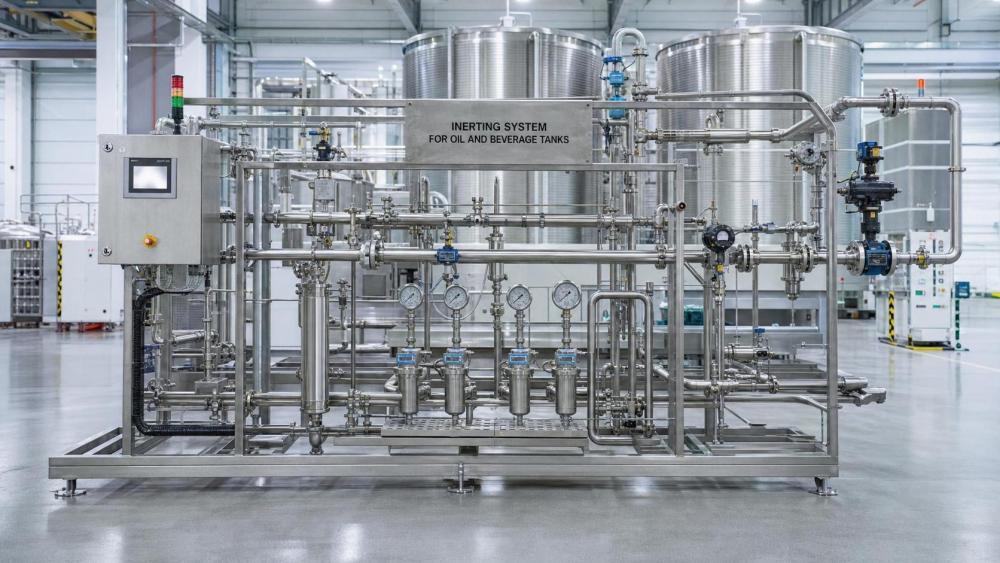
Pressure Control, Venting, and Relief
A complete inerting system includes both gas admission and gas exit. Nitrogen admission is commonly controlled by a regulator, blanketing valve, or pressure-control arrangement. Venting allows gas to leave when tank pressure rises. Relief devices protect the tank during abnormal conditions. These functions must be considered together.
Buyers should ask how the system maintains headspace pressure during filling, discharge, and temperature changes. They should also ask whether the venting path is sized for the expected flow and whether emergency relief is separate from normal breathing. If vapors or product characteristics require additional safety measures, those should be reviewed by qualified plant personnel.
Instrumentation should be visible and useful. Operators should be able to see whether the tank is within the normal pressure range. If alarms are used, they should be meaningful rather than excessive. Too many nuisance alarms can cause operators to ignore the system; too little feedback can hide real problems.
Buyer Checklist for Inerting System Review
Cleaning, Hygiene, and Cross-Contamination Risks
In food processing, inerting design should not make cleaning harder. Lines, valves, tank fittings, and instruments should be arranged so the plant can clean, drain, and inspect the system. Poorly placed connections may trap liquid or interfere with sanitation. This is especially relevant when the tank handles edible oils, beverage bases, or flavor-sensitive products.
If the tank uses CIP or spray cleaning, buyers should ask how the inerting connections are protected or isolated. If operators open the tank after cleaning, they need a clear venting procedure. If the tank switches between products, cleaning validation and odor carryover should be considered as part of the broader process plan.
Materials also matter. Gaskets, seals, tubing, and valves should be compatible with the product, cleaning media, temperature, and expected service conditions. A system that protects product from oxygen but introduces maintenance or hygiene problems is not a good tradeoff.
Integration With Oil and Beverage Tank Systems
Inerting systems should be planned with the full tank package. Heating, insulation, level measurement, agitators, pumps, filtration, filling lines, and cleaning systems can all affect how the tank is used. The inerting connection should not interfere with access, instruments, vents, manways, or pipe routing.
For industrial edible oil tanks, inerting may be part of a wider quality-protection design that includes hygienic stainless steel construction, controlled heating, drainage, and appropriate headspace management. The buyer should review the full tank system rather than approving the nitrogen arrangement separately.
Beverage plants may face different constraints, such as foam control, aroma protection, carbonation, or batch changeover. Oil processors may focus more on oxidation, viscosity, heating, and long holding periods. The correct inerting arrangement should reflect those differences.
Supplier Documentation to Request
Documentation helps the buyer understand what is being supplied and helps the plant prepare for installation. Before ordering, request a scope list, connection list, basic layout drawing, operating description, utility requirements, pressure settings, and maintenance guidance. If instruments or controls are included, ask for wiring or signal information as needed.
Buyers should also request clear boundaries. Which components are included by the tank supplier? Which items must be supplied by the plant? Is nitrogen generation included? Are regulators, relief devices, gauges, valves, or sensors included? Are platforms or access ladders part of the tank package? Clear scope reduces later disagreements.
For export projects, packing, labeling, and installation notes are also useful. A plant that prepares utilities and foundations before delivery can shorten startup time and reduce the chance of improvised installation work.
Common Mistakes Buyers Should Avoid
One common mistake is adding nitrogen without confirming why it is needed. Another is selecting hardware before confirming tank pressure limits. A third is focusing only on gas inlet control while ignoring venting and relief. These mistakes can create unstable operation or safety concerns.
Buyers should also avoid vague supplier scopes. If a quotation says "nitrogen blanketing included" but does not list valves, instruments, connections, settings, and exclusions, the buyer should ask for clarification. A complete system is easier to evaluate than a vague promise.
Finally, plants should avoid ignoring operator training. Operators need to understand normal pressure, alarm response, cleaning isolation, restart steps, and what to do before opening a tank. Good design and clear procedure should work together.
FAQ
What does inertage réservoirs mean for food processing tanks?
Inertage réservoirs refers to inerting storage tanks, commonly by using nitrogen to reduce oxygen exposure in the headspace. In food processing, this must be matched with pressure control, venting, cleaning, and safe operating procedures.
Do all oil and beverage tanks need inerting systems?
No. The need depends on product sensitivity, storage time, turnover rate, temperature, quality-control goals, and plant procedures. Some products need stricter headspace control than others.
What is the most important specification to confirm first?
Confirm the tank's pressure and vacuum limits before selecting inerting hardware. The system must protect the tank while meeting the product-protection goal.
Can inerting be added later to an existing tank?
Sometimes, but the tank must be reviewed for pressure limits, venting, fittings, relief protection, access, and cleaning routines. Retrofitting should not be treated as a simple pipe connection.
This article is buyer-facing guidance for food processing tank selection and inerting system review. It avoids fabricated prices, unsupported performance claims, invented project numbers, and unverified certification statements. Final upload should be checked against the destination portal's house style and formatting rules.Editorial Review Note
Related News
- 00
0000-00
What Determines Soy Sauce Flavor Balance and Quality for Noodle Dishes - 00
0000-00
What Payback Period Makes Food Processing Equipment ROI Worth Approving? - 00
0000-00
What to Verify Before Ordering Stainless Steel Mixing Tanks for Alcohol - 00
0000-00
Stainless Steel vs. Carbon Steel Edible Oil Storage Tanks: Material Selection for Beverage Industry Hygiene Compliance - 00
0000-00
Selecting Dairy Processing Equipment by Product Viscosity, Capacity, and Hygiene Risk
Food Processing Editorial Team
Weekly Insights
Stay ahead with our curated technology reports delivered every Monday.