Professional Agri-Forestry Industry Insights | Global Intelligence Leader

Selection Factors for Commercial Broiler Cage Farms





Planning a commercial broiler house is not only a question of choosing cage rows and placing birds inside them. A buyer has to think about airflow, bird movement, feeding access, drinking lines, manure handling, stocking density, cleaning speed, labor routine, and how the house will perform during hot, humid, or dusty operating conditions. If the cage decision is made only from a price list, the farm may discover later that daily management is harder than expected.
A good cage plan should help birds reach feed and water easily, allow workers to inspect the flock, reduce contact with manure, and support fast cleaning between batches. It should also match the farm's building dimensions, available power, water supply, labor level, and expansion plan. The purpose of this guide is to give poultry buyers a practical framework for comparing cage options before signing a purchase order.
Start With the Production Model
The first step is to define the production model clearly. A small farm may need a simple system that is easy to install and maintain. A larger commercial farm may need stronger automation, better row alignment, and more attention to ventilation and manure removal. The correct design depends on the target bird number, batch cycle, house width, aisle arrangement, and the farm's preferred level of manual work.
Buyers should also confirm whether the project is a new house, a retrofit of an existing building, or an expansion of a working farm. A new house gives more freedom in row layout, airflow planning, and equipment placement. A retrofit often has fixed walls, columns, door locations, and drainage paths, so the cage supplier must adapt the plan to the building. Expansion projects need compatibility with existing worker routines and spare parts.
Before requesting a final quotation, the buyer should prepare a short technical brief: bird type, planned capacity, house size, local climate, available power, water source, manure disposal method, and whether automatic feeding or drinking equipment will be included. This brief helps suppliers quote a system that is close to the real farm plan instead of a generic package.
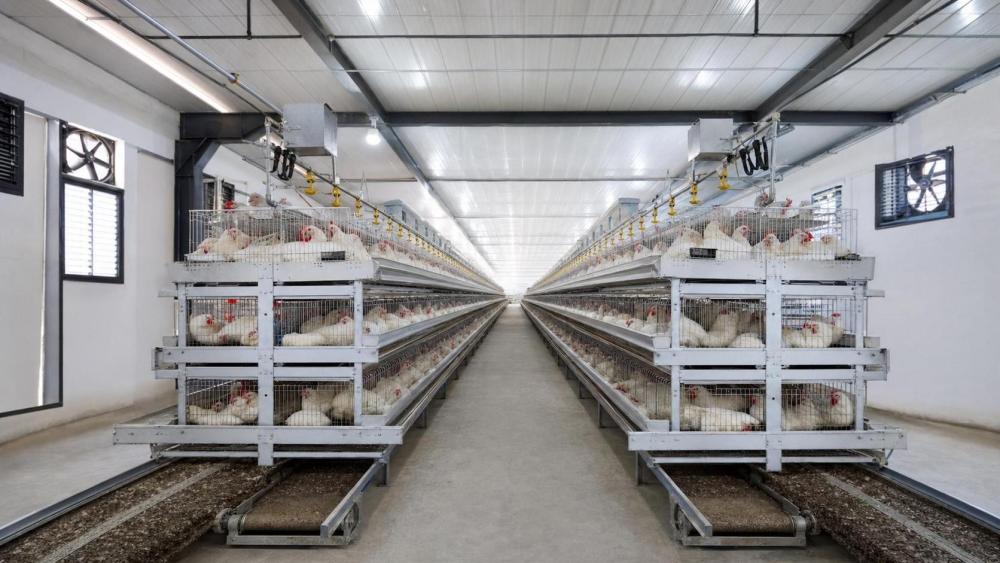
Key Equipment Areas to Compare
The cage frame is only one part of the whole house system. When buyers compare offers, they should review every equipment area that affects bird comfort and daily labor. Missing one area can make a lower quotation more expensive during operation.
Ventilation and Heat Control Cannot Be Treated Separately
Broilers are sensitive to air quality and heat. Cage design can improve management only when the house also supports enough airflow. Rows that are too close to walls, poorly placed curtains, blocked air movement, or weak fan capacity can reduce the value of a good cage layout. Buyers should ask the supplier how the cage arrangement will affect air movement through each tier and aisle.
In warm climates, the farm may need more than simple side ventilation. Depending on house size and budget, buyers may consider fans, air inlets, cooling pads, curtains, fogging support, or a tunnel ventilation plan. The exact choice should be based on local temperature, humidity, house length, stocking density, and power reliability. No cage supplier should promise a universal climate result without reviewing the building and operating conditions.
Ventilation planning should also include maintenance. Fans need cleaning, belts or motors may require service, and air openings must remain clear. If the farm cannot maintain a complicated ventilation package, a simpler but well-managed design may perform better than a system that is impressive on paper but neglected in daily use.
Feeding and Drinking Lines Need Practical Access
Feeding and drinking equipment should be positioned so birds can reach it naturally and workers can inspect it quickly. A line that is difficult to clean or adjust can cause avoidable waste. A drinker line that leaks or runs at the wrong pressure can create wet areas, hygiene problems, and uneven bird performance. These issues are not minor details; they affect the economics of every batch.
When comparing a broiler cage system, buyers should ask how feed and water access are arranged across the cage tiers, how workers check blocked nipples or uneven feed flow, and whether spare parts are easy to identify. The supplier should explain the operating routine, not only the product structure.
Farms should also plan a start-up test before placing birds in the house. Run water through the lines, check pressure, inspect leakage, and test feeding movement. This gives workers time to find installation problems before the flock depends on the system.
Manure Removal, Cleaning, and Biosecurity
One reason farms consider cage systems is to improve separation between birds and manure. That benefit depends on how the manure is actually removed. Manual systems may be acceptable for smaller houses, but they require disciplined labor and enough access space. Larger farms may consider scrapers, belts, or other removal equipment to reduce worker load and improve cleaning frequency.
The buyer should ask where manure will go after removal, how often it will be cleared, what equipment access is needed, and how the house will be washed or disinfected between batches. A cage layout that looks efficient for stocking may be less practical if workers cannot remove waste or clean corners properly. Drainage, aisle width, and door access should be checked before installation.
Biosecurity should be part of the equipment discussion. Smooth surfaces, fewer hidden residue points, easy access for washing, and clear movement paths all help reduce sanitation risk. The cage design does not replace farm management, but it can make good management easier or harder.
Supplier Questions Before Confirming an Order
A professional supplier should be able to answer practical questions and provide documents that help the farm prepare. Buyers should avoid making decisions from photos alone. A quotation should be supported by dimensions, material details, capacity assumptions, and installation notes.
- What bird capacity is assumed per cage unit, row, and house?
- What material, coating, and wire specifications are used for the cage frame?
- How are feeding and drinking components connected to the cage structure?
- What ventilation assumptions were used when recommending the row layout?
- How will manure be removed, and what labor or equipment is required?
- Which spare parts should be stocked before the first batch starts?
- What installation drawings, packing lists, and operating guidance will be provided?
- What on-site conditions must the buyer prepare before shipment arrives?
Testing the System Before Full Operation
After installation, the farm should not wait until the house is fully stocked to discover problems. A pre-operation review should check row alignment, door movement, drinking line pressure, feed distribution, manure path, worker access, and any sharp edges or unstable sections. Workers should practice the daily routine: feed check, water check, bird inspection, waste removal, and emergency access.
It is also useful to review whether the system matches the farm's record-keeping. Managers should know how they will track feed use, mortality, water consumption, cleaning time, and equipment issues. If a problem appears, the farm needs a way to identify whether it comes from equipment, management, climate, feed quality, or disease pressure.
FAQ
What is the main advantage of cage planning for broiler farms?
Cage planning can improve bird separation, inspection, feeding access, and manure management when the house layout, ventilation, and labor routine are designed together.
Should buyers choose the highest automation level available?
Not always. Automation should match flock size, labor cost, power stability, maintenance ability, and budget. A simple system that is well operated can be better than a complex system that the farm cannot maintain.
What should be checked before shipment?
Confirm drawings, dimensions, packing list, material specifications, spare parts, installation requirements, and whether the supplier's capacity assumptions match the farm plan.
How can a farm reduce installation risk?
Prepare the house before goods arrive, check row layout against drawings, inspect each component during receiving, and run feed, water, and worker-access tests before stocking birds.
Editorial Review Note
This article is buyer-facing guidance for poultry equipment selection. It avoids fabricated prices, unsupported case numbers, guaranteed production claims, and invented certifications. Final upload should be reviewed against the destination portal's house style, category rules, and formatting requirements.
Related News
- 00
0000-00
How to Evaluate Livestock Automation Systems for Labor Savings and Animal Welfare - 00
0000-00
What Determines the Startup Budget for 1,000 Broilers in Nigeria? - 00
0000-00
How Poultry Cage Material and Design Affect Long-Term Farming Costs in Nigeria - 00
0000-00
Matching Automatic Chicken Cage Capacity to Layer Farm Scale - 00
0000-00
Poultry Cage in Nigeria: Matching A-Type Systems to Layer Farm Scale
Livestock Industry Editorial Team
Weekly Insights
Stay ahead with our curated technology reports delivered every Monday.