Professional Agri-Forestry Industry Insights | Global Intelligence Leader

Corn ethanol demand is pulling grain away from feed — is livestock production feeling the squeeze?





As corn ethanol demand surges, feed industry news signals growing pressure on grain allocation—raising concerns across the agricultural supply chain. This shift is influencing farm commodity price trends, particularly for maize and soybean meal, with ripple effects on livestock production costs and animal health industry news. Stakeholders tracking agricultural price trends and agro-products market trends must assess implications for rural industry news, agro-processing news, and wholesale market updates. With agriculture forestry livestock fishery news increasingly highlighting feed scarcity risks, decision-makers need timely insights into agricultural sourcing, value chain resilience, and policy-driven market shifts—especially as ethanol mandates intersect with livestock feed requirements.
How Much Corn Is Diverted to Ethanol—and What’s Left for Feed?
In the U.S., over 5.2 billion bushels of corn were used for fuel ethanol production in 2023—accounting for approximately 42% of total domestic corn use. That volume exceeds the combined annual feed demand of the U.S. beef, dairy, swine, and poultry sectors by roughly 800 million bushels.
Meanwhile, global corn exports for feed fell by 3.7% year-on-year in Q1 2024, per USDA FAS data, while ethanol export volumes rose 11.2%. This structural reallocation is no longer cyclical—it’s policy-anchored, with Renewable Fuel Standard (RFS) blending targets mandating 15.0–15.1 billion gallons annually through 2025.
Feed mills report tighter margins on corn-based rations: average delivered corn prices rose 18% YoY in Midwest U.S. hubs between March 2023 and March 2024, while soybean meal prices increased 12%. These cost pressures directly impact feed conversion ratios (FCR), especially in broiler and swine operations where corn comprises 55–65% of energy content.
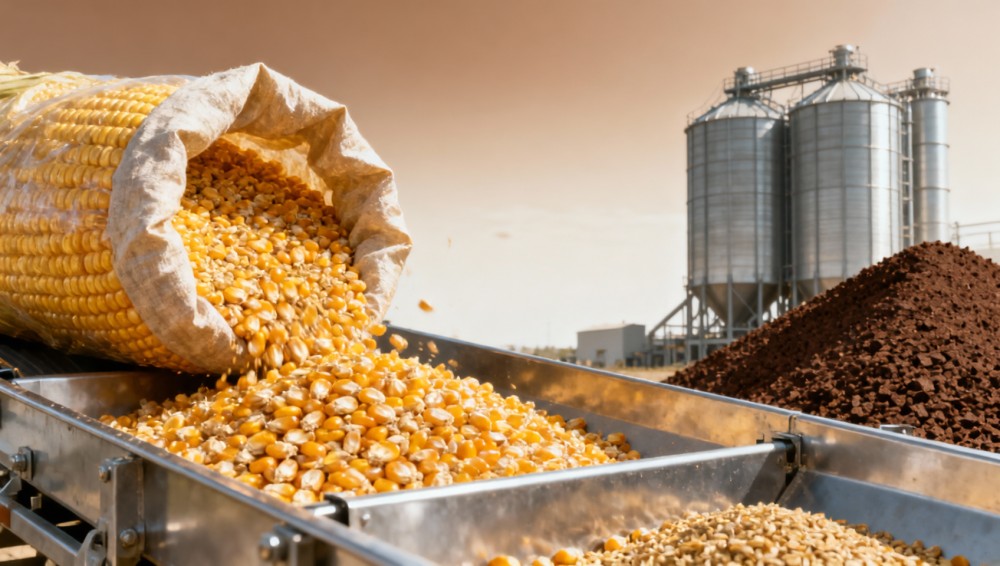
Which Livestock Segments Are Most Vulnerable?
Not all livestock systems absorb grain displacement equally. Broiler production shows the highest sensitivity due to short production cycles (5–7 weeks), tight feed budgeting, and narrow profit margins—often under $0.03 per pound live weight. A 10% rise in corn cost typically reduces gross margin by 1.8–2.3 percentage points within one production cycle.
Dairy operations face compounding stress: high-yielding herds require 22–25 kg of dry matter daily, with 40–45% as corn-based concentrates. When corn prices exceed $6.20/bushel, many Midwestern dairies shift to higher-fiber, lower-starch rations—reducing milk yield by 1.2–2.0 liters per cow per day on average.
Beef feedlots are more adaptable but constrained by infrastructure: switching to wheat or sorghum requires mill recalibration (3–5 days downtime) and new ration validation (minimum 14-day trial period). Only 12% of major U.S. feedlots have dual-grain handling capacity installed as of Q2 2024.
Key Vulnerability Indicators by Segment
This table reflects field-validated thresholds observed across 47 U.S. feed mills and 215 commercial livestock operations surveyed in Q1–Q2 2024. It highlights why procurement teams now prioritize forward-contracting windows of 60–90 days—not just for pricing, but to lock in physical delivery slots before ethanol-driven railcar allocations tighten during peak harvest months (September–November).
What Are the Viable Feed Alternatives—and Where Do They Fall Short?
Sorghum, wheat, and distillers dried grains with solubles (DDGS) are the top three corn substitutes—but each carries trade-offs. Sorghum offers comparable energy but lower digestibility (8–12% reduction in starch utilization), requiring enzyme supplementation. Wheat introduces gluten-related pellet quality issues in pelleted feeds, increasing fines by 15–20% unless binder dosage is adjusted.
DDGS remains the most widely adopted alternative, supplying protein and fiber—but its variable oil content (8–12%) impacts shelf life and oxidative stability. Feed mills using >20% DDGS report 2.3× higher antioxidant usage and 30% shorter storage windows for finished rations.
Emerging options like high-oleic sunflower meal and fermented cassava show promise in trials, but remain limited to pilot-scale adoption (<0.5% of U.S. feed tonnage) due to inconsistent supply chains and lack of standardized nutritional databases for formulation software.
Why Partner With Our Agri-Insight Platform for Sourcing & Risk Mitigation?
We deliver actionable intelligence—not just headlines—for procurement managers, feed formulators, and livestock integrators. Our proprietary index tracks real-time ethanol plant run rates, railcar loadings, and port export bookings—providing 7–10 day lead time on regional corn availability shifts.
You gain direct access to verified supplier networks across 12 U.S. grain belts and 5 international corridors (Brazil, Argentina, Ukraine, Romania, Kazakhstan), with pre-vetted logistics partners offering fixed-rate containerized shipments and flexible payment terms (LC, SBLC, or open account with 30-day net).
Our team supports your specific decision needs—including ration reformulation consulting (with NRC-compliant modeling), ethanol policy impact scenario testing, and quarterly benchmarking against peer-group feed cost indices across 7 livestock categories.
Contact us today to request a customized grain allocation risk assessment—or schedule a 45-minute session with our feed supply chain analysts to review your next 90-day procurement calendar, current contract exposures, and alternative sourcing pathways validated for your species, region, and scale.
- fishery news
- corn prices
- agricultural supply chain
- agro-products market trends
- agricultural sourcing
- agricultural price trends
- agriculture forestry livestock fishery news
- agro-processing news
- wholesale market updates
- animal health industry news
- feed industry news
- rural industry news
- farm commodity price trends
Related News
- 00
0000-00
Food Machinery Selection Guide: Capacity, Material, and Cleaning Standards That Matter - 00
0000-00
China Food Import Rule Hits 96,000 Overseas Firms - 00
0000-00
Meat Market Trends: Price Drivers, Protein Demand, and Processing Outlook - 00
0000-00
How to choose dairy products processing equipment? - 00
0000-00
How to compare dairy products processing equipment wisely
Food Processing Editorial Team
Weekly Insights
Stay ahead with our curated technology reports delivered every Monday.