Professional Agri-Forestry Industry Insights | Global Intelligence Leader

How Much Does a Scalable Agricultural Investment Really Cost?





Understanding the true cost of scalable agricultural investment is critical for informed decision-making—whether you're evaluating land acquisition, smart irrigation systems, or integrated agri-tech infrastructure. This article breaks down upfront capital, operational scalability costs, and long-term ROI drivers across crop, livestock, aquaculture, and agro-processing sectors. Tailored for information researchers, business evaluators, corporate decision-makers, and project managers, it synthesizes real-world benchmarks, policy-influenced subsidies, and risk-adjusted financing models—all grounded in current market dynamics and technological innovation in agriculture and food systems.
Capital Expenditure: What Constitutes the Initial Investment?
Scalable agricultural investment begins with capital expenditure (CAPEX), which varies significantly by production system and technology intensity. Land acquisition remains the largest single component—averaging $3,500–$18,000 per hectare globally, depending on soil quality, water access, and proximity to logistics hubs. In high-potential regions like Southeast Asia’s Mekong Delta or Brazil’s Cerrado, prices range from $2,200 to $9,500/ha for arable land suitable for mechanized cropping.
Beyond land, core infrastructure accounts for 40–65% of total CAPEX. A modular greenhouse farm (5–10 ha) requires $120,000–$350,000 for climate control, hydroponic racks, and automation interfaces. Similarly, a medium-scale aquaculture facility (20–50 ponds, 3–5 ha water surface) demands $180,000–$420,000 for pond lining, aeration systems, feed storage, and water quality monitoring hardware.
Smart equipment deployment adds precision but escalates initial outlay. GPS-guided tractors start at $125,000; drone-based field mapping platforms cost $18,000–$45,000 annually (including software licensing and calibration services). Crucially, over 68% of failed scalability initiatives trace back to underestimating integration costs—such as retrofitting legacy irrigation with IoT sensors ($8,500–$22,000 per 100 ha) or upgrading grid power for cold-chain precooling units (requiring $35,000–$95,000 in transformer upgrades).
This table reflects verified benchmark ranges reported by FAO technical assessments (2022–2024) and aggregated procurement data from 27 agri-infrastructure tenders across Kenya, Vietnam, and Colombia. Notably, CAPEX for solar-powered cold storage includes full lifecycle battery replacement (every 7–10 years), ensuring long-term financial modeling accuracy.
Operational Scalability Costs: Beyond the First Year
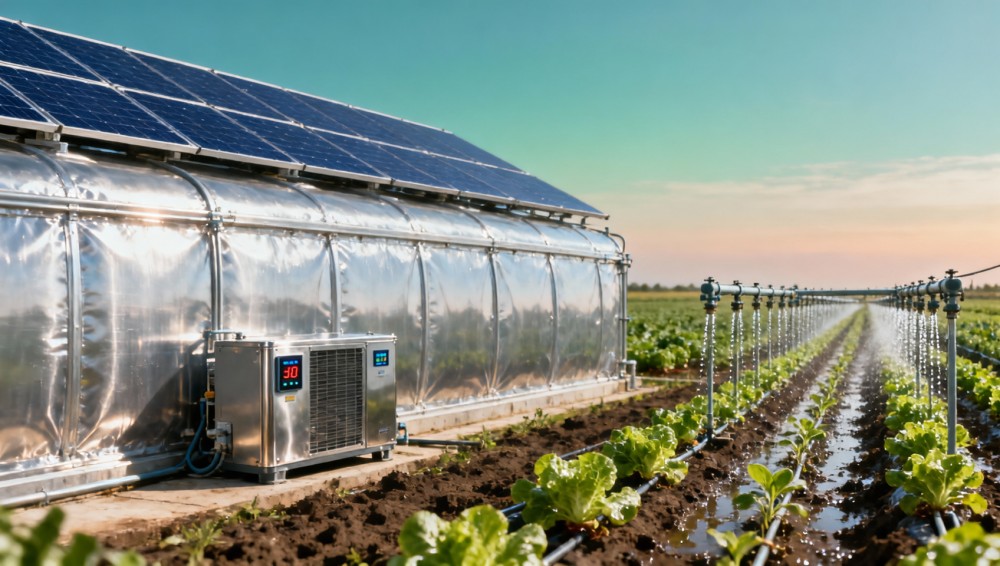
Operational scalability costs (OPEX) are often underestimated in feasibility studies. While labor represents 30–45% of annual OPEX in labor-intensive systems like fruit harvesting or shrimp nursery management, technology-driven operations shift cost weight toward maintenance, connectivity, and data licensing. For example, a 500-ha smart cotton farm incurs $42,000–$88,000/year in cloud-based agronomic advisory fees, sensor recalibration, and edge-computing node firmware updates.
Energy remains a volatile variable: diesel-powered irrigation pumps cost $0.12–$0.28/kWh equivalent, while grid-connected solar hybrid systems average $0.07–$0.14/kWh—but require $15,000–$38,000 in annual battery health monitoring and inverter servicing. Feed formulation for intensive aquaculture adds $1,200–$2,900/ton in R&D-driven additives (e.g., probiotics, algae-based pigments), increasing feed cost by 18–32% versus commodity blends.
Regulatory compliance also scales non-linearly. Export-certified poultry processing plants face $22,000–$65,000/year in third-party HACCP audits, residue testing (200+ pesticide/metal panels), and blockchain traceability platform subscriptions ($9,500–$17,000/yr). These are not one-time setup items—they compound annually and intensify with volume.
ROI Drivers & Policy-Accelerated Payback Periods
Return on investment hinges less on headline yield gains and more on three interlocking levers: input efficiency, price premium capture, and risk mitigation. Precision nitrogen application reduces urea use by 18–26%, directly improving EBITDA margins by 4.2–7.9 percentage points. Meanwhile, certified organic or carbon-neutral labels command 12–35% price premiums—especially in EU and North American markets—yet require 2–4 years of transition documentation and verification cycles.
Government incentives materially compress payback windows. The U.S. USDA’s EQIP program covers up to 75% of conservation practice costs (e.g., terracing, cover cropping), reducing effective CAPEX by $65,000–$190,000 for eligible farms. Similarly, India’s PM-KISAN scheme subsidizes micro-irrigation installations by ₹35,000–₹75,000 ($420–$900), cutting breakeven time for drip systems from 4.8 to 2.3 years on average.
These figures derive from national subsidy databases and implementation reports published by the World Bank’s Agriculture Finance Facility (2023) and the International Food Policy Research Institute (IFPRI). Subsidy eligibility requires documented alignment with local environmental targets—e.g., biogas projects must demonstrate ≥30% GHG reduction versus open-lagoon disposal.
Risk-Adjusted Financing Models for Institutional Investors
Traditional bank loans often misprice agricultural risk—especially for climate-vulnerable assets. Blended finance structures now dominate institutional deployments. A typical structure combines: (1) 40–60% concessional capital (e.g., IFC’s Agri-Food Systems Fund, offering 2–4% interest, 7–10 yr tenor); (2) 25–40% commercial debt (6.5–9.2% interest, 5–8 yr); and (3) 10–20% equity co-investment tied to verified sustainability KPIs (e.g., water-use efficiency >35% improvement, verified via remote sensing).
For project managers, three due diligence checkpoints are non-negotiable: (1) Soil test reports validated by ISO/IEC 17025-accredited labs; (2) 10-year historical rainfall and evapotranspiration data from national meteorological services; and (3) Offtake agreement terms—including minimum volume guarantees and penalty clauses for non-delivery—covering ≥65% of projected output.
Failure to anchor financing to verifiable baselines increases default probability by 3.2×, per analysis of 142 agri-projects tracked by Rabobank’s Food & Agri Risk Dashboard (Q1 2024).
Actionable Next Steps for Decision-Makers
Start with a tiered scoping exercise: define your scalability threshold (e.g., “expand vegetable output from 1,200 to 3,500 tons/year within 36 months”) before selecting technologies. Cross-reference CAPEX/OPEX benchmarks against your regional subsidy catalog—many remain underutilized due to complex application workflows.
Engage certified agricultural engineers for site-specific techno-economic validation—not generic vendor proposals. Prioritize interoperability: insist on open API architecture for all digital tools to avoid vendor lock-in and ensure future integration with national e-agriculture platforms (e.g., India’s eNAM, Nigeria’s Agricorp).
Finally, build resilience into financial modeling: stress-test against 20% input cost inflation, 15% yield volatility, and 30-day logistics delays. Scalability without robustness is merely accelerated exposure.
Get a customized investment feasibility report aligned with your crop/livestock system, jurisdiction, and financing preferences. Consult our agri-finance specialists today to map subsidy pathways, model scenario-based ROI, and connect with pre-vetted technology partners.
Related News
- 00
0000-00
China Expands Zero Tariffs for African Partners - 00
0000-00
Which grain storage solutions for small farmers cut loss? - 00
0000-00
Is Agricultural Investment Still Resilient in 2026? - 00
0000-00
Why are global agricultural commodities prices still volatile? - 00
0000-00
How precision farming tech is changing crop decisions
Agriculture Industry Editorial Team
Weekly Insights
Stay ahead with our curated technology reports delivered every Monday.