Professional Agri-Forestry Industry Insights | Global Intelligence Leader






Introduction
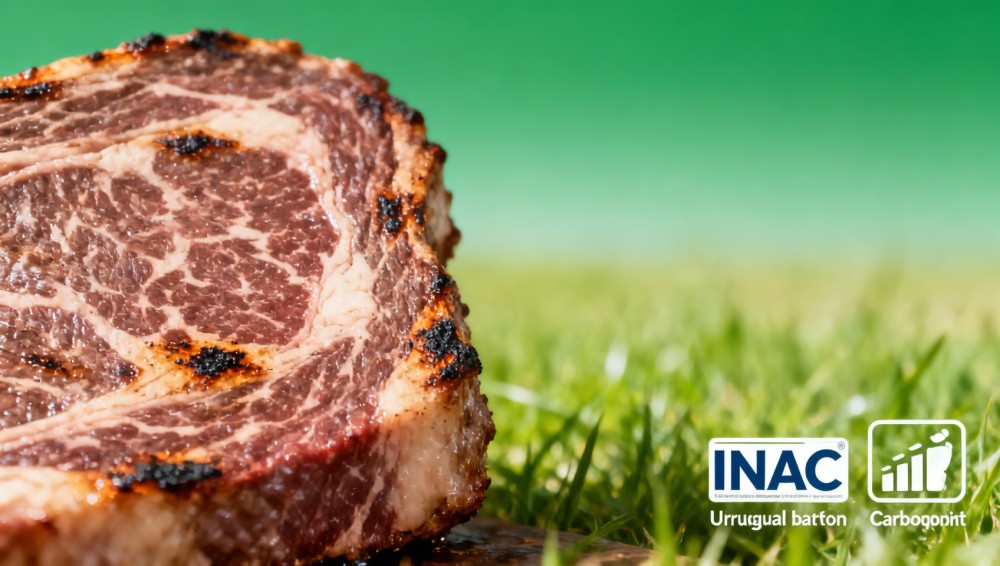
The Uruguayan National Meat Institute (INAC), a non-governmental public quality regulator, will exhibit certified natural beef at the 2026 Food Expo, highlighting its "zero hormones, grass-fed, and verifiable carbon footprint" standards. This move signals a growing trend in global meat procurement where ESG (Environmental, Social, and Governance) criteria are increasingly embedded in purchasing decisions. The development poses competitive pressure on China’s beef exporters, particularly those with GRAS registration, carbon accounting capabilities, or GlobalG.A.P. certification. The event underscores the need for industry players to adapt to evolving market demands.
Event Overview
The Uruguayan National Meat Institute (INAC) will participate in the 2026 Food Expo, showcasing beef products that meet stringent ESG standards: zero hormone residues, grass-fed rearing practices, and verifiable carbon footprint data. As a non-governmental public quality regulator, INAC’s endorsement adds credibility to these claims. The event highlights the increasing importance of ESG compliance in global meat trade, particularly in premium markets.
Impact on Sub-Sectors
Direct Trade Enterprises
Chinese beef exporters targeting high-end markets may face heightened competition as Uruguay’s ESG-certified products gain traction. Companies without robust ESG credentials could lose market share.
Raw Material Procurement Enterprises
Importers and distributors sourcing beef for premium segments will need to reassess supplier portfolios, prioritizing partners with transparent ESG practices to meet buyer expectations.
Processing and Manufacturing Enterprises
Slaughterhouses and processing plants with GlobalG.A.P. or carbon accounting capabilities may see increased demand, while others risk being sidelined in premium supply chains.
Supply Chain Service Providers
Logistics and certification providers specializing in carbon footprint verification or sustainable sourcing could experience growing demand as traceability becomes a key purchasing criterion.
Key Focus Areas and Recommended Actions
Monitor ESG Procurement Trends
Track how major importers integrate Uruguay’s standards into their purchasing policies, particularly in EU and North American markets.
Accelerate Certification Processes
Prioritize obtaining GRAS, GlobalG.A.P., or carbon neutrality certifications to maintain competitiveness in ESG-sensitive markets.
Enhance Supply Chain Transparency
Invest in systems for verifying and communicating carbon footprint data, as seen with Uruguay’s traceability model.
Differentiate Product Offerings
Develop value propositions around China’s unique sustainable farming practices to counter Uruguay’s grass-fed narrative.
Editor’s Perspective / Industry Observation
From an industry standpoint, Uruguay’s move represents more than a marketing tactic—it reflects a structural shift in global meat trade dynamics. While Chinese exporters currently face pressure, the situation also creates opportunities for those able to demonstrate ESG compliance. The 2026 expo should be viewed as a benchmark event for assessing how quickly ESG standards become mainstream procurement requirements. Companies should treat this as an early warning to future-proof their operations.
Conclusion
Uruguay’s participation in the 2026 Food Expo underscores the accelerating integration of ESG criteria into global meat trade. For Chinese exporters, this development signals both competitive challenges and potential differentiation opportunities. The industry would be prudent to interpret this as a call to action for upgrading certifications, enhancing traceability, and strategically positioning products in an increasingly sustainability-driven marketplace.
Source Information
Primary Source: Announcement by Uruguayan National Meat Institute (INAC) regarding 2026 Food Expo participation. Ongoing monitoring required for updates on exact exhibition dates and participating buyer delegations.
Related News
- 00
0000-00
IMF Cuts 2026 Global Growth Forecast to 3.1% Amid Middle East Disruptions - 00
0000-00
China-Europe Express 'East Corridor' Hits 2,000 Trains in 2026 - 00
0000-00
Hormuz Strait Partially Reopens: 20+ Cargo Vessels Transit in 24 Hours - 00
0000-00
Agri commodities storage costs climbed faster than futures premiums — a quiet squeeze on traders - 00
0000-00
Agricultural supply chain digitization accelerated — yet 62% of midsize farms still rely on paper-based inputs
Industry Global
Weekly Insights
Stay ahead with our curated technology reports delivered every Monday.