Professional Agri-Forestry Industry Insights | Global Intelligence Leader

What payback period makes packaging automation ROI viable?





A packaging line can look busy and still be underperforming. This often becomes visible at the end of a difficult production week: overtime has increased, temporary labor is harder to schedule, finished goods are waiting for packing, and a shipment window is approaching. The operations team sees a clear bottleneck and proposes automation. The approval question, however, is less simple: how quickly must the investment pay back before it is financially reasonable?
In agri-food and related processing businesses, the answer is rarely a single universal number. A short payback may be necessary where demand is uncertain, margins are thin, or equipment could sit idle outside a narrow harvest season. A longer horizon may be reasonable where the line supports traceability, food safety controls, export packaging requirements, or a stable high-volume product category. The practical task is to turn a broad packaging automation ROI claim into a decision model that reflects the actual line, operating schedule, and downside risk.
Start with the situation that created the request
Many automation proposals begin with a visible labor issue. Manual case packing, weighing, labeling, sealing, palletizing, or inspection may rely on experienced operators who are difficult to replace. During peak season, a plant may need additional shifts simply to prevent accumulated orders from disrupting cold storage, dispatch, or transport planning.
It is tempting to calculate the savings by multiplying the number of people on the line by their hourly wage. That is a starting point, not a business case. If those people cannot actually be reassigned, if the machine only operates for part of the year, or if a manual step remains necessary for product changes and quality exceptions, the apparent savings may never become cash savings.
The same problem appears on the benefit side. A supplier may state a rated speed, but a packaging line earns its return from usable output: the packages that meet specification, are correctly labeled, survive handling, and leave on time. For food, feed, seafood, produce, grain-based products, and other agricultural goods, packaging performance is closely tied to batch control, moisture exposure, shelf-life protection, and buyer requirements. A faster machine that increases changeover delays or produces more rejected packs does not automatically improve the economics.
The first question should therefore be: Which operating constraint is automation expected to remove? It may be labor availability, throughput, pack consistency, material waste, repetitive-motion exposure, labeling accuracy, or a combination of these. If the proposal cannot identify the constraint, the payback calculation will likely become a collection of optimistic assumptions.
Payback is a threshold, not a universal rule
A payback period measures how long it takes for annual net benefits to recover the initial investment. It is popular because it is easy to explain, especially when capital requests compete with cold-chain upgrades, processing equipment, storage, fleet needs, or compliance projects. But it does not measure every economic effect. It does not fully reflect the value of benefits after the recovery point, financing structure, tax treatment, residual value, or the cost of a production interruption.
That does not make payback unhelpful. It makes it useful as an early risk screen. A viable target should be tied to the organization’s exposure rather than copied from an industry conversation. Consider these conditions:
- Demand reliability: Lines serving repeat orders with dependable volume can support a longer recovery horizon than products with volatile or seasonal demand.
- Utilization: An automated packer running across several shifts has a different cost base from equipment used only during a short campaign.
- Cash pressure: Businesses with constrained working capital may require faster recovery even if long-term economics look attractive.
- Operational urgency: Where a packaging bottleneck causes missed loading slots, quality risk, or repeated use of agency labor, delaying action also has a cost.
- Technology flexibility: Equipment able to handle multiple pack formats, products, or plants may carry less utilization risk than a highly dedicated system.
A relatively short payback target is often appropriate when benefits depend mainly on reducing labor hours and the product mix changes frequently. In that situation, the numbers need to survive conservative assumptions. A longer target may be justified when automation protects a strategic supply relationship, enables required coding or traceability discipline, or avoids a known capacity constraint that would otherwise require building expansion. Those benefits should still be described carefully; “strategic” is not a substitute for evidence.
Build the model from line-level evidence
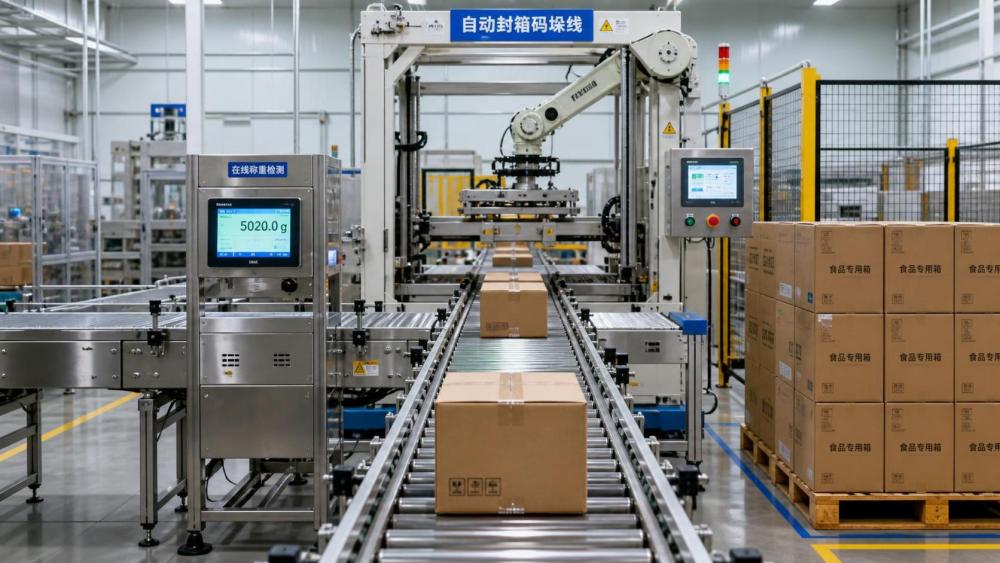
The most useful packaging automation ROI analysis begins with a normal operating baseline, not the best shift of the year and not the worst disruption. Gather several production periods that represent the real mix of products, pack sizes, staffing levels, changeovers, rejects, rework, downtime, and dispatch demand. If seasonality matters, use a full operating cycle rather than a single month.
Then separate the cost of the proposed system into two groups. The first is the initial outlay: equipment, integration, guarding, conveyors, installation, utility connections, site preparation, commissioning, training, validation work where relevant, and a reasonable allowance for implementation disruption. The second is the recurring cost: energy, consumables, preventive maintenance, spare parts, software or service arrangements, operator time, cleaning, and planned downtime.
The annual benefit side should be equally disciplined. A practical formula is:
Annual net benefit = realized labor savings + contribution from additional sellable output + avoided material loss + avoided quality or compliance cost + other verified gains − annual operating and maintenance cost.
Simple payback period = total installed cost ÷ annual net benefit.
The phrase “realized labor savings” deserves attention. If automation allows the business to avoid hiring seasonal workers, eliminate overtime, or redeploy people from a constrained packing task to another productive area, that can be included when it is supported by scheduling and labor plans. If people will remain in the same roles with no reduction in paid hours and no avoided recruitment need, record the benefit as capacity resilience rather than a cash saving. It may still matter, but it should not be counted twice.
Additional output should also be valued cautiously. Capacity only has economic value if the business can sell the extra volume, retain orders that would otherwise be lost, or reduce a costly outsourced packaging arrangement. More units produced without demand can increase inventory exposure rather than generate return.
The assumptions that most often distort the answer
The common error is not a bad formula. It is treating assumptions as settled facts. A line may be described as operating for a certain number of hours, while actual run time is reduced by cleaning, product changeovers, material replenishment, quality holds, and unplanned stops. Similarly, an automation project may be expected to remove several manual positions, but someone still needs to load materials, resolve jams, verify labels, inspect finished packs, and manage exceptions.
Material savings are another area where enthusiasm can outrun evidence. Better control of film, cartons, labels, or seals can reduce waste, but the baseline loss rate should be measured first. The model should show whether the gain comes from fewer damaged packs, more accurate filling, fewer coding errors, or less rework. If the cause is unknown, the saving should be treated as an upside case, not a core approval assumption.
Quality and compliance benefits often matter in agricultural supply chains, yet they should be framed without inventing a monetary figure. Automated label verification, controlled sealing, batch handling, and consistent pack presentation can reduce exposure to avoidable errors. Where internal records show recurring rework, rejected deliveries, or documentation effort, those costs can be incorporated. Where no baseline exists, document the risk reduction separately and avoid presenting it as guaranteed cash return.
Use three operating cases before asking for approval
A single forecast can create false certainty. It is more credible to calculate a conservative case, an expected case, and a constrained-utilization case. The conservative case may use lower run hours, partial labor realization, higher maintenance allowance, and slower ramp-up. The expected case can reflect normal operating assumptions supported by records. The constrained-utilization case should ask what happens if demand softens, a major customer changes pack specifications, or seasonal volume arrives later than planned.
This approach changes the discussion. Instead of debating whether a machine “will pay back,” decision-makers can see which conditions are necessary for viability. If the investment only meets the target under the most favorable case, it is not yet ready for approval. If it remains acceptable when utilization falls or labor savings are delayed, the proposal is more resilient.
It is also useful to test the model against one operational reality at a time. For example, reduce annual run hours while holding all other assumptions constant. Then test a lower saving from labor, a higher maintenance cost, or a slower changeover rate. This sensitivity work identifies the variable that deserves the most verification before committing capital.
Compare alternatives before treating automation as the only answer
Packaging automation is not always an all-or-nothing decision. Sometimes the better first move is to improve the existing line: rebalance workstations, standardize pack materials, reduce unnecessary product variants, improve label workflow, add simple conveyors, or revise shift planning. These changes may reveal that the bottleneck is not the manual packing task but inconsistent upstream supply, poor carton availability, or frequent order changes.
In other situations, a modular approach is preferable. Automating one repetitive, high-volume step can provide learning without committing the business to a fully integrated line. This can be particularly sensible for processors handling variable produce grades, multiple seafood formats, changing retail packs, or contract-packed products. The trade-off is that partial automation may leave labor dependency in place and may not achieve the same throughput as a complete system.
Leasing, rental arrangements, contract packing, and outsourcing can also be compared where available. These options may reduce upfront capital exposure, though their long-term operating cost, service dependence, transport implications, and control over quality need careful review. The appropriate comparison is not merely purchase price versus monthly fee; it is the total cost and operational consequence over the planned period of use.
Questions that should be answered before the number is trusted
Ask the operations team to explain the current process in enough detail that the finance model can be traced back to the production floor. Which SKU families will run on the equipment? How often will the format change? Which upstream and downstream processes can keep pace? Who owns fault recovery? What happens when packaging materials vary in quality? Is sufficient floor space available for safe access, maintenance, and material flow?
Ask for an implementation plan that includes acceptance criteria. The equipment should be evaluated on the actual product and packaging materials where possible, not only a generic demonstration. Expected throughput, reject handling, changeover procedure, code verification, operator training, and service response should be defined before the order is placed. This is not administrative detail; it protects the assumptions used in the return calculation.
Finally, distinguish between a compelling operational reason and a measurable financial reason. A project may deserve support because it reduces a serious dependency on scarce labor or improves control over a sensitive product. If so, state that openly alongside the payback estimate. Blending unmeasured strategic value into labor savings makes later review difficult and weakens confidence in future capital requests.
A practical approval position
Packaging automation ROI becomes viable when the payback period remains within the business’s acceptable risk window under realistic, not ideal, operating conditions. For a stable, well-utilized line with demonstrated labor pressure and measurable waste or throughput losses, a stronger case can emerge quickly. For a seasonal, variable, or frequently changing operation, the threshold should be stricter or the equipment should be more flexible.
The soundest decision is usually not based on a headline payback figure. It comes from a transparent installed-cost estimate, a defensible baseline, conservative benefit recognition, and a clear view of what happens when volume, staffing, or uptime differs from plan. That discipline helps ensure the investment solves the packaging problem that exists on the floor rather than creating a new capital problem on the balance sheet.
Related News
- 00
0000-00
Flexible Packaging Price Trends: What Drives Costs for Food Packaging Buyers? - 00
0000-00
What Is Driving Printing Market Demand Across Packaging and Commercial Print? - 00
0000-00
Packaging Market Trends: How Sustainability and Automation Reshape Supply Chains - 00
0000-00
Can Recycled Food Packaging Meet International Safety Standards? - 00
0000-00
How much does food packaging cost for a new product launch?
Packaging & Printing Editorial Team
Weekly Insights
Stay ahead with our curated technology reports delivered every Monday.