Professional Agri-Forestry Industry Insights | Global Intelligence Leader

What Compliance Rules Apply to Sustainable Food Packaging in 2026?





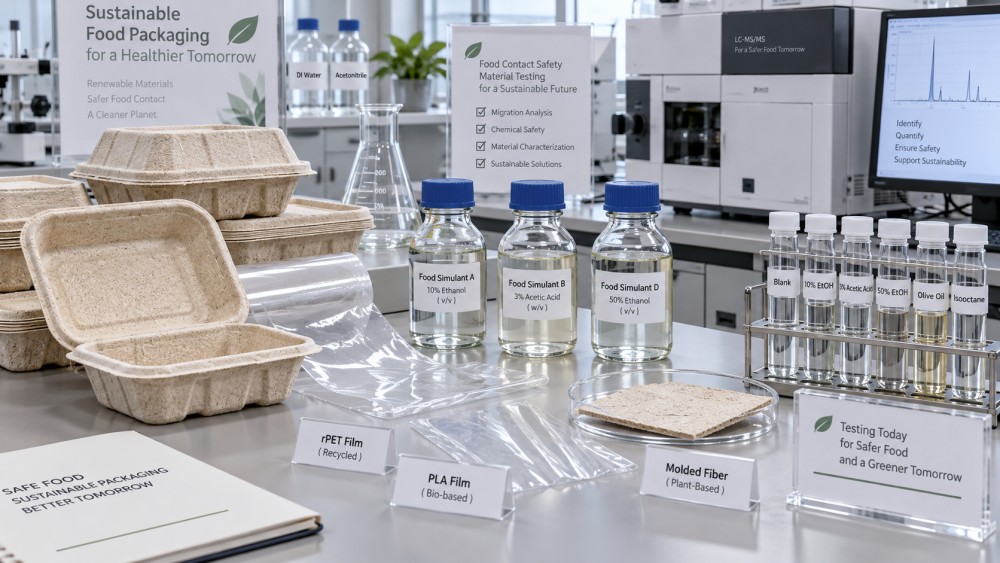
A food processor replacing a plastic tray with molded fiber, or a seafood exporter buying recycled-content film, faces more than a material choice. In 2026, sustainable food packaging must satisfy food-contact safety rules, applicable chemical restrictions, packaging and waste obligations, and rules governing environmental claims. A recyclable or compostable label does not establish compliance, and an unsuitable coating or unsupported claim can delay market entry or require packaging to be replaced.
The practical starting point is the destination market and the intended food-contact use. For businesses researching food packaging sustainable material compliance 2026, the central distinction is between requirements already applicable, requirements taking effect during 2026, and later targets that should influence design but are not yet mandatory.
Which rules apply before sustainability claims are considered?
First establish whether the complete packaging article is suitable for its intended contact with food. Assessment must cover the substrate, coatings, adhesives, inks, closures, and other components capable of transferring substances into food. A compliant base resin does not automatically make the finished pouch or tray compliant.
In the European Union, Regulation (EC) No 1935/2004 establishes the general food-contact framework, including safety and traceability requirements. Regulation (EC) No 2023/2006 addresses good manufacturing practice. Plastic food-contact materials are also subject to Regulation (EU) No 10/2011, including applicable composition, migration, and documentation requirements.
Paper, board, printing inks, and some other materials do not have fully harmonized EU material-specific rules. National requirements can therefore matter alongside the general framework. A supplier statement referring only to “EU compliance” needs enough detail to show which requirements were assessed.
In the United States, packaging substances need a valid regulatory basis for their intended use, such as an applicable regulation, effective Food Contact Notification, or another legally recognized basis. “FDA approved” is often too vague: request the specific authorization, substance identity, limitations, and, where relevant, the manufacturer covered by the notification.
Conditions of use are decisive. Frozen fish, acidic fruit preparations, oily ready meals, and hot-filled sauces create different exposure conditions. Documentation should match the food type, contact duration, temperature, and any reheating or repeated-use instructions.
What changes in the EU during 2026?
Regulation (EU) 2025/40, the Packaging and Packaging Waste Regulation, generally applies from 12 August 2026. It covers packaging across materials and sectors, including food packaging. However, it does not make every future recycling, recycled-content, labeling, or reuse requirement immediately mandatory on that date.
The PPWR introduces PFAS limits for food-contact packaging. From 12 August 2026, packaging must not be placed on the market at or above the specified thresholds: 25 ppb for an individual PFAS measured by targeted analysis, 250 ppb for the sum measured by targeted analysis, and 50 ppm for PFAS including polymeric PFAS. The regulation specifies analytical qualifications and additional evidence requirements where total fluorine exceeds 50 mg/kg.
A statement that a coating contains “no intentionally added PFAS” does not, by itself, demonstrate compliance with concentration-based limits. The appropriate evidence depends on the formulation, supply-chain controls, and analytical method. Fluorine screening and targeted PFAS analysis answer different questions.
EU bisphenol restrictions also deserve attention. Regulation (EU) 2024/3190 restricts BPA and certain other hazardous bisphenols in food-contact materials. Many transitional arrangements reach milestones in July 2026, but exceptions and longer periods exist for specified applications. Verify the provisions for the exact article rather than treating July 2026 as a single deadline for every packaging format.
Can recycled or bio-based materials be used for any food?
No. Recycled content and renewable feedstocks describe material origin, not food-contact suitability.
For recycled plastics in the EU, Regulation (EU) 2022/1616 addresses recycled plastic materials and articles intended to contact food. Depending on the technology and process, compliance can involve authorization, registration, decontamination controls, and specific documentation. A recycled-content certificate does not replace this evidence.
In the United States, the regulatory status of packaging components still matters, while recycling processes require attention to contamination and suitability. An FDA recycling-process no-objection letter, where available, concerns the evaluated process and conditions; it is not unrestricted approval of every finished package made from recycled resin.
Bio-based plastics remain plastics for relevant regulatory purposes. Plant origin does not establish biodegradability, compostability, or suitability for heating. Similarly, recycled paper can introduce contaminants, while fiber packaging may depend on a barrier coating that changes its migration profile and waste-management route.
A useful specification describes the complete construction: fiber or polymer grade, recycled fraction, barrier layers, adhesive, ink system, and intended use. Changing a grease barrier or increasing recycled content should trigger a documented review before the replacement enters production.
What should exporters check outside the EU?
There is no global sustainable-packaging approval. Each destination adds its own food-contact, waste, labeling, and chemical requirements. Great Britain must be assessed separately from the EU; Northern Ireland can involve a different regulatory position.
For US sales, check federal food-contact requirements alongside state restrictions. Several states restrict PFAS in defined food-packaging categories, but definitions, dates, and evidence obligations differ. State packaging producer-responsibility programs also have distinct registration, reporting, and implementation schedules.
The FDA announced in 2024 that PFAS-containing grease-proofing substances were no longer being sold for US food-packaging use. That development should not be treated as proof that every imported fiber package is PFAS-free or satisfies every state restriction. Procurement still needs formulation and compliance evidence.
In the UK, packaging extended producer responsibility can create data-reporting and waste-disposal fee obligations, depending on the business's role, size, and packaging activities. Determine who imports or supplies the packaging and who is responsible for reporting it; using a foreign packaging supplier does not automatically transfer those duties.
China requires assessment against applicable food-contact national standards, including the relevant GB 4806 series and additive requirements. Other destinations have their own frameworks. A test report prepared for one market may contribute useful evidence elsewhere, but it is not a substitute for checking local legal requirements.
When are “recyclable” and “compostable” claims defensible?
Claims should describe the finished package and the disposal conditions actually available to its users. Technical compatibility with a recycling process does not necessarily establish that collection, sorting, and processing are accessible in the sales market.
In the US, the FTC Green Guides provide the federal framework for environmental marketing claims. Unqualified recyclable claims generally require recycling access for a substantial majority of consumers or communities where the product is sold. State laws, including California's rules, can impose additional restrictions. Check the applicable timetable and substantiation requirements before printing packaging.
EU Directive (EU) 2024/825 strengthens consumer protection against misleading environmental claims. Member States are required to apply implementing measures from 27 September 2026. Among other changes, it addresses unsupported generic environmental claims and sustainability labels not based on qualifying certification schemes or established by public authorities.
Compostability claims must distinguish industrial composting from home composting. Standards such as EN 13432 or ASTM D6400 can support assessment within their scope, but certification does not prove that local facilities will accept the package. Food residue, coatings, inks, and labels can affect the finished article's performance.
Use qualified wording where needed: identify the relevant component, treatment route, and limitations. “Industrial composting only, where accepted” communicates a different proposition from “biodegradable.” Avoid implying that a package will safely break down in soil, water, or littered conditions without suitable evidence.
Who handles producer responsibility, and which records are needed?
Extended producer responsibility, or EPR, normally concerns the party legally defined as the producer in each jurisdiction—not necessarily the factory making the packaging. An importer, brand owner, distributor, or distance seller may carry the obligation.
Registration, reporting, fees, and participation in a compliance scheme depend on local rules. Contracts can allocate administrative work and costs, but they do not override the statutory definition of the responsible party.
Maintain packaging data at a level that supports reporting: material type, component weight, format, relevant recycled content, and destination. A pouch with a closure and label may require more detail than a single “plastic packaging” entry. Do not assume compostable packaging is exempt from EPR.
For cross-border food sales, link packaging specifications to destination records. This helps separate food-contact compliance from waste obligations and prevents a compliant package from being sold through an unregistered or incorrectly reporting operator.
What evidence should a buyer obtain before approving a replacement?
Request an application-specific dossier rather than a collection of logos. Its content should let the buyer connect the supplied article to the legal basis, test conditions, and environmental statements.
- Identify the article: record the product code, construction, manufacturing site where relevant, and specification revision.
- Define exposure: state the food types, storage period, filling temperature, freezing, reheating, and reuse conditions.
- Obtain compliance documents: request required declarations, the applicable regulatory basis, and supporting migration or safety evidence.
- Review chemicals and recycled inputs: address restricted substances, recycled-plastic process status where relevant, and supplier change controls.
- Substantiate disposal claims: obtain evidence covering the complete article and the destination's collection or treatment conditions.
- Assign market obligations: establish responsibility for EPR, labeling, traceability, and document retention.
Reject unexplained gaps between the dossier and the purchase specification. A report for an unprinted film may not cover a printed laminate; a room-temperature assessment may not support retort use. Confidential formulation information may be handled through appropriate arrangements, but confidentiality should not prevent a meaningful compliance assessment.
Does a material change always require new testing?
Not every change requires a complete new test program, but every relevant change requires review. Existing evidence may remain adequate when the supplier can justify equivalence within the applicable rules. A different coating, adhesive, recycled feedstock, or exposure condition can invalidate that reasoning.
Test planning should follow the identified risk rather than a generic laboratory package. For example, replacing a barrier in packaging for fatty food requires attention to migration under that use; replacing a grease-resistant fiber coating also warrants review of PFAS evidence and end-of-life claims.
Before releasing a 2026 order, resolve the dates that control it: manufacture, import, placing on the market, and any applicable transition or stock provisions. Where these differ across destinations, separate specifications or stock allocation may be necessary. Uncertainty about a restriction, authorization, or migration assessment calls for targeted regulatory or laboratory support before shipment—not after the packaging has been printed and filled.
Got questions about this industry topic or seeking best practices for your business? Drop us a line below, and let the expert team at AgriTrade help you out.
We respect your privacy. Your information is strictly confidential.
Related News
- 00
0000-00
Printing Market Analysis: Growth Outlook for Packaging and Commercial Print - 00
0000-00
Flexible Packaging Innovation: Can Mono-Materials Match Multilayer Barrier Performance? - 00
0000-00
How to verify FSC and PEFC packaging certification in 2026 - 00
0000-00
What Compliance Rules Apply to Sustainable Food Packaging in 2026? - 00
0000-00
Are AgriTrade’s Food Packaging Regulation Updates Worth Following?
0000-00
Packaging & Printing Editorial Team
Weekly Insights
Stay ahead with our curated technology reports delivered every Monday.