Professional Agri-Forestry Industry Insights | Global Intelligence Leader

Can Recycled Food Packaging Meet International Safety Standards?





Can Recycled Food Packaging Meet International Safety Standards?
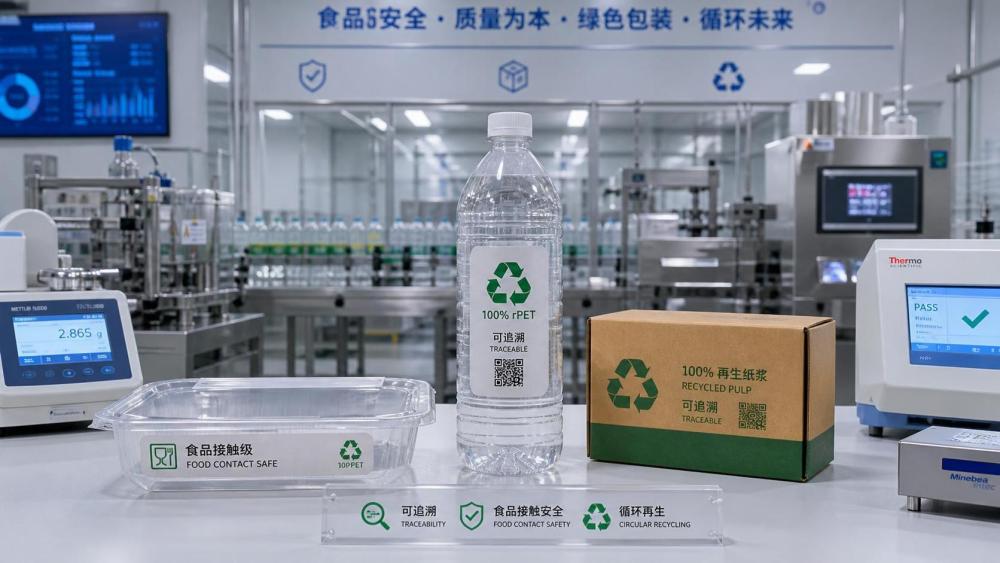
As sustainability targets reshape global food supply chains, businesses are asking a question that cannot be answered by recycled-content percentages alone: can recycled food packaging materials meet international safety standards? In many applications, the answer can be yes. But it depends on the material, the original collection stream, the recycling technology, the intended food contact conditions, and the rules in the destination market.
For food processors, seafood exporters, agricultural producers, packaging converters, importers, and retail buyers, the commercial pressure is clear. Brand owners increasingly want recycled content. Governments are tightening packaging and waste policies. Customers expect visible progress on circularity. Yet a package that performs well in a recycling claim may still be unsuitable for direct contact with food if contamination, chemical migration, or traceability has not been properly controlled.
The practical question is not whether recycled packaging is “safe” in the abstract. It is whether a specific recycled material, made through a defined process, is appropriate for a particular food and market. A bottle for ambient beverages, a tray for chilled meat, a carton for dry cereal, and a flexible pack for oily snacks do not create the same compliance challenge.
Recycled Content Does Not Automatically Mean Food-Contact Compliance
Virgin food-contact packaging starts with known raw materials and controlled manufacturing inputs. Recycled packaging starts with a more complicated history. Its feedstock may have passed through household waste systems, commercial collection channels, sorting facilities, washing operations, reprocessing lines, and multiple transport stages before it becomes a new package.
That history matters because post-consumer material can contain substances that were never intended for food contact. These may come from non-food packaging, inks, adhesives, cleaning products, labels, residues, or incorrect sorting. The risk is not simply visible dirt. It includes substances that may be difficult to detect without a controlled process and appropriate analytical evaluation.
This is why buyers should avoid treating a supplier statement such as “made with recycled material” as equivalent to a food-contact declaration. Recycled content is an environmental attribute. Food-contact suitability is a safety and regulatory determination. The two can coexist, but one does not prove the other.
In practice, regulators and customers tend to focus on whether the recycling process can remove contaminants to an acceptable level, whether the input stream is sufficiently controlled, and whether the final article meets applicable migration limits or other relevant legal requirements. Documentation must connect these points rather than presenting them as separate claims.
Why Material Type Changes the Risk Assessment
Not every recycled material faces the same route to food-contact use. Recycled polyethylene terephthalate, commonly called rPET, is widely used in beverage and food packaging because established recycling approaches can produce material suitable for certain food-contact applications when the process is appropriately assessed and controlled. However, a successful rPET route does not automatically validate recycled polyethylene, polypropylene, polystyrene, paper, aluminium, or multilayer structures.
For plastics, the polymer itself, previous use, sorting accuracy, washing intensity, decontamination conditions, and final conversion process all influence the result. A recycled plastic may be acceptable for direct food contact under defined conditions, suitable only behind a functional barrier, or more appropriate for non-food layers such as secondary transport packaging.
Recycled fibre-based packaging has a different set of concerns. Paper and board can carry mineral oil hydrocarbons, printing-ink components, adhesives, and other substances from recovered paper streams. The safety question may involve the recycled fibre source, the use of virgin fibre layers, barrier coatings, printing location, and the food type. Dry foods with long shelf lives may require a more careful assessment than products protected by an effective inner bag.
Metal and glass are often viewed as simpler circular materials, but the package design still matters. Coatings, lacquers, inks, closures, seals, and adhesives can all be food-contact components. A high recycling rate does not eliminate the need to evaluate the finished packaging system.
International Standards Are Not One Global Rulebook
There is no single international certificate that makes a recycled food package automatically compliant everywhere. Exporters need to work from the destination market backward. A package intended for the European Union, the United States, the United Kingdom, Japan, Gulf markets, or another importing region may face different legal frameworks, documentation expectations, and enforcement practices.
In the European Union, food-contact materials are generally governed by Framework Regulation (EC) No 1935/2004, which establishes the core principle that materials should not transfer constituents to food in quantities that could endanger health, cause unacceptable changes in food composition, or deteriorate sensory characteristics. For recycled plastic food-contact materials, Regulation (EU) 2022/1616 sets specific requirements for recycling technologies, processes, and related controls. Plastic food-contact materials may also require assessment under Regulation (EU) No 10/2011, depending on the material and application.
The United States takes a different regulatory approach. The U.S. Food and Drug Administration evaluates food-contact substances and has issued guidance relevant to the use of recycled plastics in food packaging. Companies may seek FDA review of a recycling process through a no-objection letter process, but the buyer still needs to confirm that the actual material, intended use, and conditions of use align with the supporting documentation. A general statement that a resin has previously been used in food packaging is not enough.
For international trade, this distinction is especially important. A packaging converter may operate a technically sound line and hold quality certifications, while the exported package still lacks evidence for the target market’s intended food contact conditions. Compliance should therefore be assessed at the level of the finished packaging application, not only at the level of the recycler or resin supplier.
Migration Testing Is Necessary, but It Is Not the Whole Story
Migration testing is often the document buyers ask for first, and it is important. It examines whether substances can move from packaging into food or food simulants under defined conditions. The relevant conditions may reflect contact time, storage temperature, heating, food acidity, fat content, alcohol content, or other properties that affect chemical transfer.
Still, a test report is only meaningful when its scope matches the real use case. A report prepared for short-term contact with dry food at room temperature may not support a package used for hot filling, microwave heating, retort processing, or long-term storage of fatty products. Likewise, a test on an unprinted sample may not address risks introduced by printing inks, coatings, lamination adhesives, or recycled-content layers in the final construction.
For recycled plastics, decontamination validation can be just as important as finished-product migration results. The key issue is whether the recycling operation can deal with foreseeable misuse of the collection stream and prevent contaminants from remaining at concerning levels. This is process-specific. Changing the input material, wash conditions, extrusion parameters, or approved operating range can change the compliance position.
The evidence package a serious buyer should request
A useful compliance file usually goes beyond a marketing specification. Depending on the material and destination, it may include a declaration of compliance or food-contact suitability, the recycled-content percentage and calculation basis, a clear description of the intended food use, relevant migration test reports, traceability information, and supporting evidence for the recycling process. Where a package uses multiple layers, buyers should understand which layer contains recycled content and whether it directly contacts food.
It is also reasonable to ask what happens when production changes. Is there a procedure for approving a new waste supplier, colourant, adhesive, barrier layer, or processing site? Are batches traceable? Can the supplier identify affected deliveries if an issue is found? These questions are less glamorous than a sustainability claim, but they are often what determine whether a packaging program can survive customer audits and border checks.
Food Type and Distribution Conditions Can Redefine Suitability
The same material can be suitable in one application and inappropriate in another. Dry grains, tea, biscuits, and powdered products may present a different migration profile from cooking oil, dairy products, sauces, fresh meat, or oily fish. High-fat foods can be particularly demanding because some substances migrate more readily into fatty media. Acidic foods, high-temperature filling, sterilisation, freezing, and extended storage also need to be considered.
Cold-chain supply chains add another layer of operational risk. Seafood, meat, and prepared foods may be packed under chilled or frozen conditions, but packaging can later experience temperature changes during loading, customs inspection, retail handling, or consumer use. A package designed only around the nominal storage temperature may overlook the full distribution journey.
For agricultural exporters, packaging decisions should be made alongside food safety, shelf-life, logistics, and market-access decisions. A recyclable tray that cracks in cold conditions, a recycled paper carton that loses strength in humid freight, or a barrier structure that cannot be supported with complete documentation can create a larger commercial problem than the original material choice was meant to solve.
Common Mistakes When Sourcing Recycled Food Packaging
- Assuming that a recycling certification proves food-contact compliance. Recycling, environmental management, and chain-of-custody certifications may be valuable, but they do not necessarily cover chemical safety for a specific food application.
- Accepting reports without checking the tested structure. A report may apply to a different thickness, colour, print system, food simulant, or temperature range.
- Treating “food grade” as a complete technical description. Buyers should ask what standard, jurisdiction, product construction, and conditions of use the statement refers to.
- Ignoring non-plastic components. Closures, inks, coatings, adhesives, and labels can affect the compliance of the complete package.
- Using one compliance file for every export market. Documentation may need to be reviewed when the destination, food category, or processing conditions change.
A More Practical Way to Make the Decision
The most reliable starting point is to define the product before selecting the recycled material. Specify the food category, contact side, shelf life, fill temperature, expected storage conditions, use of modified atmosphere or vacuum packing, transport route, and destination market. Only then can suppliers propose a recycled-content structure with evidence that is relevant rather than generic.
It is often sensible to separate the decision into two tracks. One track asks whether the package can meet food-contact and performance requirements. The other asks whether the recycled-content target is credible, measurable, and aligned with the company’s sustainability claim. If the two tracks are forced together too early, businesses may choose an ambitious percentage that cannot be supported in the desired format, colour, barrier level, or export market.
Where direct food contact remains difficult to justify, alternatives may include placing recycled content in non-contact layers, using a functional barrier where permitted and technically appropriate, redesigning the pack format, or prioritising recyclable mono-material construction while recycled-feedstock availability improves. None of these options is universally correct; the decision needs to reflect the food, the market, and the available evidence.
Why Market Intelligence Matters as Much as Material Selection
Packaging compliance does not sit apart from the wider agri-food economy. Recycled resin availability, collection quality, shipping costs, policy developments, customer specifications, and demand for certified packaging can all affect sourcing decisions. A food processor may find that a technically qualified recycled material has volatile supply or that a destination market is changing its documentation expectations. Procurement teams need visibility beyond a single quotation.
This is the kind of cross-sector context followed by AgriTrade through www.zsiron.com. Its coverage of food processing, packaging and printing, agricultural trade, fisheries, cold chain logistics, export developments, supply chains, and regulatory updates reflects how packaging choices are actually made: not in isolation, but alongside product safety, market timing, transport conditions, and buyer requirements.
Can recycled food packaging materials meet international safety standards? Yes, when the answer is supported by a controlled supply chain, a suitable recycling process, application-specific testing, and market-specific compliance documentation. The sensible next step is not to ask for the highest recycled-content claim available. It is to confirm whether the proposed package is appropriate for the exact food, processing conditions, destination, and evidence requirements of the trade transaction.
Related News
- 00
0000-00
Flexible Packaging Price Trends: What Drives Costs for Food Packaging Buyers? - 00
0000-00
What Is Driving Printing Market Demand Across Packaging and Commercial Print? - 00
0000-00
Packaging Market Trends: How Sustainability and Automation Reshape Supply Chains - 00
0000-00
Can Recycled Food Packaging Meet International Safety Standards? - 00
0000-00
How much does food packaging cost for a new product launch?
Packaging & Printing Editorial Team
Weekly Insights
Stay ahead with our curated technology reports delivered every Monday.