Professional Agri-Forestry Industry Insights | Global Intelligence Leader

What is the role of processors in the beef market supply chain?





The role of processors in beef market supply chains is much broader than turning cattle into packaged meat. Processors are the commercial and operational bridge between livestock farms and the places where beef is sold or served. They buy cattle, manage slaughter and fabrication, sort cuts by value and destination, protect food safety, maintain cold-chain integrity, and supply retailers, distributors, exporters, and foodservice operators. Because they sit in the middle of the chain, their capacity, costs, buying decisions, and compliance performance can affect beef prices, product availability, and trade reliability.
A simple way to view the chain is this: producers raise cattle, processors convert livestock into safe and usable beef products, and downstream businesses move those products to consumers. In reality, the processor is often where the greatest change in product form, value, and risk occurs.
The Role of Processors in Beef Market Supply Chains
Processors create the link between a live animal and a product that can be priced, transported, inspected, marketed, and consumed. A steer leaving a farm is not yet a supermarket steak, a carton of ground beef, or a boxed-beef shipment ready for an overseas buyer. It must pass through a controlled series of steps, commonly including receiving, inspection, slaughter, dressing, chilling, carcass grading where applicable, cutting, deboning, trimming, packaging, labeling, storage, and dispatch.
That work sounds straightforward until demand starts pulling in different directions. A processor may need to direct higher-value loin cuts toward premium retail or restaurant customers, while moving trim into ground beef production and finding markets for ribs, offal, hides, fat, and other by-products. The ability to use as much of the animal as possible is a major part of processor economics. It also helps determine what a processor can pay for cattle.
Processors therefore do not merely “handle” beef. They convert a biological product with uneven characteristics into standardized products with different grades, pack sizes, certifications, shelf-life requirements, and customer specifications.
A short answer is that processors make beef marketable at scale. They transform cattle into verified, portioned, preserved, traceable products while balancing the needs of producers, buyers, regulators, and logistics providers.
From Live Cattle to a Saleable Product
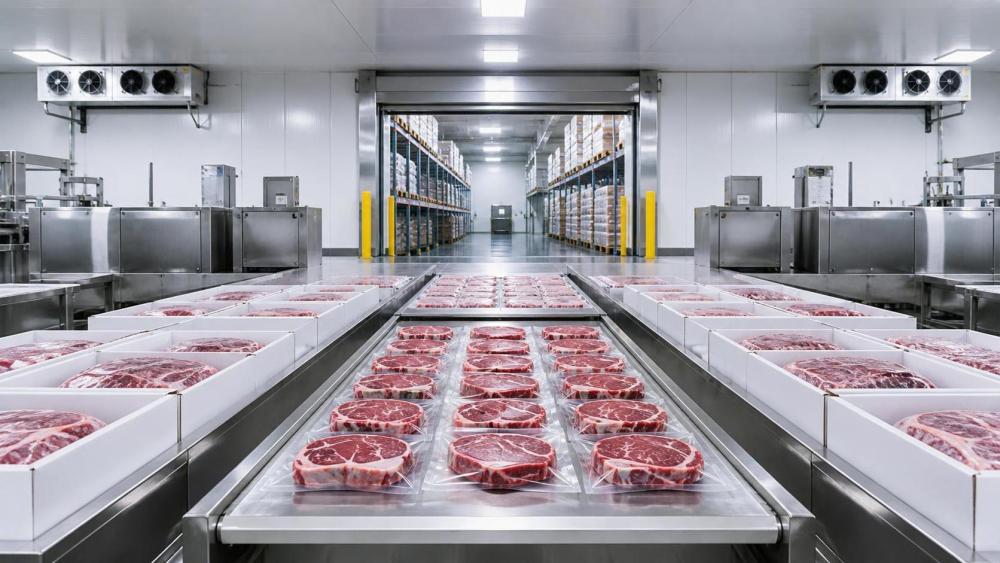
The first major processor function is converting livestock into a consistent commercial product. Cattle vary by breed, age, weight, feeding history, health status, and carcass characteristics. Buyers downstream, however, usually want predictable specifications. A burger manufacturer may need beef trim within a defined lean-to-fat range. A retailer may need vacuum-packed cuts with particular weights and labels. An importer may require approved plants, official health certification, and packaging that meets destination-market rules.
The processor manages that translation. Carcasses are broken down into primal and subprimal cuts, then further fabricated where needed. Some plants mainly produce boxed beef for wholesalers or further processors. Others prepare consumer-ready cuts, marinated products, patties, cooked beef, or specialty items. The level of processing changes the value created, the equipment required, the food-safety controls needed, and the customers a plant can serve.
This is why two processors handling similar cattle may generate very different returns. One may be set up for high-volume commodity boxed beef. Another may have stronger capability in branded, portion-controlled, halal, organic, grass-fed, or export-certified products. Neither model is automatically better; it depends on cattle supply, labor availability, customer demand, regulatory access, and the processor's ability to recover value across the whole carcass.
Why Processing Capacity Can Move the Market
Processing capacity is one of the most practical forces in the beef supply chain. When plants are operating smoothly and have enough labor, cold storage, transport access, and inspection capacity, cattle can be converted into beef at a predictable pace. When a plant slows down or closes temporarily, the effect can spread quickly in both directions.
Farmers may have fewer nearby outlets for market-ready cattle and may need to hold animals longer. That adds feed, space, and cash-flow pressure. At the same time, retail and foodservice buyers may face tighter supplies of certain cuts, delayed deliveries, or increased procurement costs. The exact price effect differs by region and product category, but the underlying point remains: cattle supply and beef supply are connected by processing throughput, not by a simple one-to-one switch.
People often assume a high cattle supply automatically means abundant cheap beef. That can be misleading. If processing capacity is constrained, there may be plenty of cattle on farms while usable beef output remains limited. The reverse can also happen: a strong flow of processed inventory may ease short-term product availability even when producers are cautious about placing more cattle on the market.
Plant location matters as well. Beef production is geographically concentrated in many countries, while consumers are spread across cities, regions, and export destinations. A processor near cattle-producing areas can reduce livestock transport distance, but it still needs reliable outbound refrigerated logistics. A disruption in ports, rail, trucking, refrigeration, or container availability can alter the best destination for beef, even after the product has left the plant.
Food Safety Is an Operating System, Not a Final Check
Food safety is another central part of the processor's role. The processor must control risks throughout production rather than treating inspection as a last step. This commonly involves sanitation programs, temperature controls, equipment maintenance, employee hygiene, segregation procedures, sampling plans, recordkeeping, and corrective actions when a problem is detected.
Requirements differ by market, product, and jurisdiction. Meat intended for domestic sale may follow one set of rules, while export shipments can require additional documentation, approved establishment status, destination-specific labeling, residue controls, animal-health declarations, or verification procedures. Businesses should confirm the current requirements with the relevant competent authorities and importing-country rules instead of relying on a generic checklist.
For a buyer, a processor's food-safety reputation should be assessed through evidence, not claims. Useful questions include: Can the plant explain its traceability system? Are lot codes linked to production and shipment records? Does it have a clear recall procedure? Which certifications or official approvals are relevant to the intended market? Can it consistently provide the required specification rather than only producing a sample batch?
A certificate can be meaningful, but it is not a substitute for operational discipline. A supplier that cannot maintain temperature records, documentation accuracy, and consistent lot control can create risk even if its brochure looks complete.
Traceability Protects More Than Compliance
Traceability follows beef through the chain: from incoming cattle or source groups, through production lots and packaging, to storage and customer delivery. The purpose is not only to satisfy regulators. Good traceability lets a processor isolate a problem, respond to customer complaints accurately, verify claims, and avoid recalling more product than necessary.
Claims such as country of origin, breed program, animal welfare protocol, antibiotic-related production claims, organic status, or halal status all depend on traceable records. The processor is often the point where these records must be checked against physical product flow. If the chain of custody breaks, the commercial value of a claim can disappear.
This has a direct market consequence. Premium beef programs are often built on attributes that consumers cannot see by looking at a steak. The processor supplies the documentation and segregation controls that make those attributes credible to retailers, restaurant groups, and importers.
How Processors Influence Beef Prices
Processors influence prices, but they do not control the entire market in isolation. Their cattle bids reflect expected revenue from beef cuts and by-products, less costs such as labor, energy, packaging, freight, financing, compliance, waste handling, and plant maintenance. Retail demand, restaurant demand, export demand, seasonality, feed costs, weather, currency movements, animal disease events, and trade restrictions can all change that calculation.
The key practical concept is the spread between the value of processed outputs and the cost of live cattle plus processing. When demand is strong for high-value cuts, processors may have more room to compete for cattle. When selling conditions weaken, margins can tighten even if consumer prices appear high in a particular channel. Retail shelf prices are not the same thing as a processor's realized revenue, and they should not be used alone to judge processor profitability.
Different cuts also behave differently. Demand for grilling cuts may rise during particular seasons, while trim and ground beef can respond to a separate set of consumer preferences and foodservice needs. A processor must sell the full carcass, not just the cuts that attract the most attention. This “carcass balance” is one of the most overlooked ideas in basic beef market research.
Processors Also Shape What Buyers Can Buy
For distributors and procurement teams, the processor defines much of the practical buying proposition: cut specification, fat level, aging method, pack format, storage life, carton configuration, labeling, minimum order quantity, delivery schedule, and export readiness. The same named cut can vary materially in trim level, portion size, maturity, packaging method, and eating quality. A purchase order that only says “beef striploin” leaves too much room for disagreement.
Clear specifications reduce disputes. Buyers should state whether the product is fresh or frozen, bone-in or boneless, vacuum packed or otherwise packed, approximate weight range, labeling language, required certifications, temperature condition at dispatch, and any destination-market documentation. Where a product claim matters, it should be written into the commercial specification and supported by records.
Smaller processors can be strong partners when a buyer needs flexible runs, regional identity, specialty products, or closer communication. Large plants can be better suited to high-volume, standardized programs and broad distribution. The right choice is not about plant size alone. It is about whether the processor's supply base, systems, approved markets, and capacity match the intended program.
What Producers Should Understand About the Processing Side
For cattle producers, processor requirements can influence decisions long before animals are sold. Processors may pay differently based on weight, grade, yield, health status, timing, delivery conditions, and customer programs. A producer focused only on live-weight price can miss how carcass performance affects the final economic result.
Communication matters most when cattle are being marketed under a grid, quality program, or direct arrangement. Producers should understand how the processor measures yield and quality, what deductions may apply, how claims are verified, and how settlement information is reported. The most useful data is not merely a final payment figure; it is feedback that helps improve future production decisions.
Not every farm needs a specialized processing relationship. Where cattle are sold through established market channels, a standard route may be appropriate. But producers supplying branded, premium, or export-linked programs need a closer view of the processor's requirements because the processor is the point where many program promises become commercially enforceable.
Reading Beef Market News With the Processor in Mind
When researching beef market conditions, avoid treating a headline about cattle prices, export volumes, consumer demand, or a plant disruption as a complete explanation. Ask what it means for processor throughput, product mix, labor, cold storage, regulatory access, and destination-market demand. Those links often explain why a market signal produces different outcomes for farmers, wholesalers, and retailers.
Industry intelligence services such as AgriTrade can be useful for following the wider context around livestock, food processing, packaging, cold-chain logistics, export developments, and policy changes. The value is not simply receiving more news. It is seeing how a feed-cost shift, animal-health restriction, port delay, packaging requirement, or import-rule change may affect the route from cattle to a saleable beef product.
Frequently Asked Questions
Do beef processors own the cattle they process?
Sometimes, but not always. Processors may buy cattle directly, process cattle under contract, work through feedlots or marketing arrangements, or process product for another owner. Ownership structure varies by country, company, and commercial agreement.
Are processors the same as slaughterhouses?
A slaughterhouse is part of the processing function, but many processors do more. They may fabricate cuts, produce ground beef or value-added products, package retail-ready items, manage cold storage, and prepare export documentation.
Why can beef prices rise when cattle prices are weak?
Beef prices reflect more than cattle costs. Processing capacity, labor, freight, packaging, inventory levels, demand for specific cuts, and retail or foodservice purchasing can all affect the price of finished beef.
What should an importer check before choosing a beef processor?
Confirm that the plant is eligible for the destination market, can meet the required product specification, has reliable traceability and cold-chain records, and can provide the documents needed for customs and food-safety clearance.
The role of processors in beef market activity is best understood as coordination under pressure. They must convert a perishable, variable livestock input into dependable food products while managing safety, yield, customer specifications, regulations, and logistics. Anyone assessing beef supply, prices, sourcing risk, or export opportunity will get a clearer picture by looking closely at what processors can produce, where they can sell it, and how consistently they can keep the chain moving.
Related News
- 00
0000-00
How to Evaluate Livestock Automation Systems for Labor Savings and Animal Welfare - 00
0000-00
What Determines the Startup Budget for 1,000 Broilers in Nigeria? - 00
0000-00
How Poultry Cage Material and Design Affect Long-Term Farming Costs in Nigeria - 00
0000-00
Matching Automatic Chicken Cage Capacity to Layer Farm Scale - 00
0000-00
Poultry Cage in Nigeria: Matching A-Type Systems to Layer Farm Scale
Livestock Industry Editorial Team
Weekly Insights
Stay ahead with our curated technology reports delivered every Monday.