Professional Agri-Forestry Industry Insights | Global Intelligence Leader

What Is a Husbandry System? Housing, Feeding, and Grazing Explained





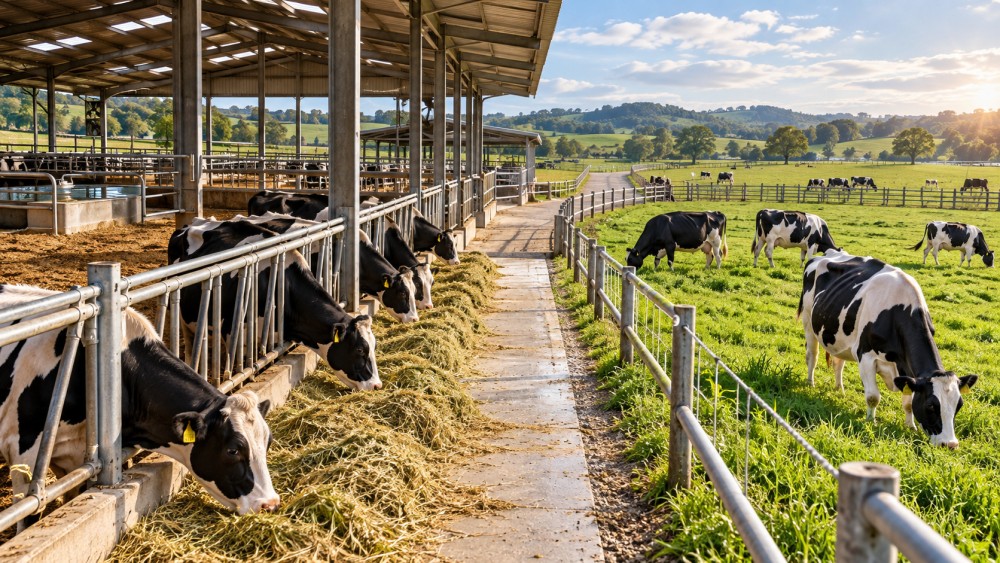
A husbandry system is the way a farm organizes livestock housing, feeding, grazing, breeding, and daily care. It describes how animals live and how their needs are met throughout the production cycle. A pasture-based beef herd, an indoor poultry flock, and dairy cows that graze in summer but spend winter in housing all operate under different husbandry systems.
The main differences concern where animals obtain feed, how much control farmers have over their environment, and what resources keep the system working. No single approach suits every farm. The practical question is whether the arrangement matches the animals, local climate, available land, labor, and production goals.
What does a husbandry system include?
Housing, feeding, and grazing are closely connected. A change in one usually affects the others. Keeping cattle indoors for longer increases the need for stored forage, bedding, and manure handling. Extending grazing may reduce some of those requirements while increasing the importance of fencing, water access, and pasture management.
A complete livestock husbandry system also covers several less visible tasks:
- Health management: observing animals, preventing disease, managing parasites, and arranging treatment.
- Breeding and youngstock care: managing reproduction, births, weaning, and the needs of growing animals.
- Animal handling: moving, inspecting, weighing, and separating animals safely.
- Waste and nutrient management: handling manure, protecting water, and returning nutrients to suitable land.
- Records: tracking feed use, health problems, reproduction, growth, and production.
These elements explain why a husbandry system means more than a building type or feeding method. A well-designed barn cannot compensate for unreliable water, and productive pasture cannot replace regular animal observation.
How pasture-based, housed, and mixed systems differ
Livestock systems are often described as extensive, intensive, or semi-intensive. These terms usually indicate the level of inputs and production relative to land or facilities. They do not map perfectly onto outdoor and indoor management: a grazing dairy farm, for example, can use intensive pasture management and substantial supplementary feeding.
These are broad categories. A farm may use different arrangements for breeding animals, youngstock, and finishing stock. Describing when animals graze, what they eat, and where they rest is often more useful than relying on a single label.
Pasture-based systems depend on more than available acreage
Grazing animals harvest their own forage and deposit much of their manure directly on the land. This can reduce some feed handling and manure collection work. However, usable feed depends on pasture quality, growth, terrain, and access—not simply field size.
A large area of mature, low-quality forage may not meet the needs of lactating or rapidly growing animals. Drought, cold weather, or prolonged wet conditions can also interrupt supply. Farms need a way to respond, such as conserved forage, supplementary feed, reserve grazing, or adjustments to animal numbers.
Housed systems provide control but require dependable daily inputs
Housing makes it easier to offer measured rations, group animals by nutritional needs, and protect them from some weather conditions. It can also support close observation around birth, illness, or demanding production stages.
That control carries responsibilities. Feed and water must reach animals consistently, air quality must remain suitable, and bedding or flooring must support comfortable resting. Where essential equipment depends on electricity, backup arrangements become part of daily risk management. Animals concentrated in one place also produce manure that must be collected, stored, and used appropriately.
Mixed systems work when transitions are planned
Seasonal housing is common where pasture cannot support animals throughout the year. Other farms provide outdoor access while supplying most feed indoors. These arrangements offer flexibility, but maintaining both pasture infrastructure and housing creates costs.
Transitions deserve attention. Moving animals from stored feed to fresh grass changes their diet; bringing them indoors changes movement, grouping, and exposure to other animals. Gradual dietary adjustments and observation help manage these changes.
Housing should protect animals without creating new problems
The purpose of livestock housing is to provide a suitable environment for resting, feeding, movement, and care. The design must reflect the species and life stage. Newborn animals, adult cattle, pigs, and poultry have different needs for temperature, space, flooring, and social contact.
Ventilation and dryness matter alongside shelter. Closing a building tightly against cold weather can allow moisture, dust, and gases to accumulate. Effective ventilation removes stale air while avoiding harmful drafts at animal level, particularly around vulnerable youngstock.
Flooring needs similar care. Slippery surfaces discourage movement and increase injury risk. Persistently wet resting areas can contribute to skin, foot, and hygiene problems. Bedding demand therefore depends partly on drainage, animal density, and how often resting areas are maintained.
Outdoor systems also require shelter planning. Depending on climate and species, animals may need shade, wind protection, or a dry resting area. Feed, water, and gateways should be positioned carefully because repeated traffic can turn these locations into muddy, damaged ground.
Feeding starts with animal requirements, not the system label
A feeding plan must supply sufficient energy, protein, fiber where appropriate, minerals, vitamins, and clean water. Requirements change with body size, growth, pregnancy, lactation, activity, and weather. Animals sharing a field or building may therefore need different diets or feeding arrangements.
For ruminants such as cattle and sheep, forage quality strongly influences intake and performance. Hay, silage, and pasture can vary considerably. Assessing stored forage helps farmers decide whether supplementation is needed and avoids treating every batch as nutritionally equivalent.
Pigs and poultry require diets suited to their digestive systems and production stages. Outdoor access provides opportunities for movement and foraging, but it does not automatically provide balanced nutrition. A free-range flock still needs a dependable feeding program.
Access is as important as feed formulation. If feeding space is limited, dominant animals may prevent others from eating enough. A similar problem occurs when water points are difficult to reach, dirty, or unable to supply demand. Reduced intake may reflect access problems rather than the ration itself.
Purchased feed also connects husbandry decisions to supply-chain conditions. A system heavily dependent on delivered ingredients is exposed to price changes and delivery interruptions. Storage capacity, alternative ingredients, and suitable reformulation options influence how well it can absorb disruption.
Grazing management balances today’s intake with future growth
Grazing management controls when animals enter an area, how much forage they remove, and how long plants recover before grazing again. The aim is to feed livestock while maintaining productive vegetation and protecting soil.
Continuous grazing generally gives animals access to the same area for an extended period. It can require less subdivision, but animals may repeatedly graze preferred patches while leaving others underused. Stocking decisions and field observation remain necessary.
Rotational grazing moves animals between grazing areas, allowing previously grazed plants time to recover. Its success depends on adjusting movement to actual growth and ground conditions. A fixed calendar can fail when drought slows recovery or rapid growth produces surplus forage.
Two terms help explain the difference between land capacity and short-term grazing pressure. Stocking rate relates animal numbers to an area over a period. Stocking density describes how concentrated animals are in the area occupied at a particular time. Moving a group frequently does not solve a seasonal shortage if total feed demand still exceeds supply.
Wet ground creates another limit. Even where grass is available, grazing may damage soil and vegetation through trampling. Temporary removal can protect the pasture, provided the alternative area has suitable drainage, feed, water, and manure management. Parasite control also needs a specific plan; rotation alone does not reliably prevent infection.
Welfare and environmental performance depend on management
Outdoor access gives animals opportunities to graze, explore, and perform other natural behaviors. It can also expose them to heat, cold, parasites, predators, or unreliable feed. Indoor housing can provide protection and close supervision, while poor design or excessive crowding can restrict movement and increase health problems.
Assess welfare through observable outcomes: body condition, injuries, lameness, cleanliness, resting behavior, disease patterns, and access to resources. The system’s name offers less information than how animals are coping within it.
Environmental comparisons require similar care. Grazing returns nutrients directly to fields, but manure can accumulate around shade and water points. Housed systems allow manure collection and planned application, while creating storage and runoff management responsibilities. Feed production, soil conditions, nutrient losses, and animal productivity all influence the overall result.
How to assess whether a system fits a farm
Start with the animals’ needs and the farm’s limiting resource. That constraint might be winter forage, summer water, suitable land, labor during births, housing capacity, or access to affordable feed. A system that ignores its main constraint will remain vulnerable even if other parts work well.
- Match animals to conditions. Consider species, breed characteristics, life stage, climate, and production goals.
- Build a seasonal feed picture. Identify when pasture, stored forage, and purchased feed will meet demand and where gaps could occur.
- Check infrastructure and labor together. Assess water, fencing, handling facilities, shelter, manure storage, maintenance, and daily workload.
- Compare whole-system costs. Include feed, buildings, equipment, bedding, energy, labor, land, and losses associated with poor health or performance.
- Test difficult periods. Consider how the arrangement would cope with drought, prolonged rain, feed delivery delays, equipment failure, or staff shortages.
For example, a grazing system with inexpensive forage may still struggle if animals must walk long distances to water or handling facilities. An indoor system with precise feeding may become costly if ventilation, bedding, and manure storage were underestimated.
Before changing an existing arrangement, define the problem clearly: inadequate growth, recurring foot problems, seasonal feed shortages, or excessive labor. Then identify which part of daily management causes it. That gives the decision a practical starting point and helps establish whether a targeted improvement or a broader system change is needed.
Got questions about this industry topic or seeking best practices for your business? Drop us a line below, and let the expert team at AgriTrade help you out.
We respect your privacy. Your information is strictly confidential.
Related News
- 00
0000-00
US Cattle Herd Falls to 75-Year Low as Beef Prices Rise - 00
0000-00
Chicken House Size in Meters: Planning for 1,000 Caged Layers - 00
0000-00
Livestock Breeding Technology: How AI and Genomic Selection Work - 00
0000-00
What Is a Husbandry System? Housing, Feeding, and Grazing Explained - 00
0000-00
Feed Storage Loss Reduction: Controlling Moisture, Mold, and Pests
0000-00
Livestock Industry Editorial Team
Weekly Insights
Stay ahead with our curated technology reports delivered every Monday.