Professional Agri-Forestry Industry Insights | Global Intelligence Leader

What Drives Poultry Farming Equipment Prices Beyond the Initial Quote?





An equipment quotation can look comparable on paper while representing a very different operating system. Two offers for feeders, drinkers, ventilation, cages, or egg-handling equipment may have similar headline totals, yet differ sharply in material grade, automation scope, installation responsibility, spare-parts coverage, electrical requirements, and expected maintenance burden. For a business evaluator, the initial quote is only the starting point of the cost review.
The central question is not simply whether one package is cheaper. It is whether the quoted configuration can support the intended flock size, housing conditions, labor model, biosecurity routine, and production schedule without creating avoidable costs after installation. A low purchase price may be appropriate for a small, manually managed house. The same package can become costly when used in a larger operation that requires reliable environmental control, consistent feed delivery, and rapid cleaning between flocks.
A quotation is a configuration snapshot, not a full ownership cost
Equipment suppliers commonly quote a defined list of components: feed lines, pan feeders, nipple drinkers, water pressure regulators, fans, cooling pads, heating units, control panels, manure belts, cages, conveyors, or egg collection systems. What is less obvious is the boundary around that list. One quote may include a control cabinet but not field wiring. Another may include equipment delivery but exclude unloading, erection, commissioning, or operator training.
Before comparing offers, evaluators should convert each quotation into a common scope document. The exercise often exposes differences that are hidden by broad labels such as “automatic feeding system” or “complete poultry house equipment.” A complete review should identify:
- the number of birds, rows, tiers, houses, or production zones covered by the design;
- the stated capacity of each feed, water, ventilation, manure, and egg-handling component;
- included motors, sensors, controllers, pumps, valves, winches, cables, and connection hardware;
- materials used in wet, dusty, corrosive, or manure-exposed areas;
- civil works, structural supports, utility connections, and on-site labor that remain outside the supply scope;
- commissioning, testing, documentation, spare parts, warranty terms, and service response arrangements.
This approach prevents an inaccurate comparison between a bare equipment supply price and a more complete installed-system proposal. It also makes it easier to assign internal ownership for costs that sit between procurement, construction, farm operations, and maintenance teams.
Material choices and environmental exposure change the real price
Poultry buildings are demanding environments. Moisture, washdown procedures, airborne dust, feed particles, ammonia exposure, manure handling, and temperature variation can affect equipment differently depending on its location and duty cycle. A component that performs adequately in a dry service corridor may deteriorate more quickly near drinker lines, manure belts, cooling systems, or pit areas.
Material specification therefore matters more than the appearance of a finished system. Galvanized steel, coated steel, stainless steel, plastics, rubber seals, bearings, and electrical enclosures are selected for different operating conditions. The relevant question is not whether a more expensive material is always better; it is whether the material matches the part’s exposure and the farm’s cleaning routine.
For example, a buyer may accept a lower-cost structural finish in a protected area while specifying stronger corrosion resistance for wet zones, wash points, or components difficult to replace after installation. The same reasoning applies to fasteners, hinges, cable trays, motor housings, and sensor connections. Replacing a small failed component can require disproportionate labor if it is located inside a crowded cage system or above an occupied production line.
Capacity is more than a bird-count calculation
Equipment capacity is frequently presented as a simple output figure: feed conveyed per hour, fan airflow, water flow, eggs transferred per hour, or manure removed per cycle. That number has limited value without its operating context. Actual performance depends on line length, elevation changes, feed type, house layout, voltage stability, motor duty cycle, ambient conditions, and whether the system must operate during peak periods rather than average periods.
Oversizing every component can inflate capital expenditure without producing a practical benefit. Undersizing, however, can create bottlenecks that disrupt daily routines. Feed distribution delays may affect flock uniformity. Inadequate ventilation capacity or poorly placed air inlets can make conditions difficult to manage. A manure-removal system that cannot keep pace with the farm’s cleaning schedule may create extra labor and downtime.
Business evaluators should ask suppliers to state the design basis used for capacity calculations. The document should clarify whether the system was sized for the planned house dimensions, maximum occupancy, local climate assumptions, and intended operating schedule. A number without those assumptions is difficult to compare responsibly.
Automation adds value only when the operating model can support it
Automation can reduce repetitive manual work, improve timing consistency, and give managers better visibility of alarms or operating conditions. Yet automated equipment also introduces motors, controls, sensors, software settings, wiring, and maintenance requirements. The price difference between semi-automatic and highly automated systems is not only the cost of machinery; it reflects the level of operational dependency created by the design.
A farm with trained technicians, dependable power, planned preventive maintenance, and rapid access to replacement parts may justify a more integrated system. A location with variable power supply, limited technical support, or a small workforce that prefers direct manual oversight may need a simpler architecture, backup arrangements, or modular controls that can be isolated when faults occur.
Installation and utility work often sit outside the equipment total
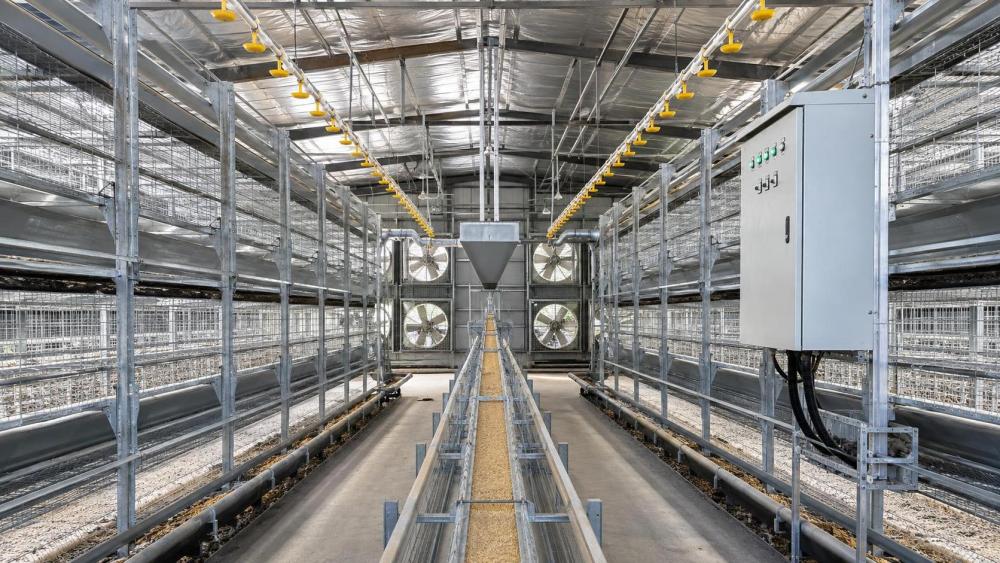
Many budget overruns occur after purchase approval, when the project team begins matching the supplied equipment to the physical building. Poultry systems depend on interfaces: foundations and supports must align with equipment loads; water pressure and filtration must suit drinker requirements; electrical circuits must support motors and controls; ventilation equipment must work with the building envelope; and drainage or manure routes must accommodate cleaning practices.
The following cost areas should be reviewed separately from the equipment list:
These items should not automatically be treated as supplier shortcomings. Project boundaries vary, and some buyers prefer to manage local construction and utilities themselves. The risk arises when responsibilities are not defined until the equipment reaches the site.
Operating costs can reverse the apparent savings
Capital price attracts attention because it is visible and immediate. Operating costs accumulate gradually through energy use, water losses, feed spillage, cleaning time, replacement parts, and unplanned labor. A cost review should consider how equipment design changes those recurring demands.
For feeders, practical considerations include feed bridging, pan adjustment, line accessibility, and the likelihood of spillage during operation. For drinker systems, pressure regulation, leak detection, flushing access, and maintenance of nipples or cups can affect both water use and litter conditions. For ventilation, fan selection, inlet design, controller settings, cleaning access, and belt or motor maintenance can influence electricity demand and reliability. In egg-handling systems, transfer points, belt alignment, gentle movement, and cleanability may affect breakage risk and labor needs.
A useful review of poultry farming equipment prices should therefore compare the operating assumptions behind each package, rather than treating the purchase total as the only economic measure. The key is to identify which cost drivers are credible for the proposed operating conditions and which remain uncertain until installation or early production.
Decision-makers do not need a false level of precision to make this assessment. Where site-specific utility tariffs, labor rates, flock performance assumptions, or maintenance records are unavailable, it is more useful to model ranges. A base case may reflect normal operation, while a stress case can allow for higher energy consumption, more frequent component replacement, or longer service interruptions. This makes uncertainty visible before it becomes a budget problem.
Supply-chain and service terms carry an economic value
Equipment pricing also reflects manufacturing lead time, inventory practices, shipment consolidation, quality-control processes, and the availability of technical support. A lower purchase price may be less attractive if a farm must wait for a critical replacement part during production. Conversely, paying for an extensive spare-parts package may not be sensible if the system uses readily available standard components and the farm has reliable local support.
Evaluators can reduce this uncertainty by separating critical spares from routine consumables. Critical spares are components whose failure could stop feeding, watering, ventilation, manure removal, or egg collection for a significant area of the house. Routine items are those replaced as part of planned upkeep. The procurement file should identify likely failure points, recommended stock levels, part numbers, expected replacement procedures, and whether substitutes are acceptable.
Warranty language also needs close reading. The value of a warranty depends on what constitutes a defect, which components are covered, how claims are documented, who pays transport or labor costs, and whether operational wear is excluded. A broad warranty period can provide little protection if the remedy process is unclear or if field labor is outside the agreement.
Commissioning and acceptance should test the system, not just its presence
Equipment acceptance is often reduced to checking whether all delivered items match the packing list. That is necessary, but it does not confirm that the system operates as intended. A stronger handover process verifies installation quality, operation under normal load, safety guarding where applicable, control logic, alarm function, water pressure behavior, feed-line movement, ventilation response, and accessibility for routine cleaning and maintenance.
The acceptance checklist should be tied to the original technical specification. If a buyer did not define performance expectations before ordering, disagreements after installation become harder to resolve. Clear acceptance criteria are particularly useful when multiple contractors are involved, because failures at the interface between building, utilities, and equipment can otherwise be assigned to the wrong party.
Documentation should include layout drawings, electrical diagrams, operating instructions, maintenance schedules, spare-parts lists, and records of adjustments made during commissioning. These documents support future troubleshooting and prevent the farm from depending solely on the memories of the installation team.
Common comparison errors in equipment procurement
One recurring error is comparing price per bird without checking what that measure includes. It may exclude structural work, environmental controls, installation, or the level of automation required for the planned house. Another is treating a generic equipment list as a final engineering design. Dimensions, tier count, aisle width, service access, building columns, drainage routes, and utility locations can all alter the final configuration.
Buyers also sometimes focus on a single visible component while overlooking system interactions. A high-quality feeder does not resolve an inadequate feed storage or conveying arrangement. A well-specified controller cannot compensate for poorly positioned sensors or an unsuitable ventilation layout. The most workable package is usually the one with fewer unresolved interfaces, not necessarily the one with the highest specification in every category.
The disciplined approach is to compare scope, design assumptions, installed cost, recurring operating demands, service exposure, and acceptance criteria in one decision record. The initial quote still matters, but it should be read as one part of a larger operating commitment. When that commitment is understood before purchase, equipment decisions are more likely to match the farm’s practical needs and financial limits.
Related News
- 00
0000-00
What Determines the Startup Budget for 1,000 Broilers in Nigeria? - 00
0000-00
How Poultry Cage Material and Design Affect Long-Term Farming Costs in Nigeria - 00
0000-00
Matching Automatic Chicken Cage Capacity to Layer Farm Scale - 00
0000-00
Poultry Cage in Nigeria: Matching A-Type Systems to Layer Farm Scale - 00
0000-00
What Drives Poultry Farming Equipment Prices Beyond the Initial Quote?
Livestock Industry Editorial Team
Weekly Insights
Stay ahead with our curated technology reports delivered every Monday.