Professional Agri-Forestry Industry Insights | Global Intelligence Leader

Is Sourcing Livestock Products From Disease-Outbreak Regions Too Risky?





Is it risky to source livestock products from regions with disease outbreaks? For global buyers, importers, processors, and food supply chain managers, the honest answer is: sometimes—but the presence of an outbreak alone does not determine whether trade is unsafe or commercially impossible.
A disease event can trigger understandable concern. News of avian influenza, African swine fever, foot-and-mouth disease, or another animal health emergency often leads buyers to pause purchase orders, question supplier reliability, or seek replacement origins immediately. Yet risk is rarely as simple as “outbreak region equals unacceptable product.” The real assessment depends on where the outbreak occurred, which animals and products are affected, how authorities responded, whether processing eliminates the hazard, and whether the supplier can document every step from origin to shipment.
For businesses that need dependable volumes of meat, poultry, dairy ingredients, hides, rendered products, feed materials, or other livestock-related goods, a rushed decision can create a second problem: unnecessary supply disruption. The better approach is neither blind acceptance nor blanket avoidance. It is disciplined, evidence-based sourcing.
The outbreak headline is only the starting point
Animal disease reports can sound broad because they are often communicated at country or regional level. In practice, the commercial implications may be much narrower. A confirmed outbreak on one farm, in one municipality, or within a defined surveillance zone may not affect products from an unrelated production area. Conversely, a disease spreading across multiple provinces, combined with weak reporting and uncontrolled animal movement, can create a much higher level of concern.
Buyers should begin by asking four practical questions:
- What disease has been reported, and how is it transmitted?
- Which animal species, products, and production stages are involved?
- Is the outbreak geographically contained or expanding?
- What restrictions have veterinary authorities and importing countries imposed?
These questions matter because the risk profile of live animals is very different from the risk profile of heat-treated, canned, rendered, frozen, or fully processed products. A disease may severely restrict live animal trade while allowing certain processed goods to move under approved conditions. Buyers who treat all livestock products as one category can miss both genuine dangers and viable sourcing options.
Disease risk has three dimensions: animal health, food safety, and trade continuity
Procurement teams often focus first on food safety, and rightly so. However, livestock disease outbreaks can affect a business even when the final product itself is not considered a direct food safety threat. The commercial consequences may arise through border controls, reduced slaughter capacity, transport delays, labor shortages, culling programs, changing export certificates, or a sudden loss of market confidence.
Animal health risk concerns whether a pathogen could spread through animals, animal-derived materials, equipment, transport systems, or improperly handled products. This is especially important for businesses sourcing breeding stock, live animals, genetic material, raw hides, untreated by-products, or feed ingredients with animal-origin components.
Food safety risk concerns whether the product could pose a hazard to consumers when handled and consumed as intended. The relevant controls may include slaughter inspection, hygiene practices, temperature management, processing treatment, residue testing, packaging integrity, and microbiological verification.
Trade continuity risk is the operational reality behind many sourcing decisions. A supplier may produce compliant goods, but a shipment can still be delayed if an importing authority changes its rules, a veterinary certificate is no longer accepted, or a port requires additional inspections. For a processor running on tight inventory, even a short interruption can be costly.
A balanced decision must consider all three. A product may be safe to consume but difficult to import. It may be legally exportable but commercially unreliable because the producer’s region is subject to rapidly changing controls. Or it may come from a well-managed zone where risk remains manageable with the right documentation.
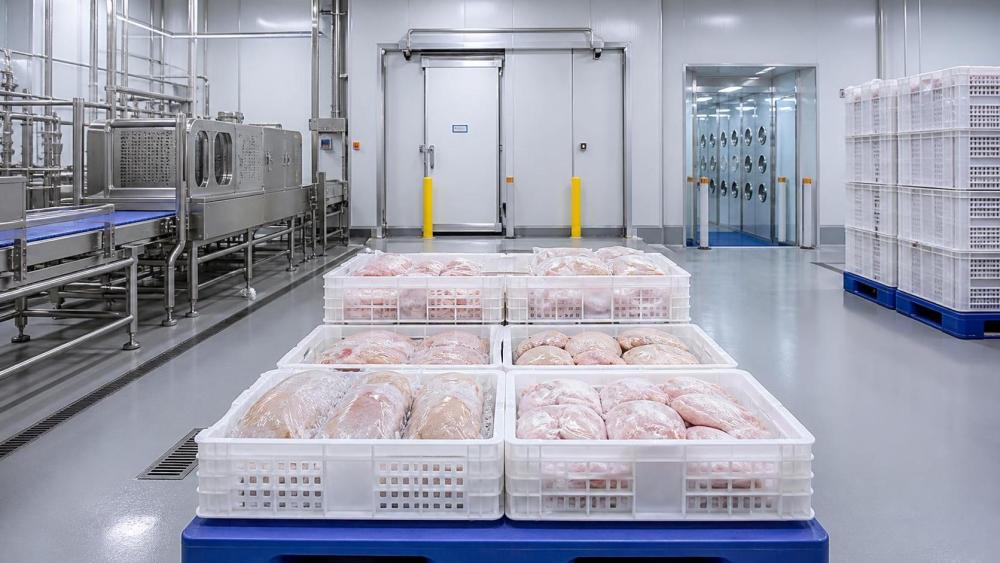
Regionalization can make a major difference
One of the most important concepts in livestock trade is regionalization, sometimes called zoning. Under this approach, animal health authorities distinguish between affected areas and disease-free areas within the same country, provided that surveillance, movement controls, and traceability systems are robust enough to support that distinction.
For buyers, this means a country should not automatically be judged as a single, uniform risk area. A supplier located outside a controlled zone may remain eligible to export, especially where products are sourced from registered farms, transported through approved channels, and processed in facilities operating under veterinary supervision.
Compartmentalization is another useful concept, particularly in integrated poultry or pork systems. Rather than defining safety only by geography, a compartment is defined by common biosecurity and management practices. A company may operate closed production systems with controlled feed, staff entry rules, farm records, testing programs, and dedicated logistics. Where recognized by authorities, such systems can provide buyers with a more precise basis for evaluating risk.
Still, regionalization is not a reason to lower standards. It only works when the boundaries are credible. If disease reporting is unclear, animal movement is difficult to control, or the supplier cannot prove the origin of raw materials, a claimed disease-free zone offers limited reassurance.
What responsible buyers should verify before placing an order
During an outbreak, a standard supplier questionnaire is rarely enough. The buyer needs a targeted review that connects the disease event with the actual product, facility, shipment route, and destination-market rules.
1. Confirm official status rather than relying on informal updates
Ask for the relevant veterinary authority notices, export eligibility statements, and current import requirements for the destination market. Information should be checked against official government sources and, where applicable, the importing country’s border inspection or agriculture authority. A supplier’s reassurance may be sincere, but it does not replace a valid certificate or a legally permitted trade route.
2. Trace the product back to its source
Traceability is the dividing line between a manageable sourcing decision and a gamble. Buyers should be able to identify the farm or approved sourcing area, slaughterhouse or processing site, production date, batch number, storage history, and export documentation linked to the shipment.
For mixed-origin products, the review should go further. If a processor combines raw materials from multiple farms or regions, can it demonstrate segregation? If its cold store handles goods from restricted zones, are there clear controls to prevent mix-ups? A polished export catalog says little if batch-level records are incomplete.
3. Review the processing pathway
Not all livestock products carry the same risk after processing. Certain treatments—such as validated heat processing, rendering, curing, pasteurization, or other approved methods—may significantly reduce or eliminate relevant hazards, depending on the disease and product category. The key word is validated. Buyers should request process descriptions, critical control records, and evidence that the method meets destination-market requirements.
Frozen storage, by itself, should not be treated as a universal control. Freezing can preserve product quality and support cold-chain distribution, but it does not automatically neutralize every animal-health concern. The disease, material, and applicable regulations must guide the assessment.
4. Check biosecurity and facility discipline
During a disease event, a supplier’s operational habits become more revealing than its marketing language. Look for practical controls: restricted visitor access, vehicle disinfection, employee hygiene procedures, separation of clean and dirty zones, pest management, farm testing, mortality reporting, cleaning records, and protocols for handling suspected cases.
For processors, evaluate intake controls as well. Do they accept animals or raw materials only from approved sources? How do they manage rejected loads? Are transport vehicles cleaned between collections? Can the plant keep products from different origins physically and digitally separated?
5. Test the resilience of logistics and documentation
A disease outbreak can alter the export process overnight. Buyers should confirm whether veterinary certificates remain available, whether transit countries have additional restrictions, and whether shipping lines, warehouses, or ports have changed their handling rules. It is wise to ask the supplier what happens if a new control zone is declared after production but before departure.
Strong contracts can help here. They should define responsibility for certificates, notification obligations, shipment holds, product substitution, force majeure, rejected consignments, and the treatment of goods in transit. These details are less exciting than price negotiation, but they are often what determine whether a disruption becomes manageable or expensive.
When sourcing may still be reasonable
It may be reasonable to continue buying from a region with a reported disease outbreak when several conditions align: the product is legally eligible for export; the supplier is outside the affected zone or operates within a recognized compartment; traceability is complete; processing and inspection controls are appropriate; and the buyer has a clear route to verify ongoing compliance.
For example, a buyer sourcing fully processed livestock ingredients from an approved facility may face a very different risk profile from a buyer importing live breeding animals from the same country. Likewise, a poultry processor with documented closed-system biosecurity may offer greater confidence than an unverified trader offering material at an unusually low price.
The decision should not be based on optimism. It should be based on evidence that can withstand an audit, a border inspection, or a customer inquiry.
When walking away is the safer commercial choice
There are situations where the risk is too difficult to control. Warning signs include vague origin information, inconsistent documents, unexplained price discounts, sudden changes in the named production facility, reluctance to share veterinary records, or a supplier that cannot explain how its goods are separated from affected areas.
Buyers should also be cautious when official reporting is delayed or contradictory, disease zones are changing rapidly, local transport controls appear weak, or the importing market is known to apply strict emergency bans. Even if a shipment could technically leave the origin country, it may not be a sensible procurement choice if the likelihood of delay, rejection, reputational damage, or customer concern is high.
In these cases, diversifying supply may be safer than trying to negotiate around uncertainty. A second qualified source, staggered purchasing, additional safety stock, or a temporary shift toward products with more robust processing can reduce exposure without forcing a complete halt in supply.
Avoid two common mistakes: panic buying and false reassurance
The first mistake is abandoning an entire origin at the first outbreak announcement. This may lead to higher costs, shortages, and rushed onboarding of unfamiliar suppliers—sometimes creating more risk than the original source. It can also overlook the fact that many disease-control systems are designed precisely to keep safe, eligible trade moving.
The opposite mistake is accepting broad assurances because a long-standing supplier has delivered reliably in the past. Disease events test systems under pressure. A trusted supplier should still be asked for updated records, current export status, and a clear explanation of its contingency measures. Familiarity is valuable, but it is not a substitute for verification.
Build a monitoring routine, not a one-time approval file
Livestock disease risk is dynamic. A supplier that meets requirements this week may face a different regulatory environment next month. Buyers should establish a monitoring process covering outbreak notifications, import rule changes, veterinary authority announcements, destination-country border measures, shipping disruptions, and relevant market-price movements.
This is where sector intelligence becomes commercially useful. Agriculture, Livestock & Fisheries Industry News | AgriTrade follows developments across animal husbandry, food processing, export rules, cold-chain logistics, packaging, and supply chain conditions. For sourcing teams, tracking these connected signals can reveal problems before they appear in a delayed shipment notice or a revised quotation.
The objective is not to predict every outbreak. It is to recognize when a routine purchasing decision has become a risk-management decision—and to act while options are still available.
The practical answer for livestock product sourcing
So, is it risky to source livestock products from regions with disease outbreaks? Yes, it can be. But the risk is not defined by a map headline alone. It is shaped by disease type, product category, outbreak location, official controls, processing methods, supplier traceability, import regulations, and logistics readiness.
Buyers who ask for evidence, distinguish between animal-health and food-safety issues, and monitor regulatory developments can make more informed choices than those who rely on fear or assumptions. In a volatile global livestock market, the strongest sourcing strategy is not simply avoiding risk. It is understanding which risks can be controlled, which cannot, and what proof is required before a shipment is allowed into the supply chain.
Related News
- 00
0000-00
What Determines the Startup Budget for 1,000 Broilers in Nigeria? - 00
0000-00
How Poultry Cage Material and Design Affect Long-Term Farming Costs in Nigeria - 00
0000-00
Matching Automatic Chicken Cage Capacity to Layer Farm Scale - 00
0000-00
Poultry Cage in Nigeria: Matching A-Type Systems to Layer Farm Scale - 00
0000-00
What Drives Poultry Farming Equipment Prices Beyond the Initial Quote?
Livestock Industry Editorial Team
Weekly Insights
Stay ahead with our curated technology reports delivered every Monday.