Professional Agri-Forestry Industry Insights | Global Intelligence Leader

How Should Bulk Cattle Feed Be Stored After Delivery to Prevent Mold?





To prevent mold after a bulk cattle feed delivery, put dry feed into clean, weatherproof storage, keep moisture from entering or condensing inside, and use older stock before adding more. Silage and wet byproducts need a different approach: they must be managed through appropriate fermentation, oxygen exclusion, or a short feeding schedule suited to the material.
Good storage starts before unloading. A sound bin cannot rescue feed that arrives wet or spoiled, and fresh feed can deteriorate quickly when it lands on damp, contaminated leftovers. The most useful routine combines delivery checks, storage preparation, and regular inspection.
Match the storage method to the feed
“Bulk cattle feed” can mean pellets, ground grain, a complete concentrate, silage, or moist processing byproducts. Treating them all alike creates avoidable problems. Identify the material and ask the supplier for its storage requirements, expected usable life under your conditions, and any restrictions on handling.
A sealed container is not automatically suitable for every feed. Dry feed still needs protection against trapped moisture and condensation. Wet material requires a preservation system appropriate to that ingredient; simply closing a lid does not establish controlled fermentation.
Check the delivery before it enters storage
Inspect feed while you can still keep the new load separate. Once a questionable delivery is mixed into an existing inventory, identifying the affected material and resolving a supplier issue becomes harder.
- Check its condition: Look for visible mold, damp patches, unusual discoloration, excessive clumping, or unexpected changes in texture.
- Notice unusual odors: Musty, burnt, or unexpectedly sour smells warrant attention. Some fermented feeds normally smell acidic, so judge against the expected condition of that product.
- Watch for unexpected heat: Feed that arrives unusually warm deserves investigation, particularly when heat accompanies moisture or an abnormal smell.
- Inspect the unloading route: Rainwater, dirty receiving pits, and wet augers can compromise feed during transfer.
- Keep delivery records: Record the product, supplier, delivery date, lot reference, and storage location.
Keep suspect material separate and contact the supplier before unloading it into sound feed. Where sampling is needed, collect a representative sample using a suitable procedure. A handful from the surface may miss problems elsewhere in the load.
Appearance and smell are screening tools, not proof of safety. Mycotoxins may be present without visible mold, and visible mold does not identify which toxins, if any, are present.
Prepare the bin or feed bay before refilling
Remove old feed, dust, and caked deposits, especially around outlets, seams, ledges, and auger boots. These areas can retain damp material even when the main storage space appears empty. New feed placed over spoiled residues can develop problems at those contact points.
Dry cleaning is often practical for dry feed storage. If washing is necessary and suitable for the structure, allow the entire system to dry before filling. Moisture left behind in a discharge cone or conveyor can undermine the cleaning work.
Inspect roof joints, fill lids, inspection hatches, sidewalls, and discharge connections. Look for water stains, corrosion, damaged seals, and evidence of birds or rodents. Check after rainfall when possible: a leak that is difficult to locate in dry weather may leave a clear trail after a storm.
For a covered feed bay, examine the floor and surrounding drainage. Rain blowing through an open side, runoff crossing the entrance, or moisture rising through an unsuitable floor can spoil the bottom and edges of a pile. Keep loose dry feed off bare soil and use a clean surface suited to feed storage.
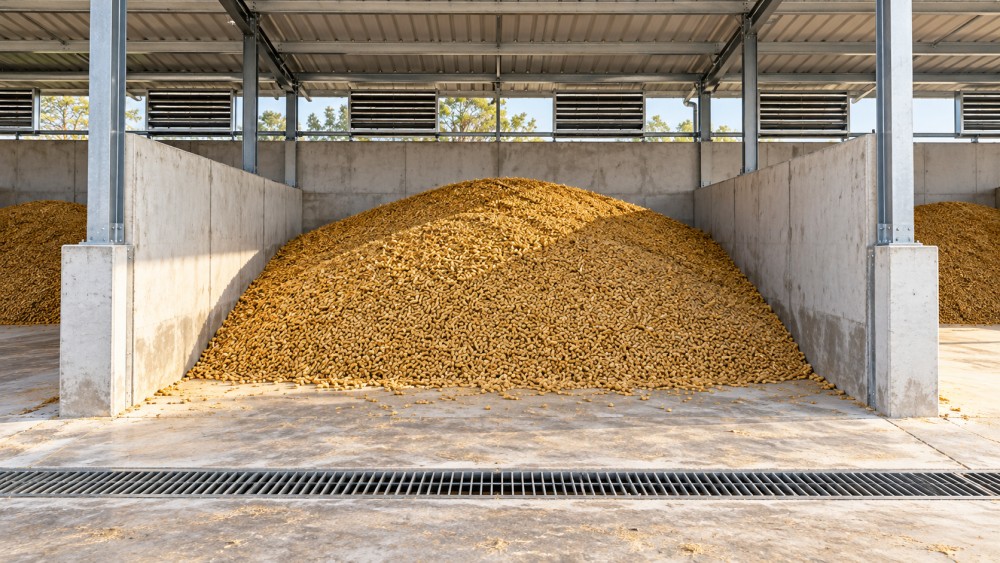
Complete repairs before the truck arrives. A larger delivery is poor value if it forces feed into a bay that cannot protect it or prevents access for inspection and cleaning.
Control moisture without creating condensation
Mold depends on available moisture, but rain is only one source. Warm feed, humid air, and cold storage surfaces can produce condensation inside an apparently weatherproof bin. Moisture may collect beneath the roof or along walls, then drip onto feed and create localized spoilage.
This explains why checking only the average condition of a load is insufficient. Most of the feed may remain dry while a small area near a wall becomes damp enough to deteriorate.
Use moisture limits that fit the ingredient
There is no single moisture percentage that guarantees safe storage for every cattle feed. Whole grain, finely ground ingredients, pellets, and mixed feeds behave differently. Storage duration, temperature, formulation, and moisture distribution also affect the result.
Use the supplier’s specification for the actual product. If you measure moisture on the farm, use equipment and calibration suitable for that material. A meter intended for whole grain may give misleading readings on a compound feed or wet byproduct.
Ventilate according to the storage system
For dry feed, maintain designed vents and follow the bin manufacturer’s operating guidance. Where suitable aeration equipment is installed, it can help manage temperature differences. However, forcing unsuitable humid air through feed can add moisture, and improvised ventilation may leave stagnant areas.
Opening a hatch is not a reliable drying method. It may expose the contents to rain, insects, or birds without moving air effectively through the feed. Likewise, placing a tarp directly over a warm, damp pile of dry feed can trap moisture beneath it.
If dry feed arrives wetter than its storage specification allows, passive storage should not be treated as a drying process. Arrange an appropriate response with the supplier before committing it to a full bin.
Buy quantities that match actual feed use
The longer feed remains in storage, the more opportunity there is for leaks, moisture migration, pests, and quality loss. Base order size on realistic consumption and seasonal conditions, rather than the maximum volume the bin can hold.
Estimate inventory duration by dividing the usable quantity in storage by average daily use. Include what remains from the previous delivery. Recalculate when cattle numbers, ration composition, or feeding rates change.
Use first-in, first-out rotation, but check whether the storage arrangement actually delivers it. Some bins discharge mainly through the center, leaving material along the walls. Repeated topping up can allow these residues to remain much longer than the delivery records suggest.
Where practical, schedule complete emptying and cleaning between batches. With multiple bins or bays, identify each lot and finish the older sound stock before switching. Do not blend spoiled leftovers into fresh feed to clear space.
There is no universal storage period that suits all bulk cattle feed. A cool, dry season and a hot, humid season place different demands on the same facility. Smaller, more frequent deliveries can be sensible when turnover is slow or moisture control is difficult.
Manage wet feed and silage around air exposure
For properly ensiled feed, limiting oxygen helps preserve the material. Maintain covers, repair damage promptly, and keep edges sealed using a system suitable for the storage structure. During feeding, maintain a firm, reasonably smooth face and avoid loosening more material than will be removed promptly.
Air penetrates disturbed material and supports spoilage organisms. Heating at the exposed face or in removed feed can signal deterioration. A loader that tears deeply into the face may leave loose pockets behind that continue to spoil.
Wet byproducts need ingredient-specific planning. Some are supplied for quick use; others can be preserved through a defined ensiling process. Do not assume wet brewers’ grains, wet distillers’ grains, and other moist ingredients have the same storage behavior.
Match delivery size to the feeding rate, keep storage surfaces clean, and manage drainage without allowing dirty runoff to contact feed. A roof limits rainfall but does not stop microbial activity within moist material. Preservatives may be appropriate for certain feeds when selected and applied under technical guidance; they cannot restore material that has already spoiled.
Inspect stored feed before spoilage spreads
Build a brief inspection into the feeding routine, with closer attention after heavy rain, sharp weather changes, or unexpectedly slow turnover. Check accessible areas without entering bins or climbing onto unstable feed piles.
- Look at vulnerable locations: Inspect feed near walls, beneath roof seams, around doors, and at discharge points.
- Watch for changes: New crusting, clumps, discoloration, insect activity, or reduced flow can indicate a developing problem.
- Track temperature where practical: A rising trend or localized hot area deserves investigation, even when the surface looks normal.
- Compare feed at discharge: Changes in smell, texture, or cattle acceptance may reveal deterioration hidden inside storage.
Poor flow is particularly easy to misread. Damp feed may bridge above an outlet while the operator assumes the bin is nearly empty. Never enter a bin or stand beneath bridged feed to break it loose. Use proper equipment and trained assistance to address blockages.
Drying or cooling affected feed may slow further deterioration, but it does not reliably remove mycotoxins already present. Treat the cause of heating or moisture as well as the visible symptom.
If mold appears, isolate the feed before deciding its use
Stop feeding from the affected lot or storage area while the extent of the problem is assessed. Keep it separate from sound stock and retain the delivery and inspection records. Avoid moving visibly moldy material through clean equipment unless necessary for controlled removal.
Ask a veterinarian, livestock nutritionist, or feed specialist to help determine an appropriate sampling and testing plan. Testing should reflect the ingredient, suspected problem, and cattle being fed. A negative result for one toxin does not rule out every possible hazard.
Do not rely on scraping away visible mold, diluting questionable feed, or adding a toxin binder as an automatic solution. Contamination can extend beyond what is visible, and binders have specific limitations. Any decision to use affected feed needs a sound assessment of its condition and suitability.
Before the next delivery, identify why the problem occurred: an incoming quality issue, roof leak, condensation, old residues, or inventory held too long. Fixing that cause—and ordering only what the storage system can keep in good condition—is the most practical way to protect the next load.
Got questions about this industry topic or seeking best practices for your business? Drop us a line below, and let the expert team at AgriTrade help you out.
We respect your privacy. Your information is strictly confidential.
Related News
- 00
0000-00
Chicken House Size in Meters: Planning for 1,000 Caged Layers - 00
0000-00
Livestock Breeding Technology: How AI and Genomic Selection Work - 00
0000-00
What Is a Husbandry System? Housing, Feeding, and Grazing Explained - 00
0000-00
Feed Storage Loss Reduction: Controlling Moisture, Mold, and Pests - 00
0000-00
Choosing Feed for Faster Broiler Growth: FCR, Digestibility, and Cost
0000-00
Livestock Industry Editorial Team
Weekly Insights
Stay ahead with our curated technology reports delivered every Monday.