Professional Agri-Forestry Industry Insights | Global Intelligence Leader

How Can Buyers Manage Livestock Feed Cost Pressure in 2026?





How Can Buyers Manage Livestock Feed Cost Pressure in 2026?
Buyers researching “livestock feed cost pressure sourcing 2026” need more than lower supplier quotes. They need a procurement strategy that protects margins without compromising animal nutrition or supply reliability. Grain and protein meal prices, freight charges, currency movements, and trade requirements can all change the cost of feed between quotation and consumption.
The practical response is to manage three things together: the delivered cost of usable ingredients, the nutritional value those ingredients contribute, and the risk of running short. Optimizing only one can make the others worse. A cheaper shipment is not a saving if it creates formulation problems, arrives late, or requires expensive corrective processing.
For 2026, buyers should build a purchasing process that remains workable under different market conditions rather than depend on a single price forecast. That means comparing offers consistently, qualifying alternatives before they are needed, and connecting market intelligence to specific purchasing decisions.
Find out where the pressure actually enters your feed bill
A rising feed bill does not always mean the underlying commodity has become more expensive. The increase may come from freight, exchange rates, storage losses, financing, or a change in the ration. Before renegotiating with suppliers, separate these effects.
Compare recent purchases on the same ingredient specification, delivery location, currency, and commercial terms. Then distinguish price changes from changes in consumption. A larger livestock population or a different production stage can increase total expenditure even when the purchase price remains stable.
This diagnosis determines the response. Freight pressure may justify reviewing shipment size or delivery routes. Poor ingredient consistency calls for tighter quality control. Higher protein meal costs may warrant reformulation. Buying more inventory will not solve all three problems—and can increase working-capital pressure.
Avoid treating 2026 as a uniform global market. Exposure differs by country, import dependence, currency, species, and storage capacity. Buyers sourcing locally available grain face a different set of constraints from importers relying on overseas protein meals.
Compare landed cost, then compare usable nutrition
Supplier quotations need a common comparison basis. An FOB offer and a delivered offer cannot be ranked by their headline prices alone. Incoterms allocate particular costs and responsibilities, but buyers still need to identify expenses outside the quoted scope and avoid counting included charges twice.
A practical landed-cost calculation includes the ingredient price plus applicable freight, insurance, duties, clearance, inland transport, inspection, financing, and handling costs. Inventory carrying costs and expected losses should then be considered when assessing the total cost of using that shipment.
Use the same exchange-rate assumption and delivery window across competing offers. Record quotation validity, payment timing, shipment size, and any exposure to demurrage or detention. A favorable unit price can be offset by a large minimum order that exceeds available storage or forces earlier payment.
Moisture is another easily missed comparison issue. Where appropriate, convert prices to a consistent dry-matter basis: delivered price per tonne divided by the dry-matter fraction. This helps reveal differences in the amount of dry material purchased, but it does not establish nutritional equivalence.
Protein percentage alone is also insufficient. Poultry and pig formulations may require comparison of digestible amino acids and energy, while ruminant diets involve additional considerations such as fiber characteristics and protein degradability. Ingredient value should be assessed within the actual ration, not through a single universal price-per-nutrient calculation.
Diversify suppliers without multiplying the same risk
Having several supplier names does not necessarily create resilience. Different traders may purchase from the same processor, load through the same port, or depend on the same transport corridor. Ask where the material originates and how it will reach the receiving site.
Useful diversification creates a qualified alternative to a meaningful point of failure. That might mean another origin, a different processing facility, a local supply option, or an alternative ingredient already approved by the nutrition team. The right choice depends on which disruption would be hardest to absorb.
Before allocating substantial volume to a new source, confirm:
- Written specifications, sampling methods, and acceptance or rejection procedures.
- Batch traceability, recent analytical results, and access to independent testing where needed.
- Production capacity, realistic lead times, shipment documentation, and destination-market eligibility.
- Responsibility for nonconforming deliveries, replacement arrangements, and claims deadlines.
A trial delivery can help establish whether laboratory results, physical handling, and production performance match expectations. Paper approval alone does not demonstrate dependable supply. Equally, maintaining a backup supplier without checking its current capacity can create false confidence.
Map the route from source to storage, including inspection and customs steps. This often exposes dependencies that are invisible in a supplier comparison sheet.
Treat alternative ingredients as formulation decisions
When conventional grain or soybean meal becomes expensive, buyers may investigate distillers grains, rapeseed meal, sunflower meal, milling by-products, or locally available materials. These can be useful options, but none should be treated as a simple tonne-for-tonne replacement.
The relevant question is whether an alternative reduces the cost of the complete ration while maintaining required performance. Lower ingredient prices may be offset by additional amino acids, enzymes, processing, or other balancing ingredients. Species, age, production stage, palatability, and inclusion limits all matter.
Have a qualified nutritionist evaluate representative analyses rather than relying only on generic feed tables. Processing methods and raw-material origins can produce meaningful differences between batches. Where relevant, assess fiber, digestibility, anti-nutritional factors, mycotoxins, and storage stability.
Physical properties also affect delivered value. Bulky materials may cost more to transport and store per unit of useful nutrient. Changes in particle size, flowability, or pellet performance can create mill constraints. An attractive formulation result is not enough if the ingredient cannot be handled consistently.
Introduce approved changes in a controlled way and monitor species-appropriate outcomes, such as feed conversion, growth, milk yield, or egg production. Procurement savings should be reviewed alongside animal performance—not declared at the point of purchase.
Match purchasing commitments to consumption and cash flow
Trying to buy everything at the market low is not a reliable procurement plan. A more workable approach is to separate near-term operational requirements from later demand and make commitments in stages. The balance between contracted and uncommitted volume should reflect demand confidence, storage limits, and financial capacity.
Set reorder triggers using usable inventory, confirmed inbound shipments, expected consumption, and replenishment lead time. Include a buffer appropriate to delivery variability and the consequences of a shortage. Inventory awaiting quality clearance should not automatically count as available stock.
Contracts deserve as much attention as price negotiations. Specify quality tolerances, delivery windows, volume flexibility, pricing mechanisms, and remedies for short delivery or rejected material. Where pricing uses a benchmark, understand the local basis and which transport or currency exposures remain open.
Financial hedging may suit businesses with appropriate expertise and controls, but it does not guarantee physical supply or remove quality risk. Benchmark mismatch, collateral requirements, and cash-flow effects need separate assessment. A procurement team should not use a hedge it cannot explain under an adverse scenario.
Do not let purchasing savings disappear in storage
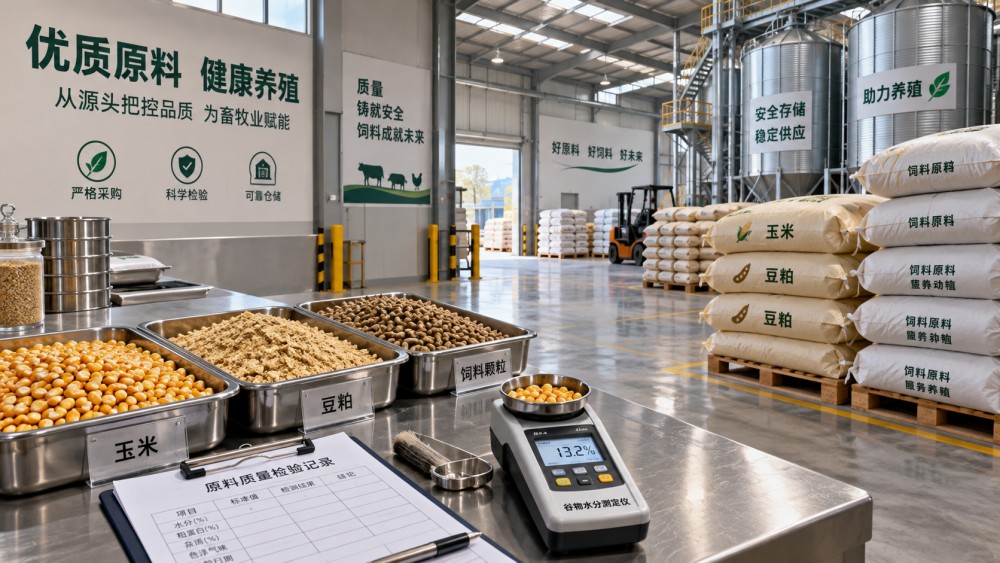
Bulk buying can lower quoted costs while increasing spoilage, infestation, or handling losses. Before extending stock cover, check whether the site can preserve the material for the intended period. Storage suitability depends on the ingredient, its condition on arrival, local climate, and the facility’s controls.
Track moisture and temperature where relevant, manage stock rotation, and investigate discrepancies between received, stored, and consumed quantities. Reconcile weighbridge records and production usage rather than assuming every difference is unavoidable shrinkage.
Quality testing should reflect origin, ingredient type, and destination requirements. Mycotoxin limits and other feed-safety obligations vary by jurisdiction and application; verify applicable requirements with competent authorities and technical specialists. A supplier certificate is useful evidence, not a substitute for a suitable sampling and verification plan.
Turn market intelligence into a purchasing decision
Market monitoring becomes useful when each signal has an operational consequence. A potential export restriction should prompt verification of shipment eligibility. Port disruption should trigger a delivery review. Currency movement should lead to an updated landed-cost comparison, not simply another news alert.
AgriTrade, the Agriculture, Livestock & Fisheries Industry News platform operated through www.zsiron.com, brings together market analysis, policy updates, export developments, and supply-chain reporting across the agricultural economy. Its coverage can help buyers connect feed procurement with developments in crop production, transport, processing, and trade.
Use that context alongside current quotations, laboratory findings, official regulatory notices, and internal consumption forecasts. News can identify a risk worth investigating; it cannot establish that a particular shipment is compliant or that a supplier will deliver.
A practical next step is to review the ingredients with the greatest spend or supply exposure. For each, establish a comparable landed cost, a nutrition-approved alternative, verified replenishment timing, and a qualified backup route. Those four checks provide a stronger basis for managing feed cost pressure in 2026 than choosing the lowest quotation alone.
Got questions about this industry topic or seeking best practices for your business? Drop us a line below, and let the expert team at AgriTrade help you out.
We respect your privacy. Your information is strictly confidential.
Related News
- 00
0000-00
US Cattle Herd Falls to 75-Year Low as Beef Prices Rise - 00
0000-00
Chicken House Size in Meters: Planning for 1,000 Caged Layers - 00
0000-00
Livestock Breeding Technology: How AI and Genomic Selection Work - 00
0000-00
What Is a Husbandry System? Housing, Feeding, and Grazing Explained - 00
0000-00
Feed Storage Loss Reduction: Controlling Moisture, Mold, and Pests
0000-00
Livestock Industry Editorial Team
Weekly Insights
Stay ahead with our curated technology reports delivered every Monday.