





Damp corners, condensation inside bins, and unnoticed pest activity can turn valuable feed into costly waste before obvious damage appears. Prevention starts with routine inspection.
Effective feed storage loss reduction depends on keeping suitable feed dry, detecting deterioration early, excluding pests, and isolating suspect material before it reaches animals.
For operators, the immediate priorities are straightforward: inspect every delivery, track storage conditions, clean equipment between lots, and use older stock before its quality declines.
This guide focuses on dry ingredients and manufactured feeds. Silage, high-moisture grain, and other deliberately fermented feeds require different preservation methods and separate operating procedures.
What Should You Check Before Accepting a Feed Delivery?
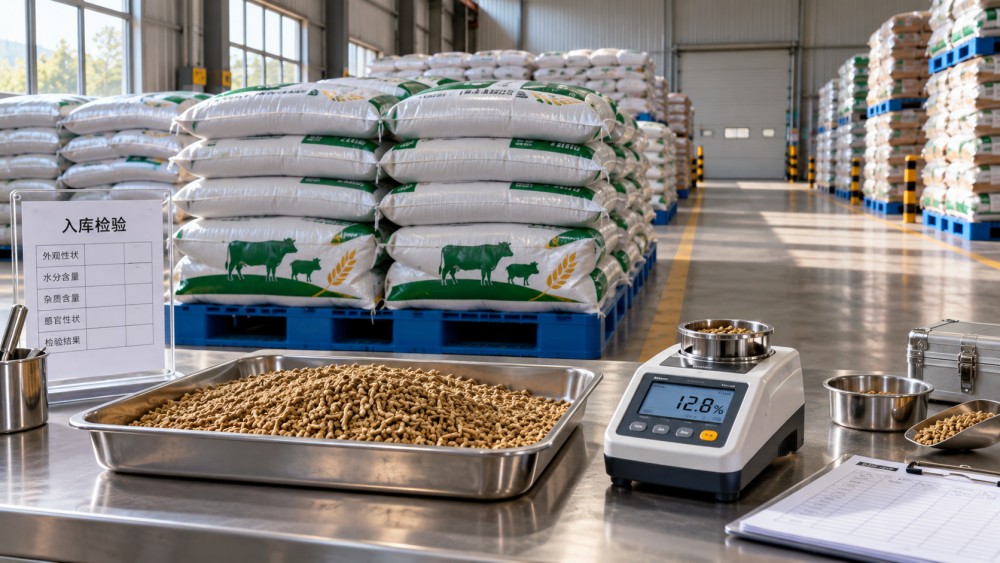
Storage problems often begin before unloading. A wet shipment, damaged packaging, or an infested ingredient can introduce problems that careful warehouse management cannot fully reverse.
Check the delivery vehicle for water entry, dirty floors, pest evidence, unusual odors, and residues from previous loads. Confirm transport suitability against your receiving procedure.
Match the product name, lot number, manufacture date, and quantity against purchasing documents. Check shelf life and any supplier requirements for temperature, humidity, or handling.
Inspect bags for tears, damp patches, staining, loose seams, and clumps. For bulk loads, examine safely accessible samples for crusting, insects, discoloration, or abnormal smell.
Measure moisture using a method suitable for the ingredient. Portable meters need appropriate calibration; readings from one grain setting may misrepresent another ingredient or compound feed.
Sample multiple locations following an established sampling procedure. One convenient surface sample can miss a wet pocket or contamination concentrated elsewhere in the delivery load.
If feed fails specifications or shows suspicious deterioration, hold it separately and record the findings. Obtain a supplier or quality-team decision before unloading into shared storage.
How Dry Does Feed Need to Stay?
There is no universal safe moisture percentage for every feed. Ingredient composition, temperature, storage duration, packaging, and local climate all influence the likelihood of deterioration.
Use product specifications and locally appropriate storage guidance to establish acceptance limits. A moisture target suitable for short storage may be unsuitable for several months.
Moisture content describes total water, while water activity indicates how available that water is for microbial growth. Different products can behave differently at similar moisture percentages.
Water activity around 0.65 or below is commonly used as a screening reference for limiting mold growth, but some molds tolerate drier conditions. Obtain product-specific guidance.
Reducing water activity does not remove toxins already present. Acceptable moisture results therefore cannot replace checks on delivery condition, storage history, or relevant mycotoxin risks.
Keep rainwater, roof leaks, rising damp, and plumbing leaks away from feed. Repair water entry promptly instead of repeatedly moving bags around the same wet area.
Place bagged feed on clean, sound pallets with inspection access around stacks. Follow local clearance requirements and leave enough space to identify condensation or pest activity.
Where humid air repeatedly causes problems, assess insulation, controlled ventilation, or dehumidification. Opening doors during humid weather may increase moisture exposure instead of drying the building.
How Can You Catch Condensation and Heating Early?
Condensation occurs when moist air contacts a surface below its dew point. Bin roofs, exterior walls, and cooler feed layers can become local wet spots.
Temperature differences also move moisture within bulk feed. This means an apparently dry load can develop a damp surface layer or localized deterioration during storage.
Record temperatures at consistent locations and compare trends with ambient conditions. Investigate unexplained warming, especially when it appears alongside musty odors, clumping, or visible moisture.
A single temperature reading rarely explains the cause. Compare several locations and previous readings to distinguish normal weather effects from a developing storage problem promptly.
Check bin roofs, hatches, seals, vents, and discharge areas for leaks or deposits. Inspect safely from outside wherever possible, using installed monitoring equipment when available.
Aeration can help manage temperature in suitable bulk storage systems, but it must follow commodity-specific guidance. Unsuitable outside air can rewet feed or worsen condensation.
If readings change unexpectedly, increase inspection frequency and investigate promptly. Do not assume that running fans longer will correct every moisture or heating problem safely.
Never enter bins to inspect heating or break crusts. Entrapment, unstable material, machinery, and hazardous atmospheres require formal entry controls and appropriately trained personnel for access.
What Should You Do When Feed Looks Moldy?
Visible mold, a musty smell, unusual discoloration, and persistent clumps require immediate investigation. Stop issuing the affected lot and identify where it has already been used.
Quarantine suspect feed with clear identification and prevent accidental mixing. Record the lot, quantity, storage location, observed damage, and any relevant temperature or moisture readings.
Appearance alone cannot establish safety. Feed can contain mycotoxins without visible mold, while visible mold does not reveal which toxins are present or their concentrations.
Arrange representative sampling through a qualified laboratory or established testing program. Mycotoxins can occur unevenly, so sampling quality strongly affects how useful the result becomes.
Select testing according to the ingredient, regional risks, supplier history, and intended animals. Species, age, production stage, and applicable regulations influence acceptable concentrations and subsequent decisions.
Do not assume drying, pelleting, or removing visibly damaged material makes a contaminated lot safe. Many mycotoxins can persist after processes that reduce living molds.
Do not dilute suspect feed or add binders as an automatic remedy. Seek qualified nutritional, veterinary, and regulatory guidance before any treatment, diversion, or disposal.
Before restocking, remove affected residues and correct the moisture source. Otherwise, clean feed may contact remaining contamination or encounter the same conditions that caused deterioration.
How Do You Keep Insects and Rodents Out?
Pest control works best when exclusion, sanitation, monitoring, and treatment support each other. Repeated pesticide use will achieve little if spilled feed and entry points remain.
Seal gaps around doors, pipes, wall joints, and service openings using durable materials. Fit suitable screens where ventilation openings would otherwise allow pests into storage.
Remove spilled feed promptly, including deposits beneath conveyors, around bagging equipment, and beside discharge points. These overlooked areas provide food and shelter between cleaning rounds.
Keep the surrounding area tidy and manage vegetation near buildings. Store waste in closed containers and remove damaged packaging that could conceal insects or rodents.
Inspect incoming pallets and packaging, especially when reusing materials. An otherwise acceptable delivery can introduce pests through contaminated bags, pallet joints, or residues from previous storage.
Place monitoring devices according to a documented site plan and inspect them consistently. Track activity by location so recurring hotspots lead to targeted repairs and cleaning.
Use only pest-control products authorized for the site and intended application. Protect feed from contamination and follow label requirements for placement, treatment, ventilation, and re-entry.
Fumigation requires qualified specialists and appropriate controls. If activity continues after treatment, investigate hidden residues, untreated equipment, structural gaps, and infested incoming stock before repeating interventions.
Which Cleaning and Stock-Rotation Habits Prevent Repeat Losses?
Old residues can contaminate new deliveries and conceal deterioration. Empty and inspect bins periodically rather than continuously topping up material whose age is no longer clear.
Clean accessible ledges, conveyor housings, discharge boots, and transfer points according to equipment procedures. Isolate machinery before removing guards or reaching into any moving equipment.
Choose cleaning methods appropriate to the facility and feed. Uncontrolled compressed air can spread dust, while unsuitable vacuum equipment can introduce ignition hazards in dusty areas.
Wet cleaning requires particular care because remaining water can encourage spoilage. Follow an approved procedure and verify that equipment is thoroughly dry before refilling it.
Use first-expiring, first-out rotation when shelf lives differ, and first-in, first-out where appropriate. Keep lot labels visible and record which lots enter each storage location.
Avoid combining fresh feed with unidentified leftovers. Where mixing is unavoidable within an approved process, maintain traceability and account for the oldest material in release decisions.
Match order quantities to realistic consumption and storage capacity. Bulk discounts can disappear when slow turnover increases spoilage, pest exposure, handling losses, and eventual disposal costs.
What Should Operators Check Each Shift and Each Week?
A useful inspection routine makes abnormalities easy to spot and gives operators a clear response. Assign responsibility and keep records short enough to complete consistently.
Each shift, check for leaks, condensation, spills, damaged bags, unusual odors, and pest evidence. Review available temperature readings and confirm suspect stock remains clearly isolated.
Each week, inspect seals, roof drainage, pallet condition, monitoring devices, and less accessible cleaning points. Review stock age and confirm planned use matches remaining shelf life.
Increase inspection frequency after heavy rain, sharp temperature changes, a pest finding, or receipt of a questionable shipment. Fixed schedules should respond to changing conditions.
Define escalation limits with the supplier or quality team before problems occur. Operators should know which findings require monitoring, quarantine, testing, or an immediate stop.
How Can You Tell Whether Storage Losses Are Falling?
Track physical waste separately from unexplained inventory differences. Disposed feed, spills, moisture changes, weighing errors, and undocumented transfers can otherwise appear as the same problem.
Calculate discarded-feed loss as discarded weight divided by received weight over a defined period. Account for opening and closing inventory when interpreting short reporting periods.
Add testing, disposal, cleaning, pest treatment, and replacement purchases when estimating the cost of incidents. Record causes so spending targets the most persistent sources of loss.
Compare results across similar seasons, products, and storage periods. A lower disposal figure means little if suspect feed was issued or inventory records became less reliable.
Start improvements with recurring, observable failures: leaking roofs, damp pallets, old residues, poor rotation, or unsealed entry points. Verify that each corrective action actually resolves its cause.
Effective feed storage loss reduction comes from controlling moisture, detecting changes early, excluding pests, and acting on evidence. Consistent operator routines protect feed quality and animal health.