Professional Agri-Forestry Industry Insights | Global Intelligence Leader

How Do Forestry Import Rules Differ Between the EU and Southeast Asia?





How Do Forestry Import Rules Differ Between the EU and Southeast Asia?
How do forestry import rules differ between the EU and Southeast Asia? For timber traders, processors, and sourcing teams, the answer affects far more than customs clearance. It shapes which suppliers can be used, what evidence must travel with a shipment, how long compliance review takes, and whether a product can be sold after it reaches the destination market.
The broad contrast is straightforward: the European Union increasingly treats timber imports as a traceability, legality, and deforestation-risk issue, while Southeast Asian import systems are more country-specific and often focus first on customs classification, import licensing, plant-health controls, protected-species rules, and local trade requirements. That distinction matters because a document pack accepted at a port in one market may be insufficient for a buyer, customs authority, or regulator in another.
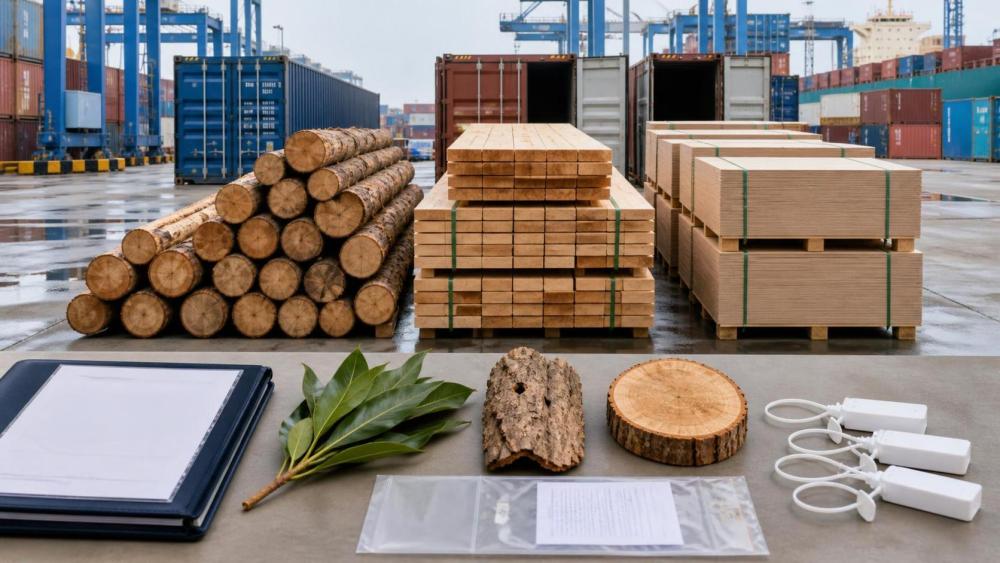
For businesses moving logs, sawnwood, veneer, plywood, pulp, wooden packaging, furniture components, or finished wood products, compliance should be designed around the final destination and the full supply chain—not added after purchase orders have been issued.
The EU’s Approach: Market Access Depends on Demonstrable Due Diligence
The EU has long placed significant responsibility on operators that first place timber and certain timber products on the EU market. The direction of travel is clear: importers are expected to understand where wood originated, whether it was harvested legally, who handled it through the supply chain, and whether the goods meet applicable sustainability requirements.
The EU Deforestation Regulation, commonly referred to as the EUDR, is particularly important for forestry trade. Wood is one of the relevant commodities, alongside several agricultural commodities. In practical terms, the regulation requires covered products placed on or exported from the EU market to be deforestation-free, produced in accordance with relevant legislation in the country of production, and supported by a due-diligence statement. Its implementation timetable and detailed operational guidance should always be checked against the latest official EU information, especially when contracts span several seasons.
This is not simply a request for a timber legality certificate or a supplier declaration. Depending on the product and transaction, an EU operator may need information on the country of production, species, quantity, supplier and customer details, and geolocation of the production area. The importer must then assess risk and, where needed, take mitigation measures before the goods are placed on the market.
That shifts the commercial discussion upstream. A European buyer may ask a plywood mill not only for species information and a certificate of origin, but also for material traceability back to concession, plantation, forest-management unit, or aggregation point. A trader working through several intermediaries may find that the weakest record in the chain—not the final mill’s quality control—creates the real market-access problem.
The EU also retains other layers of control. Customs declarations, product classification, applicable duties, value-added tax arrangements, plant-health requirements where relevant, and CITES documentation for protected timber species all remain separate considerations. A shipment can be correctly declared for customs purposes and still present due-diligence concerns for the company placing it on the EU market.
Legality evidence is necessary, but it may not be the full answer
A frequent misunderstanding is that one recognized certification automatically resolves every EU compliance obligation. Certification, chain-of-custody systems, legality verification, supplier audits, and government-issued documents can all be valuable evidence. However, their usefulness depends on the product, origin, scope, chain integrity, and the importer’s own risk assessment. They do not remove the need to examine whether the specific transaction meets current EU rules.
Indonesia is a notable example in the EU timber trade because its FLEGT licensing arrangement has provided a recognized route for licensed Indonesian timber entering the EU. Even so, businesses should not assume that a historical compliance process remains sufficient for every future product category or regulatory phase. Product coverage, documentary expectations, and implementation guidance can change. Contract language should leave room for updated evidence requests.
Southeast Asia Is Not One Import Market
“Southeast Asia” is useful as a trading region, but it is not a single forestry-import regime. Singapore, Malaysia, Thailand, Vietnam, Indonesia, the Philippines, Cambodia, and other markets operate under different customs structures, forestry controls, port practices, licensing arrangements, and enforcement priorities. ASEAN trade arrangements may influence tariff treatment for qualifying goods, but they do not replace national import procedures.
In many Southeast Asian destinations, the immediate compliance question is more operational: Is the importer properly registered? Does the commodity code trigger an import permit? Is a phytosanitary certificate needed for the form of wood being shipped? Does the product contain bark, untreated material, soil contamination, or wood packaging that could attract quarantine attention? Is the species subject to CITES controls? Are there local restrictions on logs, reclaimed wood, or particular high-risk species?
The answer varies sharply by product. Kiln-dried, processed boards may be treated differently from rough-sawn timber. Decorative veneer may face a different document pathway from logs. Wooden furniture may fall under separate consumer-product, chemical, labeling, or safety rules, even though its main material is timber. Import teams should avoid relying on generic descriptions such as “hardwood panels” when classification, species, treatment condition, and intended use determine the actual requirement.
Customs and quarantine often lead the process
Compared with the EU’s stronger emphasis on operator-led due diligence, Southeast Asian import compliance frequently begins at the border. Customs authorities need a correct tariff classification, declared value, origin evidence where preferential duty treatment is claimed, and standard commercial documents. Agriculture, forestry, or quarantine authorities may require additional certificates or inspections for unprocessed or partially processed forest products.
This does not mean sustainability and legality are irrelevant in the region. Governments, major manufacturers, international buyers, banks, and downstream brands increasingly ask for traceable sourcing and evidence of legal origin. The difference is that such expectations may come through national legality systems, procurement policies, export-market obligations, customer contracts, or project specifications rather than through one region-wide import due-diligence system equivalent to the EU model.
Vietnam and Indonesia, for example, are deeply connected to global wood-processing supply chains. A manufacturer importing timber for re-export to Europe, North America, Japan, or another regulated market may impose more demanding supplier-documentation requirements than local border rules alone would suggest. The real standard is often set by the destination of the finished product.
Where the Two Systems Create Different Risks
The practical difference is not that EU trade is “strict” and Southeast Asian trade is “simple.” Both can be demanding. The EU asks importers to prove more about the supply chain and underlying production conditions. Southeast Asian markets can be highly sensitive to administrative details at the border, and requirements may change depending on the importing country, port, species, product condition, and whether the goods are intended for domestic sale or processing and re-export.
A Better Way to Prepare a Forestry Shipment
The most reliable preparation starts before a supplier is approved. Importers should map the transaction from forest or plantation source to final buyer, identifying every party that takes legal title, changes the product, consolidates volumes, or issues documentation. This is particularly important for mixed loads, engineered wood, and products made from multiple input sources.
A useful internal file should normally connect the commercial invoice, packing list, bill of lading, HS classification, species declaration, country-of-origin evidence, treatment details where applicable, permits, and supplier traceability records. For EU-bound goods, businesses should assess whether the data is detailed enough to support the applicable due-diligence process. For Southeast Asian imports, they should confirm requirements with the importer of record and the relevant national customs and plant-quarantine authorities before cargo is loaded.
Do not leave species identification to a late-stage paperwork exercise. Trade names can be ambiguous, and a common name may cover multiple botanical species with different regulatory implications. Where CITES-listed species, mixed tropical hardwoods, reclaimed wood, or wood with bark is involved, early verification is especially sensible. The same applies to wood packaging material: it may be regulated separately from the timber product it carries.
Build contracts around evidence, not assumptions
Supply agreements should define who provides which records, when they must be delivered, how long they are retained, and what happens if regulators or downstream customers request clarification. A vague clause requiring “all necessary certificates” is often inadequate because it does not identify the records needed to demonstrate origin, legality, treatment, chain of custody, or geolocation where applicable.
Buyers also need to distinguish between a document that supports a claim and a document that proves the claim for the intended market. A certificate of origin may support customs treatment; it does not necessarily establish legal harvesting. A phytosanitary certificate may address plant-health concerns; it does not replace CITES documentation. A sustainability certificate can be valuable, but its scope, validity, and connection to the exact shipment still require review.
Why Market Intelligence Matters in Forestry Trade
Forestry compliance is rarely handled by one department alone. Procurement needs a workable supplier base. Logistics needs documents before cargo arrives. Sales teams need to know what claims can be made to customers. Legal and compliance teams need defensible records. Finance needs to understand the cost of inspection delays, demurrage, rejected cargo, or disrupted production.
That is why companies benefit from monitoring regulations alongside market and supply-chain developments. Changes in export restrictions, shipping capacity, forest-product demand, certification expectations, environmental enforcement, or pest-control measures can alter the risk profile of a purchase even when the timber grade and price remain unchanged.
AgriTrade, operated through www.zsiron.com, follows these connected issues across forestry, agriculture, processing, packaging, trade policy, logistics, and international market developments. For sourcing teams, the useful question is not merely whether a rule exists. It is how that rule may affect supplier selection, shipment timing, documentation flow, and the viability of a particular destination market.
The safest working assumption is that EU-bound timber needs deeper, evidence-based supply-chain preparation, while imports into Southeast Asia need country-by-country verification of border procedures and permits. Before confirming a forestry shipment, check the exact HS code, botanical species, product condition, origin, transit route, intended end use, and current requirements at the destination. Those details determine whether compliance is routine—or whether a cargo becomes a costly exception.
Related News
- 00
0000-00
How to Evaluate a Heavy-Duty Forestry Equipment Manufacturer for Harsh Terrain Projects - 00
0000-00
How Do Forestry Import Rules Differ Between the EU and Southeast Asia? - 00
0000-00
When is continuous pressing suitable for wood processing for panelboards? - 00
0000-00
How to reduce sanding defects in wood panelboard processing - 00
0000-00
How resin selection affects panelboard wood processing quality
Forestry Development Editorial Team
Weekly Insights
Stay ahead with our curated technology reports delivered every Monday.