





Which Dairy Shelf Life Solutions Preserve Quality Without Additives?
Introduction: For quality-control and food-safety teams, dairy shelf life solutions must protect freshness, flavor, texture, and microbiological safety without relying on unnecessary additives.
The strongest answer is usually a coordinated system, not one preservation technology. Raw-milk control, hygienic design, validated processing, packaging, and cold-chain discipline must work together.
Clean-label expectations do not remove the need for preservation. They shift the focus toward physical, thermal, biological, and operational controls that prevent contamination and quality loss.
For processors, the practical question is not simply how long a product can last. It is whether shelf life remains safe, consistent, commercially useful, and defensible.
Start With the Shelf-Life Risks That Matter Most
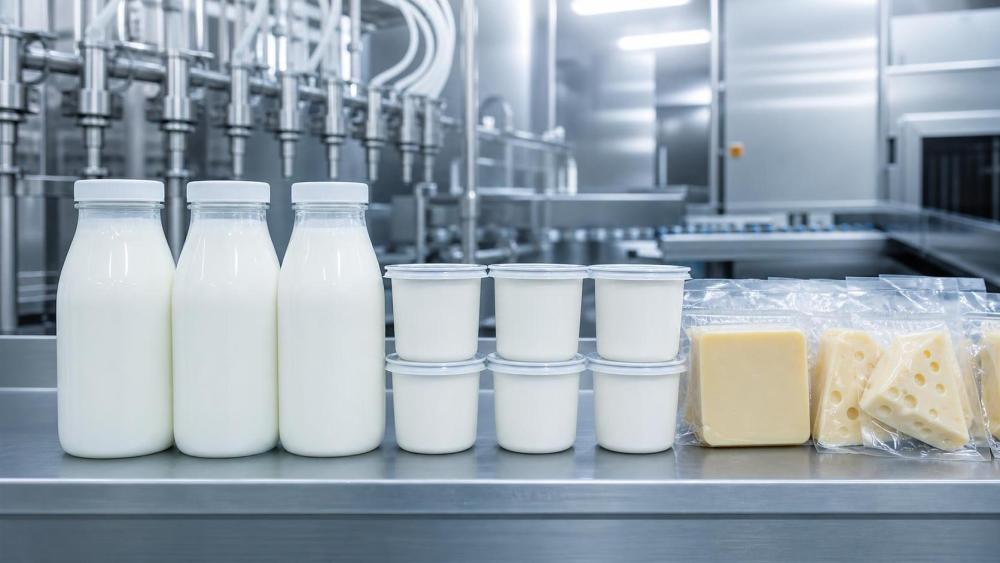
Dairy products deteriorate through several pathways, including microbial growth, enzyme activity, oxidation, moisture migration, package failure, flavor absorption, and temperature abuse during distribution.
Quality teams should identify which pathway limits each product first. Pasteurized milk, yogurt, cheese, cream, butter, and dairy-based beverages do not fail in identical ways.
For fluid milk, post-pasteurization contamination and refrigeration performance often determine actual shelf life more than the nominal pasteurization temperature alone.
For fermented products, yeast and mold control, flavor stability, syneresis, and package seal integrity may be more important than bacterial spoilage under normal storage conditions.
For cheese, moisture level, salt distribution, pH, starter culture behavior, oxygen exposure, and surface contamination can all influence safe storage duration and sensory acceptance.
A shelf-life target should therefore include microbiological, chemical, physical, and sensory criteria. A product can remain microbiologically compliant while still failing consumer expectations for taste or texture.
Define failure clearly before evaluating dairy shelf life solutions. Use measurable limits for total counts, yeast and mold, pathogens, oxidation markers, viscosity, color, flavor, and package appearance.
This risk-based approach prevents unnecessary additive use. It also helps teams spend capital where the evidence shows the real shelf-life limitation exists.
Improve Raw Material Quality Before Processing Begins
Preservation begins at the farm and collection point. Milk with a high initial microbial load gives processors less safety margin, even when downstream processing is well controlled.
Rapid cooling after milking is essential because psychrotrophic bacteria can grow at refrigeration temperatures and produce heat-stable enzymes that damage dairy quality later.
Those enzymes may survive pasteurization and contribute to bitterness, gelation, proteolysis, or lipolysis during storage. Better raw-milk handling can therefore extend finished-product quality.
Supplier specifications should include temperature on collection, bacterial counts, somatic cell indicators, antibiotic-residue compliance, and practical corrective-action requirements for repeated deviations.
Routine testing should not only reject poor milk. Trend analysis can identify farm, route, season, equipment, or transport patterns that create recurring shelf-life risk.
Cleaning effectiveness in bulk tanks, transfer lines, collection vehicles, and receiving systems deserves particular attention. Biofilms can become persistent sources of spoilage organisms.
Quality managers should also assess hold times before processing. A long, variable interval between collection and treatment can undermine otherwise strong cold-chain control.
When raw-material variation is reduced, processors can validate shelf life with tighter confidence intervals. This supports more reliable production planning, inventory control, and customer commitments.
Use Processing Technologies That Preserve Without Chemical Additives
Thermal processing remains the most established additive-free preservation tool. Pasteurization, extended shelf-life treatment, and ultra-high-temperature processing each offer different quality tradeoffs.
Conventional pasteurization protects refrigerated products while retaining a relatively fresh profile. However, it requires excellent post-process hygiene and dependable low-temperature distribution.
Extended shelf-life processing combines higher heat treatment with improved hygienic control. It can provide useful refrigerated shelf-life gains without relying on chemical preservatives.
Ultra-high-temperature processing creates commercially sterile dairy products that can remain stable for months when aseptically packaged. Its sensory profile may differ from fresh refrigerated milk.
Microfiltration can reduce bacterial load in selected dairy streams while preserving some fresh characteristics. It is often combined with pasteurization rather than treated as a standalone solution.
High-pressure processing can inactivate many vegetative microorganisms at low temperatures. Its suitability depends on product composition, packaging strength, target organisms, and texture sensitivity.
UV treatment has limited but growing relevance for specific liquid applications. Validation must account for product opacity, flow design, equipment cleanliness, and uneven dose delivery.
Each technology requires product-specific validation. A processing method that works for low-fat milk may not deliver equivalent results for cream, protein beverages, or cultured dairy products.
Control Post-Process Contamination With Hygienic Design
Many shelf-life failures occur after an effective kill step. Filling equipment, transfer lines, valves, air handling, and employee practices can reintroduce spoilage organisms into finished products.
Hygienic design should eliminate dead legs, difficult-to-clean joints, damaged seals, and stagnant zones. These locations can harbor biofilms that standard cleaning procedures fail to remove.
Cleaning-in-place programs require verification, not assumption. Teams should review chemical concentration, flow, temperature, contact time, return conductivity, and microbiological swab results.
Environmental monitoring should focus on areas where contamination can enter open products. Drains, conveyors, filler exteriors, packaging zones, and condensation points often need targeted sampling.
Separate raw and finished-product traffic wherever possible. Airflow, personnel movement, tools, mobile equipment, and maintenance access can transfer contamination across hygiene zones.
Filling-room air quality matters especially for extended shelf-life products. Controlled positive pressure, filtration, dry surfaces, and disciplined sanitation reduce post-process microbial exposure.
Seal integrity is a food-safety and quality issue. Weak seals allow leaks, oxygen entry, contamination, and moisture changes that shorten real shelf life before a product reaches consumers.
Investments in hygienic design often provide better long-term returns than additives because they reduce recurring spoilage, recalls, rework, waste, and customer complaints across product lines.
Select Packaging That Protects the Specific Product
Packaging is one of the most practical dairy shelf life solutions because it controls exposure to oxygen, light, moisture, external odors, and physical damage.
Light protection is especially important for milk and other riboflavin-containing products. Light exposure can create oxidized or cardboard-like flavors even under correct refrigeration.
Opaque or light-barrier packaging can preserve sensory quality better than clear containers where retail lighting is intense. Packaging selection should reflect actual display conditions.
Oxygen-barrier materials are valuable for products vulnerable to oxidation, mold growth, or flavor deterioration. Butter, cheese, cream, and high-fat dairy products often benefit significantly.
Modified-atmosphere packaging can help selected cheese products by limiting oxygen and slowing mold development. Gas selection must be validated for product appearance, flavor, and package shape.
Vacuum packaging can reduce oxygen exposure in cheese and dairy ingredients. It requires consistent seals and careful management of anaerobic or facultative microorganisms where relevant.
Package trials should include distribution abuse, not only laboratory storage. Vibration, compression, temperature cycling, retail lighting, and repeated handling reveal problems that static tests miss.
Material choices must also meet food-contact, recyclability, labeling, and market-specific compliance requirements. Sustainability goals should not compromise barrier performance or product safety.
Make Cold-Chain Performance a Measured Control
Refrigeration is not a passive storage condition. It is an active control that determines microbial growth rates, flavor stability, texture changes, and the reliability of date coding.
A product validated at 4 degrees Celsius may perform very differently at 7 or 8 degrees Celsius. Small temperature increases can meaningfully reduce practical shelf life.
Continuous temperature monitoring provides more value than occasional checks. It identifies loading delays, chiller failures, warehouse variation, transport excursions, and retail storage weaknesses.
Use data loggers during representative deliveries, particularly for long-distance routes and export shipments. Average temperature alone can conceal short but damaging warm excursions.
Temperature specifications should cover receiving, processing, cooling, storage, loading, transport, distribution, and retail handoff. Ownership must be clear at every transfer point.
Rapid cooling after heat treatment is particularly important. Slow cooling can allow surviving organisms or post-process contaminants to multiply before products enter stable refrigerated storage.
First-expired, first-out inventory practices support shelf-life performance but cannot compensate for poor temperature control. Date management and refrigeration must be managed together.
When cold-chain data reveal repeated deviations, revise shelf-life assumptions or correct the logistics system. Extending the printed date without evidence only transfers risk downstream.
Use Fermentation and Protective Cultures Carefully
Fermentation is a natural preservation strategy because acidification changes the product environment and can slow growth of many undesirable microorganisms without synthetic additives.
Starter cultures must be selected for more than acidification speed. Their flavor development, consistency, phage resistance, texture impact, and behavior through shelf life all matter.
Protective cultures may help suppress selected spoilage organisms in some dairy applications. Their use should be transparent, legally appropriate, and compatible with clean-label positioning.
Culture-based approaches are not universal replacements for hygiene or refrigeration. They provide an additional hurdle, but poor sanitation can overwhelm their intended benefits.
For yogurt and cultured drinks, controlling yeast and mold remains essential. Low pH does not eliminate every spoilage risk, particularly after opening or under abusive storage.
Teams should validate cultures in the finished formulation, not only in pilot media. Sugar level, fruit preparation, protein content, stabilizers, and packaging can alter real performance.
Sensory evaluation should continue throughout storage. A culture that improves microbial stability may still create excessive acidity, gas formation, bitterness, or unwanted flavor changes.
Documented culture performance can support technical discussions with buyers who seek recognizable ingredients while requiring consistent product quality and reasonable distribution life.
Validate Shelf Life With Evidence, Not Estimated Dates
Shelf-life validation should simulate the actual product journey. Laboratory samples stored under ideal conditions rarely represent real factory, logistics, retail, and consumer handling patterns.
Build a study protocol around the product's likely risks. Include microbiological testing, sensory panels, physical measurements, package evaluation, and temperature conditions relevant to distribution.
Challenge studies may be appropriate where pathogen growth is a credible concern. These studies should be designed and interpreted by qualified specialists under applicable regulations.
Accelerated testing can support early development decisions, but it should not replace real-time data when temperature, microbial ecology, or texture changes are complex.
Establish sampling points across the claimed shelf life, including the final day and a reasonable margin afterward. This helps teams understand the true failure curve.
Use retain samples from regular production, not only optimized pilot batches. Normal production variability is critical when setting a shelf-life claim that customers can trust.
Review complaints and returns as part of ongoing verification. Trends in sourness, swelling, mold, separation, or leakage may reveal failures absent from scheduled testing.
Any change in supplier, formulation, equipment, thermal profile, packaging, cleaning chemistry, or distribution route should trigger a documented shelf-life risk assessment.
Choose the Right Solution Mix for Product and Market
There is no single best solution for every dairy category. The appropriate combination depends on product composition, intended market, distribution distance, equipment capability, and label strategy.
Fresh local milk may benefit most from excellent pasteurization, sanitary filling, light-barrier packaging, and tightly controlled refrigeration rather than more intensive processing.
Export-oriented dairy beverages may require aseptic processing and high-barrier packaging because distribution time and temperature uncertainty make refrigerated control less dependable or more costly.
Cheese processors may prioritize moisture control, salt balance, vacuum or modified-atmosphere packaging, environmental hygiene, and mold prevention suited to the specific cheese variety.
Quality managers should compare options using total cost, not equipment price alone. Consider waste reduction, returns, product downgrades, energy use, labor, validation, and market access.
Regulatory expectations must be assessed early, especially for cross-border trade. Product classification, process approval, labeling rules, microbiological criteria, and package requirements can vary by market.
Clear communication with procurement, operations, maintenance, logistics, and commercial teams is essential. Shelf life is a cross-functional outcome, not a quality-department responsibility alone.
The most effective programs turn shelf life into a managed performance indicator. They connect process data, sanitation records, packaging checks, cold-chain evidence, and customer feedback.
Conclusion: Build Shelf Life Through Layered Control
Additive-free dairy shelf life solutions work best when they combine high-quality raw materials, validated processing, hygienic filling, protective packaging, reliable refrigeration, and evidence-based verification.
For quality-control and food-safety teams, the priority is to identify the product's actual limiting risk before selecting technology, changing packaging, or extending a date claim.
That discipline protects consumers and preserves the sensory qualities that drive repeat purchase. It also helps processors reduce avoidable waste while supporting credible clean-label positioning.
In practical terms, better shelf life is rarely created by one intervention. It is earned through consistent control of every point where dairy quality can be lost.