Professional Agri-Forestry Industry Insights | Global Intelligence Leader

What Determines Soy Sauce Flavor Balance and Quality for Noodle Dishes





Why noodle dishes expose flavor imbalance quickly
A noodle bowl can make a seasoning seem better or worse than it does from a tasting spoon. Wheat noodles, rice noodles, egg noodles, and alkaline ramen noodles all have relatively mild base flavors, while hot broth, cooking water, fat, aromatics, and toppings dilute or redirect seasoning perception. A sauce that tastes pleasantly savory on its own may disappear in a large bowl of soup. Another that tastes rounded before cooking may become sharply salty once the broth reduces.
For consumers, the practical question is not simply whether a bottle tastes “good.” It is whether its saltiness, sweetness, aroma, color, fermentation character, and umami remain in proportion in the finished dish. The best choice depends on whether the noodles are served dry, tossed with oil, placed in a light broth, or paired with strongly flavored ingredients such as chili paste, braised meat, mushrooms, seafood, or pickled vegetables.
Flavor balance also affects how forgiving a recipe is. A balanced seasoning gives the cook room to adjust with stock, water, vinegar, sugar, or chili oil. An overly salty or harsh product can narrow that margin: one extra spoonful may dominate the dish, especially when the noodles absorb liquid as they sit.
The foundation: raw materials and fermentation
Traditional soy-based seasonings are commonly made from soybeans and wheat, with salt and water, then fermented and matured before pressing and refining. The exact process varies by producer and style, but the central idea is consistent: enzymes and microorganisms break down proteins and carbohydrates into smaller flavor compounds. Amino acids contribute savory taste, while aromatic compounds formed during fermentation and heating shape the roasted, caramel-like, fruity, malty, or aged notes that consumers recognize.
Time alone does not guarantee quality. The quality of soybeans and wheat, the fermentation culture, salt concentration, temperature control, sanitation, and blending all influence the final result. A well-managed process tends to produce depth without an aggressive alcoholic, yeasty, burnt, or chemical edge. In noodle cooking, that difference becomes apparent because the seasoning is often a major source of both salt and savory character.
Some products are naturally brewed; others may use hydrolyzed vegetable protein or blended flavor systems to build savoriness more quickly. Neither description automatically tells a consumer whether a product will work in a particular recipe, but it does indicate that the flavor profile and ingredient list may differ. Reading the label helps identify whether the product is primarily fermented, blended, sweetened, flavored, or designed for a specific regional use.
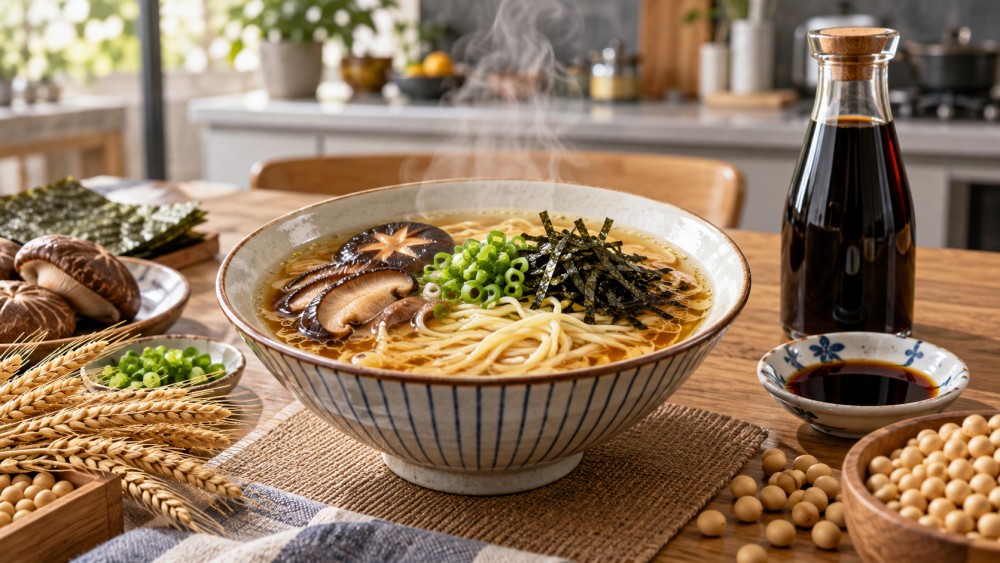
Salt is necessary, but its role is more complex than “more” or “less”
Salt carries flavor, moderates bitterness, and supports preservation, yet it is also the factor most likely to overwhelm noodles. The same bottle may perform differently in a 250 ml bowl of clear soup and in a small serving of dry noodles. Broth contains water and often other salty ingredients, including stock concentrates, cured meat, seafood, kimchi, or chili bean paste. Dry noodles receive less dilution, but their starch and oil can soften the first impression of salt.
Consumers comparing labels should use the serving size as a starting point rather than a complete answer. Serving sizes can be small compared with the amount actually used in a family pot or marinade. The U.S. Food and Drug Administration explains that the Nutrition Facts label lists sodium per serving and that packaged-food serving sizes are standardized to reflect amounts people typically consume, not personal dietary needs. Its current Daily Value for sodium is less than 2,300 mg per day. Source: U.S. Food and Drug Administration, “Sodium in Your Diet.”
For a noodle meal, the useful habit is to add seasoning in stages. Season the broth lightly before the noodles go in, then taste after the noodles have cooked or soaked in it. If toppings will release salt during reheating, such as braised beef or preserved greens, hold back more than usual. A lower-sodium product can be useful for this purpose, but it may also taste thinner if the formula has not replaced some of the lost body with fermentation depth, sweetness, or aromatic complexity.
Umami is the body of the flavor, not a substitute for balance
Umami gives noodle sauces and soups a lingering savory quality. In fermented seasonings, free amino acids are one contributor. Ingredients such as dried mushrooms, seaweed, meat stock, dried seafood, and fermented bean pastes can add related savory compounds, which is why the same seasoning can feel more intense in one recipe than another.
A high-umami profile is helpful when the bowl is built around plain noodles, mild vegetables, or a clear broth. It may be less suitable when the dish already includes concentrated stock powder, aged cheese, seafood paste, or a strong fermented chili condiment. In those cases, adding more savory seasoning can make the bowl feel heavy or muddy rather than fuller.
When choosing a bottle for noodle dishes, it helps to understand the hidden factors behind soy sauce quality: salt perception, fermentation-derived aroma, sweetness, color, and the way flavor holds up after heating all matter. The key is to judge these elements together. A deep brown color does not prove richer fermentation, and a strong aroma does not always translate into a clean finish in broth.
Matching the seasoning to the noodle format
There is no universal bottle for every noodle dish. The table below shows why the cooking method should guide selection more than a broad idea of “premium” quality.
Light soy-style seasonings are often used where a cleaner color and more direct salinity are wanted. Darker versions may bring sweetness, viscosity, and color that suit braises or certain stir-fried noodles, but can obscure a delicate soup. Sweetened, mushroom-flavored, seafood-style, or seasoned variants can be convenient, yet they should be treated as recipe components rather than interchangeable substitutes. Their added sweetness or flavorings may clash with a sauce built around vinegar, citrus, miso, or dairy.
Heat, dilution, and timing change the result
Heat does not merely warm a sauce. It changes aroma perception and can intensify the impression of salt as water evaporates. In a stir-fry, adding seasoning near the end often protects more of its aroma and reduces the chance of scorching sugars or proteins on the hot pan. In a soup, a portion can be added early to integrate with the stock, while a small final adjustment after cooking restores top notes.
Dilution matters just as much. A seasoning that seems underpowered in a tablespoon may be correct once mixed with stock and absorbed by noodles. Conversely, a sauce designed as a dipping condiment may require dilution before being used as a soup base. Consumers can test this without wasting a meal: mix a small measured amount with hot water or unsalted stock, then taste it with a bite of cooked noodle rather than tasting the liquid alone.
The noodle itself changes the calculation. Fresh alkaline noodles have a different aroma and surface chemistry from rice vermicelli. Egg noodles may contribute richness, while starchier noodles can soften sharp seasoning. Rinsed cold noodles carry less surface starch and may need a more assertive dressing. These are not fixed rules, but they explain why copying a sauce ratio from one noodle type to another often produces disappointing results.
Reading labels for practical quality signals
An ingredient list cannot fully describe flavor, but it can help consumers anticipate how a product may behave. Look for the order of ingredients, the presence of wheat or other cereals, added sweeteners, flavor enhancers, acids, preservatives, and declared allergens. In the United States, wheat and soy are among the major food allergens that must be declared under applicable federal labeling rules. Source: U.S. Food and Drug Administration, “Food Allergies.” Consumers with celiac disease or wheat allergy should not assume that all soy-based seasonings are gluten-free; they should look for a specific gluten-free claim and review the label carefully.
For those limiting sodium, compare products on the same basis, preferably per tablespoon or per 100 ml if that information is available, because serving sizes differ. A “reduced sodium” claim has a defined regulatory meaning in the United States: for foods with a reference amount customarily consumed of 30 g or less, the product must contain at least 25% less sodium per reference amount than an appropriate reference food. Source: U.S. Food and Drug Administration, “Food Labeling Guide,” Appendix A: Nutrient Content Claims.
Storage instructions also deserve attention. Keep the cap clean, close the bottle promptly, and follow the manufacturer’s guidance on refrigeration after opening. Exposure to heat, air, food residue, or a wet spoon can reduce aroma quality and create avoidable hygiene concerns. If a product develops an unusual smell, visible mold, gas formation, or a damaged seal before opening, it should not be used.
A simple kitchen evaluation before committing to a full recipe
Consumers do not need laboratory testing to make a more informed choice. A small side-by-side trial can reveal whether a seasoning fits their usual noodle dishes. Cook a plain batch of noodles and prepare two small bowls of unsalted warm water or mild stock. Add equal measured amounts of the products being compared, then taste each liquid with the same amount of noodles.
- Check the first impression: Is it immediately salty, sweet, roasted, sour, or savory?
- Notice the middle of the taste: Does it have body, or does the flavor drop away after the initial salt?
- Pay attention to the finish: Clean savory length is often more useful than a lingering bitter, metallic, burnt, or artificial note.
- Test compatibility: Add a small amount of the aromatics used most often at home, such as garlic, sesame oil, scallion, chili, or vinegar.
- Observe color and coating: For stir-fried noodles, ask whether the sauce colors evenly without making the dish look dull or overly dark.
The result should guide use, not establish a universal ranking. A bright, direct seasoning may be excellent for a cold noodle dressing but too exposed in a long-simmered soup. A darker, sweeter one may work beautifully with beef and onions but make seafood noodles seem heavy.
Quality is ultimately measured in the finished bowl
Flavor balance for noodles comes from interaction rather than one headline claim on a label. Fermentation character supplies depth; salt provides structure; sweetness and aroma round the edges; and the cooking method determines how much of each quality reaches the diner. The most dependable approach is to select for the intended dish, measure at first, taste after dilution, and account for every other salty ingredient in the bowl.
When those habits become routine, consumers can use a familiar seasoning with more control and recognize when a different style is needed for a clearer broth, a richer stir-fry, or a sharper cold noodle sauce.
Related News
- 00
0000-00
What Determines Soy Sauce Flavor Balance and Quality for Noodle Dishes - 00
0000-00
What Payback Period Makes Food Processing Equipment ROI Worth Approving? - 00
0000-00
What to Verify Before Ordering Stainless Steel Mixing Tanks for Alcohol - 00
0000-00
Stainless Steel vs. Carbon Steel Edible Oil Storage Tanks: Material Selection for Beverage Industry Hygiene Compliance - 00
0000-00
Selecting Dairy Processing Equipment by Product Viscosity, Capacity, and Hygiene Risk
Food Processing Editorial Team
Weekly Insights
Stay ahead with our curated technology reports delivered every Monday.