





A seafood shipment can meet buyer specifications yet face border delays if safety controls or documentation fall short. Compliance starts with the destination market.
For importers, exporters, and supply chain managers, understanding seafood import food safety rules 2026 means checking destination-specific requirements, rather than assuming one global standard applies.
Hazard controls, residue limits, health certificates, traceability, and cold chain evidence all matter. The exact requirements depend on the product, its origin, and importing market.
This AgriTrade guide explains what businesses should verify before shipping, where major markets differ, and how to reduce avoidable rejection, detention, and sourcing risks.
Can Your Seafood Product Legally Enter the Destination Market?
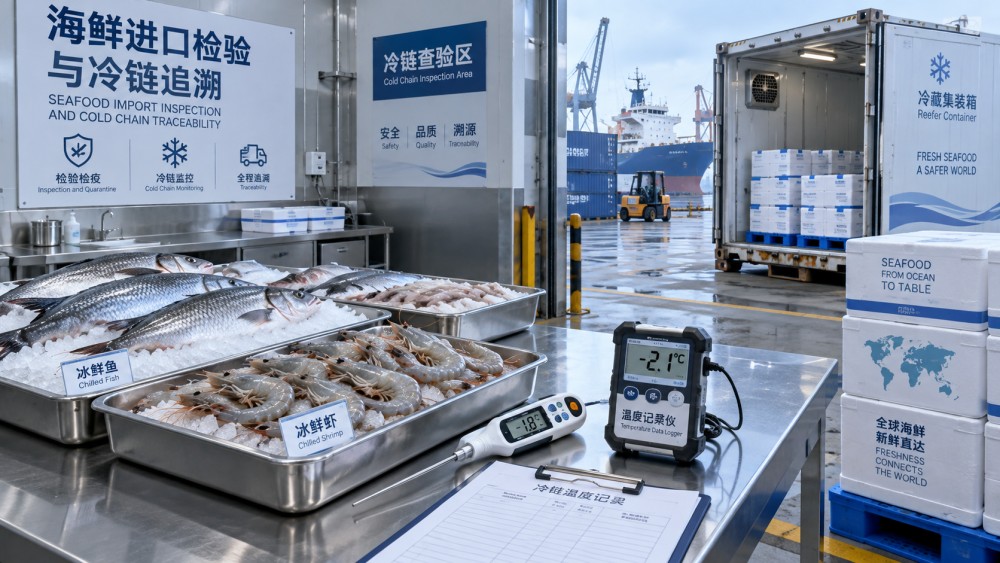
The first decision is market eligibility. Strong testing results cannot overcome a prohibited origin, an unapproved establishment, or restrictions covering a particular seafood category.
Define the shipment precisely: scientific species name, wild or farmed origin, production country, processing establishment, product form, intended use, and destination country before evaluating compliance.
Fresh tuna, frozen shrimp, live oysters, smoked salmon, and canned sardines present different hazards. Their import conditions can differ substantially within the same destination market.
Check whether the destination recognizes the exporting country’s inspection system and requires approval of individual processors, vessels, cold stores, or other establishments handling the product.
Live bivalve molluscs often face additional harvesting-area and monitoring requirements. Approval for ordinary fishery products should never be assumed to cover oysters, mussels, or clams.
Temporary restrictions can also arise from contamination findings, inspection failures, or animal disease measures. Confirm current eligibility when ordering and again before the shipment departs.
Keep food safety requirements separate from customs tariffs, sustainability certifications, and fisheries legality controls. A shipment may satisfy one framework while failing another applicable requirement.
Before paying a deposit, ask the supplier for its establishment identifiers and previous export experience. Independently verify any approval required by the destination authority.
What Do the Main Import Markets Require?
For businesses comparing suppliers, the most useful starting point is a market-specific compliance map. Assign responsibility for each requirement before agreeing shipment dates or prices.
These frameworks overlap, but documents and approvals are not automatically interchangeable. An exporter’s successful sales into one market do not establish eligibility for another.
The importer should maintain a destination checklist covering legal access, supplier approval, food safety controls, certification, labeling, notification, and the authority responsible for each check.
United States: How Do Seafood HACCP and Importer Verification Work?
Most FDA-regulated seafood imports fall under the seafood HACCP framework in 21 CFR Part 123. Relevant processors must analyze hazards and implement required controls.
The hazard analysis should reflect the actual species and process. Depending on the product, significant hazards may include pathogens, histamine, parasites, aquaculture drugs, or toxins.
Importers have verification duties under 21 CFR 123.12. These include product specifications addressing safety and affirmative steps supporting the foreign processor’s compliance with seafood HACCP.
Verification arrangements can include reviewing relevant records, obtaining appropriate assurances, or other permitted measures. Select an approach that meets the regulation and fits supplier risk.
Fish and fishery products imported from compliant seafood HACCP suppliers are generally exempt from FSVP requirements. Confirm that exemption applies to the specific import arrangement.
That exemption does not remove other applicable obligations. FDA prior notice, food facility registration where required, labeling, and restrictions on adulterated products still need attention.
Check FDA import alerts for the supplier, country, and product. An alert may expose shipments to detention without physical examination and additional evidence requirements.
Some products follow different oversight routes. Certain Siluriformes fish, including catfish, fall under USDA FSIS jurisdiction; live shellfish also require attention to applicable sanitation controls.
Consult FDA seafood guidance and 21 CFR Part 123 when building procedures. Record which requirements apply and retain evidence supporting each verification decision.
European Union and Great Britain: Which Approvals and Certificates Matter?
For EU imports, confirm that the exporting country is eligible for the product category and that establishments appear on applicable official lists where required.
Approval scope matters. A facility listed for one activity or product category may lack authorization for another, so compare its listing with the proposed shipment.
Consignments requiring official health certification must use the appropriate certificate model. Product details, establishment identifiers, origin information, and attestations should agree with the shipment.
The EU importer or responsible operator must arrange applicable pre-notification through TRACES NT. Controlled consignments generally enter through a border control post authorized for that category.
Border controls may involve documentary, identity, and physical checks, including sampling. Incorrect certificates can delay release even when laboratory results indicate an acceptable product.
EU contaminant limits, veterinary drug residue rules, and microbiological criteria must also be assessed. Applicable thresholds depend on the substance, species, and product category.
Great Britain operates a separate import system. Confirm current UK requirements for approval, health certificates, IPAFFS notification, and entry through an appropriate border control post.
Northern Ireland requires separate checking because relevant EU sanitary rules continue to apply under its arrangements. A Great Britain checklist should not be reused automatically.
Use the European Commission’s import conditions guidance and UK government import guidance to confirm the applicable route before booking freight or issuing final documents.
Which Seafood Hazards Deserve the Closest Supplier Checks?
Testing should follow the product’s risk profile. A generic certificate reporting “microbiology passed” provides limited assurance if it omits the hazards relevant to that seafood.
For tuna and other susceptible species, assess histamine controls from harvest onward. Freezing or cooking does not reliably remove histamine after it has formed.
For farmed shrimp and fish, review veterinary medicine use, prohibited substances, and applicable residue limits. Request evidence connecting test results to the actual production lot.
Bivalve molluscs require particular attention to harvesting-area controls, marine biotoxins, and microbial contamination. Freezing alone does not reliably resolve all hazards associated with contaminated waters.
Ready-to-eat smoked seafood needs controls appropriate to its process and shelf life. Consider Listeria risks, post-process contamination, storage conditions, and applicable destination microbiological criteria.
Products intended for raw consumption may require parasite controls. Determine whether a validated freezing treatment or an applicable exemption is supported by the necessary evidence.
Reduced-oxygen packaged fish can present Clostridium botulinum risks. Packaging, freezing, refrigeration, thawing instructions, and shelf-life controls must match the product’s validated safety control strategy.
For laboratory evidence, check sampling procedures, analytical methods, detection limits, and laboratory competence. A result is useful only when it answers the relevant compliance question.
Supplier approval should combine process evidence, audit findings, and targeted testing. End-product sampling alone cannot demonstrate that every unit in a shipment is safe.
What Documents and Cold Chain Evidence Should Accompany the Shipment?
Build a shipment dossier before dispatch. Depending on the market and product, it may include certificates, invoices, packing lists, establishment details, and import notification references.
Match species names, lot codes, weights, product descriptions, and establishment numbers across documents. Small discrepancies can create identity concerns and prevent straightforward border clearance.
Traceability should connect the delivered lot to its processor and relevant production or harvest records. Preserve records supporting source identification, investigations, and targeted recalls.
Temperature requirements depend on product type and destination rules. Agree operating limits with the supplier and carrier using applicable law and validated product specifications.
Review loading conditions, container settings, logger placement, transit duration, and handover records. A refrigerated container’s setpoint alone does not demonstrate the seafood’s actual temperature history.
Set a written process for temperature excursions: segregate affected stock, assess the exposure, obtain technical review, and document the decision before releasing the product.
Labels must satisfy destination requirements for product identity, allergens, storage instructions, and other mandatory particulars. Species, origin, and production-method disclosures may require additional review.
Certificates of analysis and commercial certifications can support the dossier. They do not replace official certificates, mandatory approvals, or evidence of effective food safety controls.
What Should Importers Specifically Recheck for 2026?
The practical issue in 2026 is identifying which requirements are currently effective. Separate established obligations, newly implemented measures, proposed changes, and future compliance deadlines.
EU fisheries control changes include mandatory use of the CATCH system for relevant import catch certification from January 2026. Confirm scope for the intended shipment.
Catch documentation addresses fisheries legality rather than replacing food safety certification. Businesses importing covered products need to manage both document streams within their shipment process.
For US-bound seafood, also check applicable NOAA restrictions and fisheries requirements. These can affect import eligibility independently of FDA food safety compliance and supplier testing.
Enhanced US food traceability requirements cover certain seafood categories, but businesses should verify current compliance dates and exemptions before treating implementation as a 2026 deadline.
Recheck contaminant limits, approved establishment lists, import alerts, and country restrictions close to shipment. These operational changes can matter more than broad annual regulatory summaries.
Maintain a dated regulatory register identifying the official source, affected products, effective date, and responsible employee. Update purchasing instructions whenever a change affects shipment eligibility.
How Can Buyers Make a Defensible Ship-or-Hold Decision?
Release a shipment only after confirming legal eligibility, supplier controls, document consistency, and acceptable transport conditions. Assign a named owner to each unresolved compliance item.
Hold the shipment when essential evidence is missing, approvals cannot be verified, or a safety deviation remains unresolved. Correct problems before cargo enters expensive transit.
Include compliance responsibilities in purchasing contracts: document deadlines, testing expectations, notification of production changes, access to records, and allocation of costs for rejected consignments.
Evaluate suppliers on total landed risk as well as price. Demurrage, laboratory testing, rejected stock, and interrupted customer supply can outweigh a small purchasing discount.
The central lesson for seafood imports in 2026 is practical: verify the exact product-market combination, then align supplier controls, official paperwork, and logistics with that decision.
A maintained compliance checklist gives buyers a repeatable basis for sourcing decisions. It also helps exporters demonstrate readiness before shipments face scrutiny at the border.