Professional Agri-Forestry Industry Insights | Global Intelligence Leader

How Can Buyers Assess a New Fishery Supplier’s Export Capacity?





Export Capacity Is a Supply Chain Question, Not a Sales Claim
For seafood buyers entering a new sourcing relationship, export readiness matters as much as product quality and price. A supplier may offer attractive samples, competitive quotations, and familiar certifications, yet still struggle to ship consistently once the first order becomes a recurring program.
That is why the practical question is not simply whether a fishery supplier can export. In many markets, almost any processor or trading company can arrange one shipment. The more important question is: can this supplier keep exporting the agreed product, in the agreed condition, with complete documentation and predictable delivery performance when market conditions become difficult?
How to assess whether a new fishery supplier has stable export capacity? Buyers need to look beyond a factory introduction or a product catalog. Processing volume, cold-chain control, raw-material access, compliance history, logistics partnerships, documentation capability, and financial discipline all affect whether an exporter can support a long-term relationship.
This distinction becomes especially important in fisheries because supply is exposed to seasonal catch patterns, aquaculture cycles, disease events, weather disruption, port congestion, changing import controls, and volatile freight conditions. A supplier's capacity is therefore not a fixed number on a brochure. It is the ability to manage these variables without creating unacceptable risk for the buyer.
Start With the Product Program, Not the Supplier's Headline Capacity
A common early mistake is treating total factory output as proof of export capability. A processor may state that it handles several thousand tonnes annually, but that number may combine many species, product formats, grades, and destination markets. It may also reflect peak-season throughput rather than the volume available to a new customer.
Buyers should define the intended program before evaluating capacity. The relevant questions change depending on whether the purchase involves frozen shrimp, whole round fish, fillets, squid, canned seafood, fishmeal, live aquatic products, or value-added retail packs. A supplier that performs well with one product category may be poorly equipped for another.
- What exact species, scientific name where relevant, origin, size range, and grade are required?
- Is the product wild-caught, farmed, or sourced through a mixed procurement model?
- What processing format is needed: whole, headed and gutted, fillet, portion, cooked, breaded, IQF, block frozen, or another specification?
- What is the expected shipment rhythm: seasonal purchases, monthly containers, weekly replenishment, or a promotional volume?
- What level of tolerance is acceptable for glaze, net weight, moisture, defects, bycatch concerns, labeling, and carton presentation?
Only after the program is clear can a buyer ask meaningful capacity questions. For example, a factory may have substantial freezing capacity but limited trimming labor for premium portions. Another may have reliable access to raw fish but insufficient cold storage to hold inventory during shipping delays. A supplier may also depend on third-party packing facilities, which can be workable but should be visible in the assessment.
The most useful request is not “What is your annual capacity?” It is: “What volume of this exact specification can you commit to for our destination over the next two to four quarters, and what constraints could change that commitment?”
Verify the Production System Behind the Quotation
A quotation should be treated as the beginning of due diligence, not evidence that the supplier has secured the product. In seafood trade, low pricing can result from efficiency and scale, but it can also reflect an outdated raw-material assumption, a temporary catch surplus, an incomplete specification, or a supplier attempting to win business before confirming allocation.
Ask the supplier to explain how product moves from landing site, farm, auction, collector, or vessel to the processing plant. The answer should identify the main sourcing regions, purchasing model, collection arrangements, quality checks, and normal timing from harvest or landing to freezing.
For farmed species, buyers should understand whether the exporter owns farms, contracts directly with farms, buys through agents, or purchases on the spot market. Owned or contracted supply does not automatically guarantee reliability, but it generally provides greater visibility than a purely opportunistic buying model. For wild-caught products, the key issues may include quota conditions, fishing seasons, vessel access, landing patterns, and the supplier's ability to compete for raw material when prices rise.
A credible supplier can usually distinguish between average throughput and committed capacity. It should be able to show production planning by line, shift, product type, and season, even if commercially sensitive details are withheld. Vague claims such as “we can handle any volume” deserve caution, particularly when the buyer's requested format requires labor-intensive handling or specialized equipment.
During an audit, virtual tour, or site visit, buyers should compare the stated program with observable conditions. Are the receiving, processing, freezing, packing, and storage areas appropriate for the intended product? Does the equipment appear maintained and actively used? Is there enough segregation to prevent species, allergen, or customer-lot mixing? Are temperature controls and sanitation practices documented rather than merely described?
For a first order, it is often sensible to treat the supplier's operational performance as a testable hypothesis. A smaller commercial shipment can reveal much more than samples alone: actual lead time, production communication, carton consistency, loading discipline, document quality, and responsiveness when a detail needs correction.
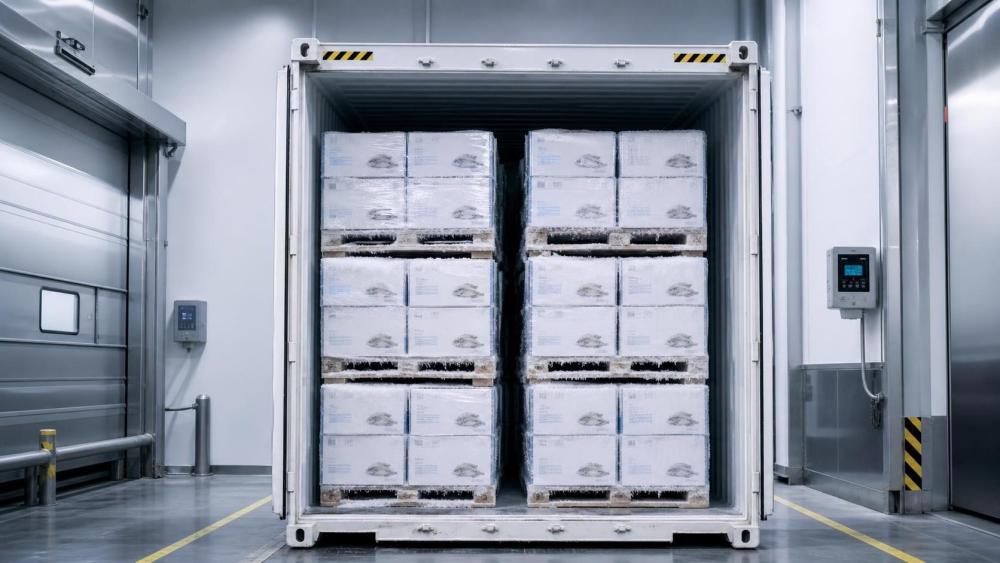
Cold Chain Control Is Where Export Claims Meet Reality
Frozen seafood is unforgiving of weak temperature control. Product may still look acceptable when it leaves a facility, while temperature abuse during pre-cooling, storage, stuffing, transshipment, or destination handling reduces shelf life, texture, appearance, and buyer confidence. For chilled products, the operating margin is even narrower.
Buyers should assess the cold chain as a connected system rather than a factory feature. Blast freezers and cold rooms are important, but so are insulated transport from the source, receiving temperature checks, staging time on the loading dock, reefer-container availability, generator access at ports, and the response plan for vessel delay or equipment alarm.
Useful evidence can include temperature monitoring records, calibration practices for probes, cold storage capacity, freezer loading procedures, reefer pre-trip inspection arrangements, and examples of corrective actions taken after deviations. The goal is not to demand a perfect record with no incident. It is to determine whether the supplier detects problems early, documents them, and has authority to stop or rework a shipment when necessary.
Buyers should also clarify ownership of risk at transfer points. In practice, disputes often arise because the supplier considers the container released once it enters the port, while the buyer expects the exporter to manage a temperature issue discovered before loading. Contract terms matter, but operational communication matters just as much. A supplier that can name its freight forwarder, reefer service contacts, and escalation process is usually easier to work with than one that simply says logistics are “arranged by the agent.”
Compliance Must Match the Destination Market
Export registration in the supplier's home country is not the same as market access in the buyer's destination. Seafood trade can involve health certificates, veterinary or competent-authority controls, establishment approvals, catch documentation, species declarations, origin requirements, residue controls, labeling rules, sustainability requirements, and import inspection procedures. Requirements differ by product, origin, processing method, and market.
A new supplier should be able to identify which approvals and documents apply to the buyer's shipment. Buyers should independently confirm the most current requirements with their importer-of-record, customs broker, regulatory adviser, or relevant authorities, because rules and enforcement priorities can change. Certification logos or expired document scans should not be treated as sufficient proof.
The following table separates useful evidence from weaker assurance signals.
Document competence deserves particular attention. A shipment can be physically sound and still be delayed, rejected, or subjected to costly rework because of an incorrect species description, weight mismatch, label error, missing signature, or inconsistent origin statement. Buyers should ask for redacted document sets from previous shipments to comparable destinations. This is often more revealing than a broad assurance that the supplier exports “worldwide.”
Traceability Should Be Tested Backward and Forward
Traceability has become a commercial requirement as well as a compliance requirement. Buyers may need to respond to customer questions about farm origin, vessel or landing area, processing date, lot composition, feed or treatment controls, and sustainability claims. In a recall scenario, slow or incomplete traceability can turn a contained issue into a wider commercial loss.
Ask the supplier to conduct a traceability exercise using a sample lot. Starting from a finished-carton code, can it identify the production date, raw-material batch, source, processing line, storage location, and shipment details? Starting from a raw-material record, can it identify which finished lots and customers were affected?
The assessment should also examine whether traceability is maintained when raw material is pooled. Blending supply from multiple farms, landing sites, or traders may be normal for some products, but the supplier should be transparent about what can and cannot be identified at lot level. Promises of full traceability are only useful if the records can support them.
Look for Evidence of Logistics and Documentation Experience
Stable export capacity includes the ability to move goods through real trade lanes. A seafood processor may have reliable production but lack experience with the buyer's port, required container type, transit duration, customs practices, or carrier schedules. These gaps can usually be managed, but they should be identified before confirming a regular program.
Questions worth asking include:
- Which ports does the supplier use most often, and how far is the facility from each port?
- Which freight forwarders and carriers are regularly used for refrigerated cargo?
- How frequently has the supplier shipped to the buyer's region or a market with similar requirements?
- What is the normal lead time from purchase order confirmation to container loading?
- How does the supplier manage container shortages, rolled bookings, port closures, or delayed vessel departures?
- Who reviews shipping instructions, labels, certificates, and final weights before documents are issued?
Past export volume can be helpful, but buyers should interpret it carefully. A supplier that ships many containers to less regulated nearby markets may still need support to serve a demanding import market. Conversely, a modest exporter with repeat shipments to comparable destinations may offer stronger operational discipline than a larger company with no relevant route experience.
References can help when they are specific. Rather than asking for a generic customer list, request references from buyers handling a similar species, product form, destination, and shipment frequency. The useful question is not whether the supplier has customers. It is whether it has delivered a comparable program through difficult periods.
Supply Stability Depends on Commercial Behavior Under Pressure
Fishery supply chains often appear stable when prices are falling and raw material is plentiful. The harder test comes when catches decline, farm output is disrupted, exchange rates move sharply, freight costs rise, or another market offers a higher spot price. In those moments, some suppliers prioritize long-term commitments while others delay, substitute, renegotiate, or quietly allocate volume elsewhere.
Buyers cannot eliminate this risk through a checklist, but they can evaluate the supplier's commercial structure. Does it use written allocation plans? Does it communicate market changes early? Can it explain its policy on substitutions and price review? Does it have multiple approved raw-material sources? Are payment terms realistic for the scale of business being proposed?
Extremely favorable terms can be a warning rather than an advantage. A supplier offering unusually low prices, broad specifications, long credit, and guaranteed volumes without clarifying conditions may be underestimating its own exposure. The buyer may later face requests for price adjustments, shipment postponement, or lower-grade substitutions.
For recurring programs, a framework agreement can help define volume ranges, quality specifications, notification periods, documentation requirements, inspection rights, temperature responsibilities, claims procedures, and escalation contacts. It will not create fish where supply has failed, but it gives both parties a clearer method for handling disruption.
Use a Staged Qualification Process
New suppliers should not be assessed through one meeting or one set of certificates. A staged process produces better information while limiting risk. First, screen the supplier against the required species, market access, product format, and minimum compliance conditions. Next, review documents and production evidence. Then audit the facility remotely or in person when the program justifies it. Finally, place a controlled trial order before moving to a larger commitment.
The trial shipment should be evaluated across the full chain: sample consistency, contract accuracy, production communication, loading photos where appropriate, temperature evidence, shipping documentation, arrival condition, claims handling, and final landed economics. A supplier that handles a small issue transparently and promptly can be a stronger partner than one whose first shipment appears flawless but whose internal systems remain opaque.
Industry intelligence also belongs in the qualification process. Buyers should track seasonal availability, disease alerts, weather patterns, export-policy changes, port conditions, and market-price movement in the supplier's region. Platforms such as AgriTrade can provide useful context by connecting fishery trade developments with cold-chain, policy, processing, and supply-chain reporting. The supplier's statements should make sense against that wider market picture.
A new fishery supplier does not need to be the largest exporter in its category to be a viable partner. It needs to be transparent about what it can deliver, disciplined in the systems that protect product and documents, and commercially credible when supply conditions tighten. Export capacity is proven over time, but a structured assessment can reveal early whether the relationship is being built on operational evidence or on promises that will not survive the first disruption.
Related News
- 00
0000-00
Fishery Machinery Manufacturing Market: Demand Drivers and Supply Chain Risks - 00
0000-00
Selecting Marine Fishery Equipment for Offshore Vessels: Capacity, Corrosion, and Safety - 00
0000-00
How to Evaluate a Fishing Equipment Manufacturer for Quality, Capacity, and Compliance - 00
0000-00
How Can Buyers Assess a New Fishery Supplier’s Export Capacity? - 00
0000-00
Which Countries Have the Strictest Fishery Product Quarantine Rules in 2026?
Fishery News Editorial Team
Weekly Insights
Stay ahead with our curated technology reports delivered every Monday.