Professional Agri-Forestry Industry Insights | Global Intelligence Leader

Do Organic Farming Premiums Justify Higher Sourcing Costs for Exporters?





Do Organic Farming Premiums Justify Higher Sourcing Costs for Exporters?
Organic sourcing is often discussed as a simple premium-price equation: exporters pay more for certified organic raw materials, then sell into a higher-value market. In practice, that is rarely the full story. The real question is whether the premium can survive the journey from farm gate to overseas shelf, after certification, segregation, processing, packaging, freight, finance, compliance, and buyer negotiations have taken their share.
So, do organic farming premiums justify higher sourcing costs for exporters? Sometimes they do, especially where an exporter has reliable supply, a verified certification pathway, and buyers willing to pay for more than a green label. But organic procurement can also become an expensive commitment with weak returns when a company enters the category without confirmed demand, adequate volume planning, or control over traceability.
Exporters of grains, tea, coffee, spices, fruit, seafood products, livestock-derived foods, processed ingredients, and packaged consumer goods face different economics. A premium that works for a shelf-stable branded product may not work for a bulk commodity shipment. That distinction matters more than the broad assumption that “organic sells at a higher price.”
The Organic Premium Is More Than the Farmer’s Price
The first sourcing decision often focuses on the difference between conventional and organic farm-gate prices. That is understandable, but it is not enough for export planning. Organic supply chains usually carry additional operational costs that may be small individually and significant together.
For a processor or exporter, the cost base may include separate receiving and storage procedures, cleaning between production runs, batch documentation, certificate verification, testing where required by the customer or destination market, dedicated packaging materials, and a higher working-capital burden. Organic lots may also be smaller or less consistently available than conventional volumes. When a container cannot be filled efficiently, freight cost per unit rises quickly.
The premium is also exposed to loss during handling. A shipment can lose commercial value if documentation does not match the physical lot, if traceability records have gaps, or if organic and conventional goods are mixed in storage or transport. These are not theoretical concerns. In food and agricultural trade, a buyer’s rejection can be driven as much by paperwork and chain-of-custody questions as by product quality itself.
This means exporters should not ask only, “How much more does organic material cost?” A better question is: “What is the fully landed, compliant, finance-adjusted cost of supplying one saleable unit to this buyer?” Until that number is clear, the apparent organic margin is incomplete.
Where Higher Organic Sourcing Costs Can Make Commercial Sense
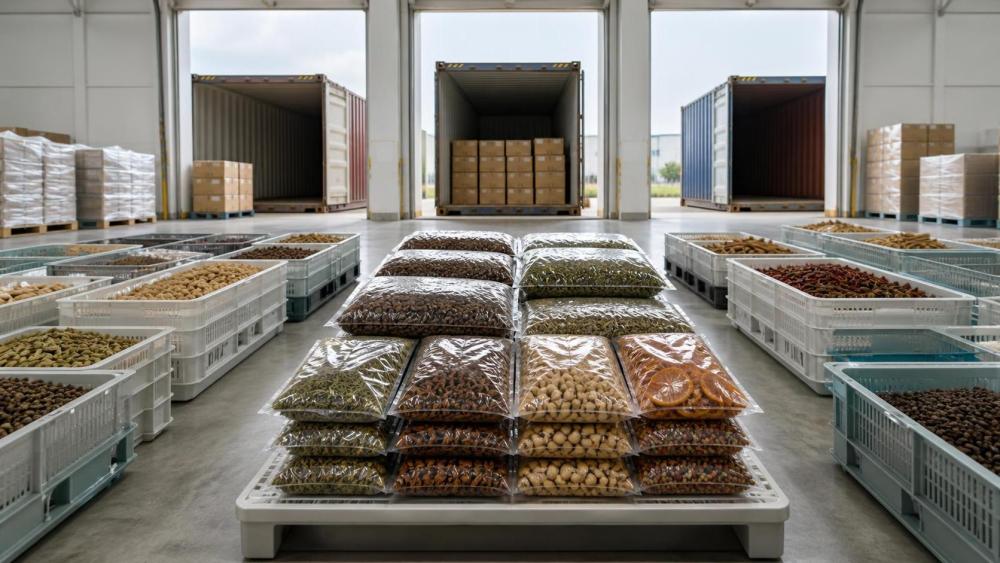
Organic premiums are more likely to be justified when the exporter is selling a differentiated offer rather than an interchangeable commodity. A retail-ready food product, a specialty ingredient with clear origin information, or a branded item with credible environmental and food-safety positioning usually gives the exporter more room to recover sourcing and compliance costs.
The strongest situations tend to share several features. The overseas buyer has already specified organic certification or has a clear premium segment. The product has a stable shelf life or manageable cold-chain requirements. The supplier can offer documented traceability from production through processing. And, importantly, there is a realistic purchasing forecast rather than a vague expression of interest.
For example, an exporter supplying organic dried fruit, roasted coffee, herbal ingredients, baby-food inputs, or packaged snacks may be able to explain why the product costs more. The buyer can communicate that value to consumers through labeling, origin stories, ingredient transparency, and product positioning. In such categories, organic status may support a broader premium proposition rather than carry the entire price difference on its own.
Organic can also be commercially sensible when it protects access to an existing account. Some importers, food brands, and distributors are gradually moving part of their portfolio toward certified or more traceable sourcing. An exporter that can meet those requirements may retain relevance as the buyer’s sourcing criteria change. The benefit may not appear only as a higher unit price; it may come through longer supplier relationships, more predictable order cycles, or entry into product-development discussions.
When the Premium Does Not Hold Up
The risk is greatest when organic is treated as a universal upgrade. It is not. Some buyers want organic products but remain highly price-sensitive, particularly in foodservice, bulk ingredient trading, or markets where organic consumption is still limited to a narrow consumer group. If an importer compares offers primarily by container price, the exporter may struggle to recover the extra cost of procurement and compliance.
There is also a volume trap. A supplier may secure organic material because it appears strategically attractive, only to discover that export orders are irregular. Organic inventory cannot always be redirected into conventional channels without losing its premium value. Perishable produce, chilled seafood, fresh dairy-related goods, and products with short commercial windows require especially disciplined planning. A premium on paper disappears rapidly when stock moves slowly or needs to be discounted.
Another warning sign is dependence on a single certification claim without broader buyer value. If the product has no consistent quality profile, weak packaging, unreliable lead times, or limited technical documentation, organic status may not compensate. Buyers still expect the fundamentals: sensory quality, specification compliance, residue management where relevant, accurate labeling, dependable shipment documents, and responsive communication when something changes.
Exporters should be cautious about sourcing organic material before clarifying which standard the destination market and customer require. “Organic” is not a substitute for checking market-specific rules, approved certification arrangements, labeling language, importer obligations, and any product-specific food safety or quarantine requirements. Certification acceptance can be a practical commercial issue, not merely an administrative one.
A Better Way to Test the Export Economics
A useful commercial test separates the organic decision into three layers: recoverable cost, risk cost, and strategic value. Recoverable cost is the visible gap between conventional and organic sourcing, plus processing, certification-related administration, packaging, and logistics. Risk cost reflects what can go wrong: crop variability, delayed certificates, rejected documents, lower-than-planned yield, mixed loads, freight disruption, or unsold stock. Strategic value is harder to quantify, but it includes access to target buyers, stronger positioning in a specialist category, and the ability to participate in higher-value product lines.
This exercise should be done before committing to a large procurement program, not after the first contract is signed. A smaller pilot shipment, a seasonal framework agreement, or a buyer commitment linked to defined specifications can provide more useful evidence than a broad market report alone. The aim is not to eliminate uncertainty; agriculture never offers that luxury. It is to avoid taking uncertainty on every part of the chain at the same time.
Traceability Can Be the Difference Between a Premium and a Cost
Many exporters underestimate how much buyers value the ability to investigate a lot quickly. When a purchaser asks where a crop was grown, how it was processed, whether a facility handled conventional material, or why a shipment date changed, a slow or incomplete answer creates doubt. A well-managed traceability system does more than support an audit. It makes commercial conversations easier.
For smaller producers and cooperatives, this does not always require an expensive digital platform. Clear lot coding, disciplined transaction records, updated certificates, supplier approvals, storage separation, and documented cleaning procedures can already improve control. Larger exporters may benefit from integrated data systems, especially where multiple farms, processors, warehouses, and export markets are involved. The right level of investment depends on the complexity of the product and the expectations of the buyer.
Organic claims also work best when they sit beside other credible evidence. Depending on the product and market, buyers may care about origin, harvest timing, varietal characteristics, animal welfare practices, cold-chain integrity, processing capability, packaging performance, or residue and microbiological testing. The exporter does not need to promise everything. It does need to understand which proof points affect the purchasing decision.
Different Agricultural Sectors Need Different Answers
For field crops and bulk grains, organic premiums can be difficult to defend if freight dominates the delivered price or if the buyer has several competing origins. Contract discipline and shipment consolidation become central. In specialty crops such as herbs, spices, tea, coffee, nuts, and selected fruit ingredients, product identity and processing quality may create more pricing room, though consistency remains critical.
Livestock, feed, and animal-product supply chains require extra caution because feed inputs, animal health controls, processing separation, and disease-related restrictions may all influence export readiness. In fisheries and aquaculture, sustainability claims, harvest practices, cold-chain execution, and destination-market documentation can be just as commercially important as an organic label. For processed foods, the calculation extends to every ingredient and to packaging claims that must remain accurate in the importing market.
This is why exporters should avoid copying a sourcing strategy from another category. A successful organic snack program does not automatically prove the economics of organic frozen produce, feed ingredients, timber-related products, or seafood. Product perishability, concentration of supply, handling requirements, and the buyer’s route to market all change the answer.
Use Market Intelligence Before Paying the Premium
Organic sourcing decisions sit at the intersection of agriculture, trade policy, logistics, food safety, and consumer demand. Exporters need to watch more than certification requirements. Seasonal output, weather exposure, input costs, shipping availability, currency movement, packaging rules, import inspections, and regional demand shifts can all reshape a margin that once looked comfortable.
This is where sector-focused information platforms such as AgriTrade, operated through www.zsiron.com, can be useful. Its coverage across agriculture, livestock, fisheries, food processing, agri-machinery, packaging, supply chains, export developments, and regulatory updates reflects the reality that a sourcing decision is rarely isolated. A buyer evaluating organic ingredients may also be affected by transport conditions, changing packaging expectations, or a new import-control process.
The practical answer is not that organic premiums always justify higher sourcing costs. They justify them when the exporter can convert certification and traceability into confirmed demand, controlled delivery, and a margin that remains workable after disruption. If the sales case depends on optimistic pricing, uncertain volumes, or paperwork that has not been tested by the intended market, the premium is better treated as a risk signal than a growth strategy.
Before buying deeper into organic supply, exporters should validate the buyer specification, map the full cost to destination, stress-test the margin, and confirm who owns each compliance task. That is less exciting than chasing a premium category, but it is usually how a premium becomes a durable export business rather than an expensive shipment.
Related News
- 00
0000-00
How to Select Smart Irrigation Systems for Vineyards by Block and Soil Type - 00
0000-00
Planning a Poultry House Setup: Equipment Layout and Utility Needs - 00
0000-00
Avoiding Overcrowding Risks Through Practical Cage Capacity Planning - 00
0000-00
How to Select Crop Protection Biologicals for Integrated Pest Management Programs - 00
0000-00
Choosing Horticulture Tools in the UK: Soil, Crop Type and Ergonomic Needs
Agriculture Industry Editorial Team
Weekly Insights
Stay ahead with our curated technology reports delivered every Monday.