Professional Agri-Forestry Industry Insights | Global Intelligence Leader

Why Poultry Equipment Prices Vary by Capacity, Materials, and Automation





Why Similar Poultry Systems Can Carry Very Different Prices
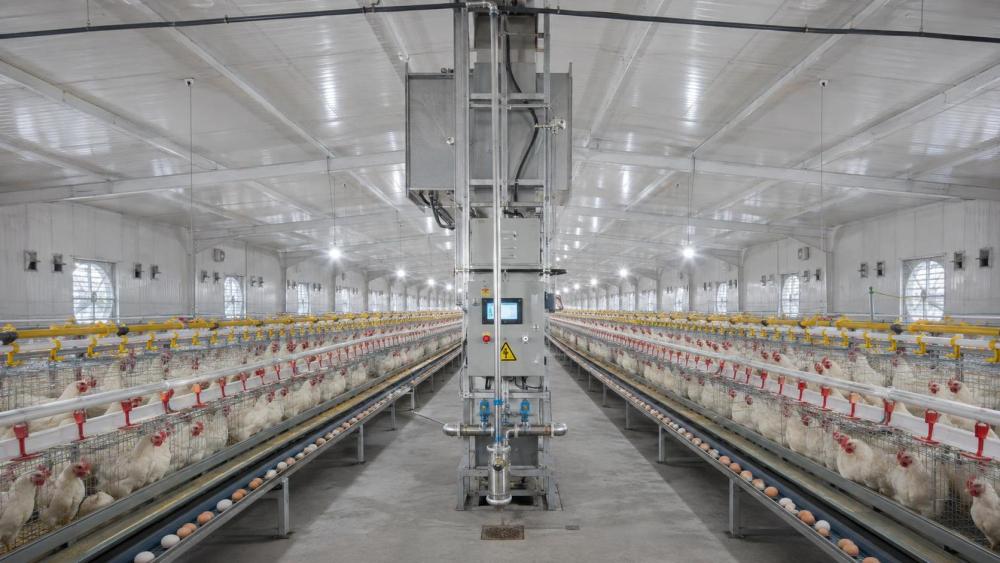
A poultry house may use the same broad categories of equipment—feeders, drinkers, cages, ventilation fans, brooders, egg handling lines, manure removal systems, and controllers—yet quotations can differ sharply. The gap is rarely explained by a supplier’s margin alone. Capacity, material selection, fabrication quality, automation architecture, installation requirements, and the intended operating environment all change the equipment’s real cost and expected service life.
For technical evaluators, the question is not simply why one package costs more than another. The more useful question is whether a higher initial price reflects measurable differences in throughput, hygiene, reliability, maintenance burden, or future expansion options. A low quotation can be appropriate for a small, dry-climate operation with simple labor routines. The same specification may be inadequate in a high-humidity house, a large layer facility, or a site where staff cannot respond quickly to equipment faults.
Price comparisons become meaningful only when the technical scope is normalized. A quotation for a drinking line, for example, may or may not include pressure regulators, filtration, medicators, hanging hardware, end-flush assemblies, spare nipples, and installation accessories. Two systems described with the same product name can therefore be materially different.
Capacity Changes More Than Equipment Size
Capacity is usually the first driver of poultry equipment cost, but the relationship is not always linear. Larger systems require more line length, more structural supports, greater motor power, larger electrical components, and more robust control arrangements. At a certain scale, equipment also shifts from being manually managed to being centrally controlled, which introduces sensors, control panels, communication wiring, alarms, and backup provisions.
A feeder designed for a small flock may rely on a basic hopper and manually adjusted feed flow. A larger automated line may require multiple feed circuits, distribution augers, anti-bridging hopper design, level sensors, drive units, and line-specific protection against overloads. The price increase reflects the added equipment, but also the engineering needed to keep feed delivery consistent across a longer house.
Capacity should be reviewed in terms of both nominal and practical loading. Nominal capacity may refer to the number of birds a system can serve under favorable conditions. Practical capacity depends on house layout, bird type, stocking density, feed form, climate, water quality, maintenance routines, and the daily operating schedule. A system that is technically sized for a bird count but has little allowance for peak demand, uneven distribution, or future flock expansion may generate recurring operational problems.
Buying for the maximum theoretical flock size can be as risky as buying too small. Oversizing may raise capital cost, increase energy draw, and leave equipment running outside its best operating range. Undersizing can create crowding around feed and water points, uneven bird access, excessive drive wear, and staff intervention that erodes the labor savings expected from mechanization.
Material Choice Is a Lifecycle Decision
Poultry environments are demanding on materials. Moisture, ammonia, disinfectants, dust, organic matter, temperature changes, and repeated washdown cycles can degrade equipment much faster than conditions in a light industrial setting. Material cost therefore reflects more than appearance or weight; it influences corrosion resistance, cleanability, structural stability, and replacement frequency.
Galvanized steel is common for frames, cages, brackets, and support structures because it provides a practical balance between strength and cost. Its performance, however, depends on coating quality, cut-edge treatment, weld protection, drainage, and exposure conditions. In areas that remain wet or accumulate manure, a thin or poorly protected coating may deteriorate early. Evaluators should ask where the equipment will be installed rather than assuming one finish is suitable throughout the house.
Stainless steel is often selected for components exposed to water, wet feed, cleaning chemicals, or frequent sanitation. It usually costs more than galvanized steel or standard coated metal, but it can reduce corrosion-related failures in critical areas such as water manifolds, certain troughs, washdown zones, and processing-adjacent equipment. The grade, thickness, fabrication method, and condition of welds matter. “Stainless” alone does not establish comparable durability.
Plastic components—including feed pans, water cups, nipple housings, slats, ducts, and egg collection elements—also vary substantially. Resin type, wall thickness, ultraviolet resistance, impact resistance, molding accuracy, and tolerance to cleaning agents influence service life. A lightweight plastic item may be suitable in a protected indoor area, while a more robust formulation may be needed where temperature swings, handling impacts, or frequent cleaning are expected.
Where material savings can create hidden costs
Cost-cutting is most likely to become problematic at joints, edges, fasteners, bearings, seals, and interfaces between different materials. These areas see movement, moisture ingress, chemical exposure, or local stress concentration. A low-priced conveyor may use an acceptable main frame but weaker bearings or limited sealing around drive components. A drinking system may have durable tubing but connectors that crack under repeated disassembly. These details are difficult to see in a summary quotation, yet they often determine maintenance frequency.
Material comparison should include the expected cleaning regime. Houses using aggressive sanitation chemicals, high-pressure washing, or prolonged downtime with residual moisture need equipment that can tolerate those conditions. If a proposed material requires gentler cleaning methods or careful drying to remain serviceable, the operating procedure should be realistic for the site rather than assumed.
Automation Adds Hardware, Logic, and Failure Modes
Automation is often described as a labor-saving upgrade, but its price is shaped by the complexity of the control task. A timer-operated feed line is different from a system that adjusts feed delivery according to sensor readings, records consumption, triggers alarms, manages multiple zones, and communicates with remote monitoring software. Both may be called automated, but their components and operational requirements are not comparable.
Basic automation can be highly effective where processes are stable and trained staff are available. Timers, limit switches, float valves, simple motor controls, and manually interpreted gauges can reduce repetitive work without creating a complicated support burden. Higher-level automation can be justified where house scale, labor availability, biosecurity restrictions, environmental variability, or management reporting requires continuous monitoring and faster response.
The added price of advanced automation commonly includes more than a controller. It may include sensors, signal cables, actuators, variable-speed drives, electrical enclosures, backup power interfaces, alarm devices, software configuration, and commissioning time. The quality of these supporting elements matters as much as the screen or dashboard. A sophisticated control unit connected to poorly installed sensors can produce unreliable data and inappropriate responses.
Technical teams should distinguish between automation that controls a process and automation that merely displays information. Temperature, humidity, water consumption, feed consumption, static pressure, and fan status are useful inputs, but their value depends on sensor placement, calibration, response logic, and operator interpretation. Monitoring without defined corrective actions may add cost without improving daily decisions.
Automation should be evaluated against the site’s response capability
A highly automated house still needs trained people, routine inspection, spare parts, and clear fault procedures. When an alarm occurs, someone must determine whether the issue is a sensor error, power problem, communication fault, mechanical jam, water supply interruption, or genuine environmental deviation. Remote alerts are valuable only when the operation has a realistic response plan.
For this reason, procurement documents should identify manual override methods. Feeders, ventilation equipment, water systems, and manure handling equipment may need to remain operable during controller faults, network interruptions, or maintenance. The cost of bypass switches, hand controls, backup ventilation arrangements, and protected power supply may look secondary during procurement, but these provisions can reduce exposure to a single-point failure.
Reading a Price List Without Comparing Unlike Scopes
A useful price reference is a starting point for identifying the components that belong in a complete system. When reviewing a poultry equipment price list, evaluators can use it to separate base equipment from accessories, installation items, controls, and operating spares. The objective is not to identify a universal “correct” price, since site conditions and scope vary, but to build a comparable bill of materials.
Each quotation should state the equipment model or configuration, material specification, rated capacity, electrical requirements, included accessories, delivery terms, installation boundaries, and warranty conditions. Where systems contain motors, gearboxes, controllers, sensors, or pumps, the offer should also clarify whether these components are included and whether local electrical compatibility has been checked.
Freight and packaging deserve particular attention for bulky equipment. Cage sections, panels, ducts, feed lines, structural frames, and conveyors may be economical to manufacture but expensive to transport, unload, and assemble. A lower ex-works figure can lose its advantage if packing dimensions are inefficient, site access is restricted, or missing fasteners and small accessories delay installation. For imported equipment, the procurement review should also account for customs procedures, local service availability, replacement lead times, and compatibility with locally available consumables.
- Define the system boundary. Confirm whether the quoted amount ends at the house wall, includes internal installation, or covers commissioning and operational testing.
- Match capacity to layout. Compare bird numbers alongside house length, row arrangement, levels, access aisles, and distribution points.
- Review material by location. Identify wet zones, chemical exposure zones, high-load supports, and areas that will be frequently cleaned.
- Request control documentation. Wiring diagrams, input-output lists, alarm logic, and operating instructions are part of the technical deliverable.
- Check service items. Bearings, belts, nipples, filters, sensors, fuses, and seals may need scheduled replacement even when the main structure remains sound.
Installation Quality Can Distort the Apparent Price Advantage
Equipment pricing is sometimes assessed before the house itself is ready. Uneven floors, insufficient roof clearance, incomplete drainage, poor water pressure, unstable power, inadequate ventilation openings, or weak structural supports can force changes during installation. These changes may appear as extra charges, but the underlying issue is often an incomplete interface review between building design and equipment design.
For cage and slat systems, floor flatness, anchoring points, aisle width, manure removal clearances, and egg collection routes should be checked before delivery. For feeding and drinking systems, the location of water treatment, header tanks, filters, pressure regulators, and electrical panels affects both installation time and future maintenance access. For ventilation, fan placement, inlet geometry, air leakage, controller settings, and emergency operation arrangements are interdependent. A fan price alone says little about how the air system will perform.
Acceptance testing should focus on function rather than appearance. Feed lines should run under representative load without abnormal noise or slippage. Drinking lines should be checked for pressure stability, leaks, flushing performance, and accessible cleaning points. Conveyors and egg collection equipment should be observed at joints and transfer points where damage or accumulation is most likely. Control systems should be tested for sensor loss, motor overload, alarm activation, and manual override, not simply powered on.
Use Total Cost of Ownership, but Keep It Operational
Total cost of ownership is often discussed in broad terms, yet it becomes useful only when linked to specific operating mechanisms. A more durable water line may reduce leakage risk and the labor required for repairs. Better corrosion protection may avoid replacement of supports during a period when the house is difficult to empty. A variable-speed ventilation arrangement may reduce unnecessary power use under partial-load conditions, provided the controller is correctly configured and maintained.
At the same time, a more expensive configuration is not automatically the lower-cost option. Complex automation may be poorly matched to a farm with inconsistent power, limited technical support, or no practical spare-parts plan. Premium materials may offer little added value in protected, low-corrosion locations. The correct comparison is between the expected operating condition and the equipment’s actual design features.
The most defensible procurement decision documents these conditions before comparing prices: flock type, house geometry, climate exposure, cleaning regime, utilities, labor availability, maintenance capability, expansion plans, and acceptable downtime. Once those conditions are clear, differences in capacity, materials, and automation stop looking arbitrary. They become traceable trade-offs between initial investment, operational reliability, and the risk of disruption over the equipment’s working life.
Related News
- 00
0000-00
Evaluating Poultry Farm Equipment Solutions Before Approving a Setup Budget - 00
0000-00
Why Poultry Equipment Prices Vary by Capacity, Materials, and Automation - 00
0000-00
Planning a Broiler Cage House: Equipment Sizing Mistakes That Raise Operating Risk - 00
0000-00
EU Tightens Foreign Investment Screening, Raising Import Compliance Risks for Agri-Food Equipment - 00
0000-00
Vietnam Mandates Type Approval for Imported Farm Machinery
Agri-Machinery Editorial Team
Weekly Insights
Stay ahead with our curated technology reports delivered every Monday.