Professional Agri-Forestry Industry Insights | Global Intelligence Leader

Layer Cage Design for High-Density Egg Farms: What Buyers Should Assess





High-Density Layer Farming in Emerging Markets: Engineering the H-Type Layer Cage
High-density egg production is expanding in many emerging markets as producers respond to urban demand, land constraints, and pressure to stabilize unit costs. In that environment, housing design is no longer a secondary equipment issue. It influences flock health, labor routines, manure handling, feed efficiency, utility planning, and the long-term economics of the farm. For buyers evaluating new poultry infrastructure, the engineering behind cage systems deserves close attention because small design differences may create large operational consequences over several production cycles.
Among the systems drawing attention, H-type configurations are often discussed when producers want to scale output within limited building footprints. Yet a higher stocking density does not automatically translate into better farm performance. The real question for procurement teams, technical evaluators, and project managers is whether the cage design supports stable production under local conditions, including climate, power reliability, labor skills, cleaning routines, and biosecurity management. A good selection process should therefore move beyond brochure specifications and focus on how the system behaves in day-to-day use.
Why Buyers Need a Technical Assessment, Not Just a Price Comparison
In fast-developing poultry sectors, expansion decisions are often made under time pressure. Investors may prioritize bird capacity, construction speed, and initial budget, while overlooking engineering details that affect operating risk. This can lead to underperforming assets: excessive egg breakage, difficult manure removal, weak corrosion resistance, poor ventilation interaction, or cage layouts that complicate routine inspection. Even when the purchase price appears competitive, these shortcomings may increase labor demand and maintenance cost over time.
A more disciplined assessment recognizes that cage design sits at the center of several farm systems. It connects with feed lines, drinking lines, egg collection, lighting plans, ventilation pathways, manure drying strategy, and building structure. If these interfaces are not considered early, farms may face redesign costs during installation or performance compromises after commissioning. For enterprise decision-makers, this makes technical due diligence a financial issue as much as an engineering one.
For many buyers, Layer cage should be reviewed as part of a wider production system rather than as a stand-alone steel product. The practical value lies in whether the design can maintain bird comfort, support routine management, and deliver predictable output under real farm conditions, especially where climate variation, uneven power supply, or inconsistent maintenance capacity may affect daily operations.
Core Design Factors That Matter in High-Density Projects
The first point buyers should assess is structural integrity. In multi-tier systems, frame stability affects installation accuracy, equipment alignment, and long-term safety. Steel thickness, joint design, anti-corrosion treatment, and load distribution all deserve attention. A cage frame that performs well in one environment may age differently in another, particularly where humidity, manure gases, and cleaning practices accelerate corrosion. Buyers should ask how the materials and coatings are expected to perform over the intended service life, not only during the first year of use.
The second factor is bird-space functionality. High-density farming depends on using space efficiently without creating management bottlenecks. Cage dimensions, door arrangement, feeder access, nipple drinker placement, and floor slope all influence hen behavior and egg handling. If the floor angle is poorly balanced, eggs may not roll smoothly, which can increase cracking or contamination risk. If feeder or drinker positioning is uneven, flock uniformity may suffer. These are not minor details; they influence production stability across the house.
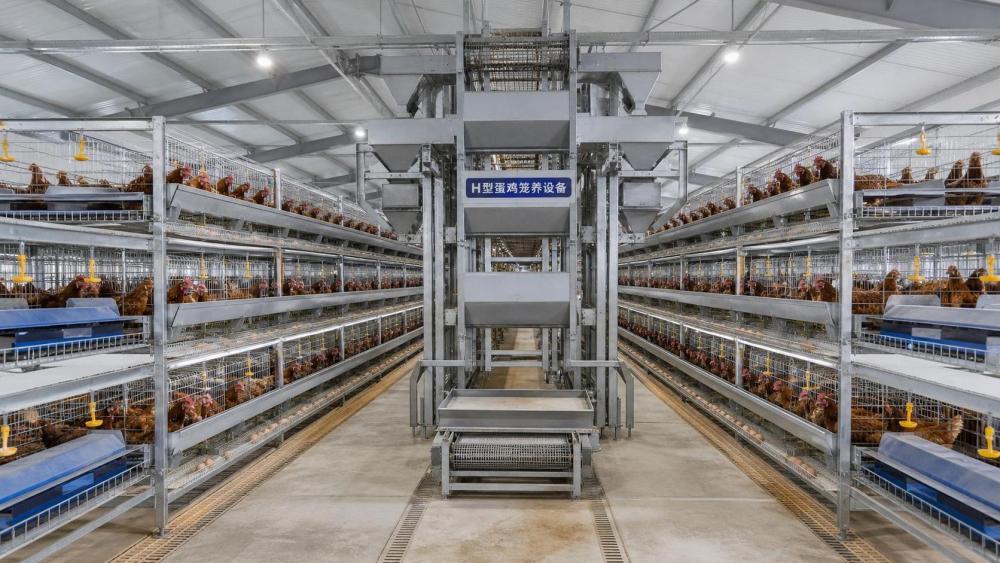
The third factor is manure and environmental management. In dense housing, manure removal is a core performance issue because it affects ammonia control, moisture levels, worker conditions, and disease pressure. Buyers should evaluate whether belt layout, discharge direction, cleaning frequency, and ventilation design work together. A cage system that increases stocking density without supporting effective waste handling may create environmental stress that offsets productivity gains. This is particularly important in regions where ambient humidity or seasonal rain complicates drying and disposal.
The fourth factor is operational accessibility. Technical evaluators sometimes focus heavily on capacity and mechanization while underestimating routine human interaction with the system. Can staff inspect birds easily? Is culling or vaccination manageable? Are there safe walkways and practical service points? Can common parts be adjusted without dismantling major sections? In emerging markets, where training levels and maintenance resources vary, simple and robust operating logic often has as much value as advanced automation.
How H-Type Systems Affect Project Economics
H-type layouts are often considered when farms want to maximize capacity per building, but their economic case should be assessed in full. Higher density may improve land use and spread some fixed costs over more birds. At the same time, system complexity can raise expectations for building precision, power consistency, spare-parts planning, and management discipline. If the site infrastructure is not ready, the theoretical efficiency of the housing system may be difficult to realize.
Procurement teams should therefore compare not only the equipment invoice but also the total project impact. This includes installation labor, utility requirements, ventilation capacity, manure logistics, maintenance routines, and future expansion compatibility. In some cases, a technically advanced cage design offers strong long-term value because it supports stable egg collection and more controlled flock management. In other cases, a farm may need to strengthen building systems or operating practices first to capture those benefits.
Common Mistakes During Buyer Evaluation
- Treating bird capacity as the main indicator of value while ignoring access, ventilation interaction, and waste removal.
- Comparing steel components visually without reviewing corrosion protection methods and expected life in local environmental conditions.
- Assuming automation alone will reduce labor, even when staff training, spare parts, and power stability are not yet adequate.
- Selecting a cage layout before confirming building dimensions, airflow paths, and manure discharge planning.
- Overlooking how daily management tasks such as inspection, isolation, repair, and cleaning will be handled at full stocking density.
These mistakes are common because housing equipment is often evaluated too late in the project cycle, after building assumptions and output targets have already been fixed. A better approach is to assess cage design early, while the project team can still align house width, ventilation strategy, utility routing, and service access with the intended production model.
What Different Stakeholders Should Check
Different decision-makers will naturally focus on different risks. Procurement personnel usually look at supply consistency, lead time, parts standardization, and lifecycle cost. Technical assessment teams will pay more attention to frame strength, feeding and drinking uniformity, egg collection flow, and maintenance accessibility. Senior management may prioritize return on investment, production stability, and whether the system supports future scale-up. Site managers and operators, meanwhile, need a design that is practical to use every day and does not turn routine tasks into hidden labor burdens.
Selection Priorities in Emerging Market Conditions
Emerging markets often present a mix of opportunity and constraint. Demand growth may justify large-scale investment, but infrastructure and operating conditions may still be uneven. This makes resilience an important buying criterion. Farms may benefit from cage systems that balance density with straightforward maintenance, practical spare-part replacement, and tolerance for variable environmental conditions. The ideal design is not always the most complex one; it is the one that remains controllable and efficient within the local management reality.
It is also useful to evaluate how easily the system can be phased into broader farm development. Some projects begin with one house and expand later. In that case, standardization matters. Consistent component logic, compatible utility layouts, and repeatable installation methods can reduce future project friction. Buyers should think beyond first installation and ask whether the system supports orderly growth without forcing major redesigns.
A More Practical Standard for Decision-Making
The strongest purchasing decisions usually come from combining engineering review with operational realism. Instead of asking only how many birds a building can hold, buyers should ask how reliably the system can support production, sanitation, inspection, and maintenance over time. In high-density layer farming, output depends not just on capacity but on how well the housing design supports repeatable daily performance.
For farms entering a new scale of production, H-type cage engineering can offer meaningful advantages when it is matched carefully to site conditions and management capability. That makes buyer assessment especially important. A cage system should not be judged solely by its footprint efficiency or mechanical appearance, but by how well it integrates with the practical demands of modern egg farming in environments where execution discipline, durability, and adaptability all matter.
Related News
- 00
0000-00
Evaluating Poultry Farm Equipment Solutions Before Approving a Setup Budget - 00
0000-00
Why Poultry Equipment Prices Vary by Capacity, Materials, and Automation - 00
0000-00
Planning a Broiler Cage House: Equipment Sizing Mistakes That Raise Operating Risk - 00
0000-00
EU Tightens Foreign Investment Screening, Raising Import Compliance Risks for Agri-Food Equipment - 00
0000-00
Vietnam Mandates Type Approval for Imported Farm Machinery
Agri-Machinery Editorial Team
Weekly Insights
Stay ahead with our curated technology reports delivered every Monday.