Professional Agri-Forestry Industry Insights | Global Intelligence Leader

Evaluating Poultry Farm Equipment Solutions Before Approving a Setup Budget





A poultry-house budget can look complete while still omitting the costs that determine whether the operation can run reliably. A line item for cages, feeders, drinkers, fans, or controllers is not enough for financial approval. The approving team needs to know how the equipment functions as a system, what site conditions it assumes, which items are essential before the first flock arrives, and where future expansion could create rework.
For finance leaders, the central question is not whether a proposed setup contains modern equipment. It is whether the proposed configuration can support the intended bird type, stocking plan, local climate, labor model, utility reliability, biosecurity procedures, and maintenance capacity without generating avoidable operating exposure. A lower initial quotation can become expensive if it leaves out water treatment, standby power interfaces, installation materials, commissioning support, spare parts, or the building alterations needed to make the equipment work.
Start with the production model, not the equipment catalogue
Equipment requirements differ materially between broiler growing, commercial egg production, breeder operations, pullet rearing, and small mixed farms. A financial review should begin with a short operating brief that defines the production model and the physical assumptions behind it.
For example, an egg operation may require layer housing, feed distribution, nipple drinking lines, egg collection equipment, manure handling, lighting controls, and ventilation designed around the selected housing system. A broiler house may place more emphasis on feeder and drinker line layout, heating, cooling, air movement, litter management, and rapid cleanout between cycles. Breeder farms introduce further separation and handling considerations because feed allocation and flock management are more controlled.
Before reviewing supplier quotations, the budget owner should request clear answers to several practical questions:
- What bird category and planned flock size does the design support?
- Is capacity measured by birds placed, birds housed, or expected production-stage occupancy?
- What are the building dimensions, ceiling height, floor condition, and intended internal layout?
- What climate conditions must the ventilation and heating arrangement manage?
- How stable are power supply, water pressure, water quality, and feed delivery access?
- Which tasks will be automated, and which will remain dependent on labor?
A setup budget should not be approved until these assumptions are written into the procurement record. Without them, competing proposals can appear comparable even when they solve different operating problems.
Separate the budget into functional systems
Equipment is often quoted as a package, which can make a budget easier to read but harder to audit. Breaking the proposal into functional systems exposes omissions and makes value engineering more disciplined. It also prevents the approval process from treating visible equipment as the entire capital requirement.
The goal is not to maximize automation in every category. It is to identify where automation reduces a recurring bottleneck or protects flock conditions that cannot be managed consistently by manual work. A fully automated feeding system may be justified in a large house with limited labor availability, while a simpler arrangement may be more appropriate where daily inspections are already well staffed. The financial case depends on the operating model rather than the appearance of the equipment.
Evaluate total installed cost rather than factory-gate price
Capital approval frequently fails at the boundary between supplied equipment and installed equipment. A quotation may cover fabricated components but exclude local civil works, electrical cabling, control panels, freight, unloading, erection tools, commissioning, or taxes and duties. None of these costs is optional once the purchase order is issued.
A more useful approval model divides cost into five layers: equipment supply, logistics, site preparation, installation and commissioning, and early operating readiness. Early readiness includes items such as essential spare parts, cleaning tools, staff training, water-system testing, and emergency-response procedures. The exact categories may vary by country and site, but the discipline of separating them prevents a misleadingly low capital figure.
Financial reviewers should also identify costs that are contingent rather than fixed. A house may need additional reinforcement after an engineering inspection. A cooling system may require a different water arrangement if local supply is unreliable. Imported components may require a longer lead time or locally available substitutes. These do not automatically invalidate a project; they should be shown as disclosed risks with an owner, estimated range, and decision point.
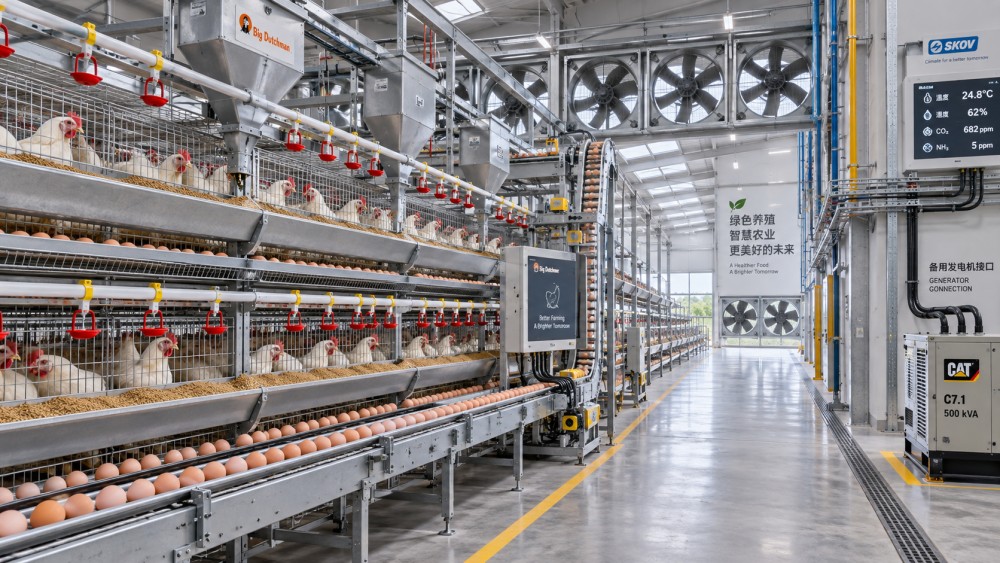
When the scope is still being developed, a poultry farm equipment solution should be reviewed as a complete layout and operating plan rather than as a list of individual machines. A complete equipment list can help the approval team test whether feed, water, environmental control, housing, collection, waste handling, and installation dependencies have been considered together.
Put reliability risks into the investment case
Equipment performance in poultry production is closely tied to daily continuity. A system that stops for several hours may create a far larger operational problem than its purchase price suggests, particularly where ventilation, drinking water, or environmental alarms depend on electricity. The budget should state which components are single points of failure and how the farm will respond if they fail.
For electrically driven systems, review the interface between the equipment and the site power arrangement. Questions should include whether the proposed controls can operate with the available voltage and frequency, whether critical loads are assigned to standby power, how alarms are communicated during an outage, and whether staff can operate essential functions manually. A generator alone is not a complete mitigation measure if it is not correctly sized, connected, fueled, tested, and maintained.
Water systems require the same scrutiny. Nipple lines, regulators, filters, tanks, and dosing equipment can perform poorly when the water source has unstable pressure or unsuitable quality. The approval file should include responsibility for water testing, filtration selection, flushing routines, and replacement consumables. This is particularly relevant when the farm expects to use medication or vaccination procedures through drinking water, as incompatible equipment or poor cleaning practice can affect delivery consistency.
Biosecurity should also be reflected in layout and equipment choices. The World Organisation for Animal Health describes biosecurity in poultry production as a set of management and physical measures intended to reduce the risk of introduction, establishment, and spread of animal diseases. Its guidance addresses issues including controlled access, cleaning and disinfection, movement management, and separation of production areas (WOAH, Terrestrial Animal Health Code, Chapter 6.5, “Biosecurity Procedures in Poultry Production,” accessed 2024). For a budget reviewer, this translates into practical questions: Can personnel move cleanly between zones? Are surfaces and equipment accessible for cleaning? Where are dead birds, litter, and manure moved? Does the proposed arrangement avoid unnecessary cross-traffic?
Compare designs on operating consequences
Two proposals can have similar capital totals but different consequences for labor, maintenance, flock monitoring, and downtime. The comparison should extend beyond capacity claims. Reviewers should ask how many routine checks are needed each day, whether consumable parts can be obtained locally, how difficult it is to wash and inspect the equipment, and whether a failed component can be isolated without shutting down the whole house.
Materials matter because poultry environments combine moisture, dust, ammonia exposure, cleaning chemicals, and mechanical wear. The proposal should identify major materials and finishes for components exposed to these conditions. Rather than accepting broad statements about durability, request documentation for the specified material grade, coating system, fasteners, motors, and electrical enclosures. The useful question is not whether a component is described as corrosion-resistant; it is whether its construction is suitable for its precise location and cleaning regime.
Controls also deserve a practical review. Environmental controllers, sensors, and alarms can support more consistent house management, but only if sensor placement, calibration, staff training, and manual override arrangements are understood. A sophisticated controller with no documented commissioning process may add complexity without reducing risk. Conversely, basic controls may be insufficient in a tightly managed house where temperature and ventilation changes need timely adjustment.
Require an acceptance plan before releasing the final payment
Approval should be tied to evidence, not merely delivery. The purchase documentation can define what must be checked at arrival, during installation, and at commissioning. This protects both the buyer and the supplier by reducing disagreement about what constitutes completion.
A workable acceptance checklist may include:
- Verification of equipment quantities against the approved bill of materials;
- Inspection for shipping damage, missing fittings, incorrect electrical specifications, and incomplete documentation;
- Confirmation that installed layout matches the approved drawing and does not obstruct access, cleaning, or emergency movement;
- Operational testing of feed distribution, drinker lines, fans, cooling components, lighting, conveyors, alarms, and manual overrides where included;
- Confirmation that operators have received installation records, maintenance instructions, spare-parts information, and control settings;
- Recording of outstanding defects, corrective responsibilities, and the deadline for closeout.
Commissioning should occur before birds are placed, leaving time to correct leaks, wiring faults, uneven feeder operation, airflow issues, or control errors. Financial teams should avoid treating commissioning as an administrative detail. It is the point at which a collection of supplied parts becomes an operating farm system.
Approve a phased budget when uncertainty is real
Not every project needs every enhancement on day one. Where flock growth, site development, or financing conditions remain uncertain, a phased plan can reduce exposure if the initial phase is designed for expansion. The key distinction is between deferring optional capacity and deferring infrastructure that will be costly to retrofit.
For instance, a farm may defer extra housing capacity while installing electrical routing, water capacity, drainage allowances, and building access that support future expansion. By contrast, postponing essential ventilation safeguards or water treatment simply transfers risk into the first production cycle. Finance approval should identify which items are expandable modules, which are critical at startup, and which require a later engineering decision.
A sound setup budget is not the lowest equipment total. It is a documented commitment to a defined operating model, with visible assumptions, installation scope, reliability controls, and acceptance conditions. When those elements are clear, decision-makers can distinguish between a genuinely economical design and a quotation that only appears inexpensive because important work has been left outside the price.
Got questions about this industry topic or seeking best practices for your business? Drop us a line below, and let the expert team at AgriTrade help you out.
We respect your privacy. Your information is strictly confidential.
Related News
- 00
0000-00
Evaluating Broiler Cage Equipment for House Space and Access - 00
0000-00
Comparing Cage Layouts for a 1,000-Layer Poultry House - 00
0000-00
Harvesting Equipment Export Market: Where Is Demand Growing? - 00
0000-00
Poultry Farm Equipment Quotes: Comparing the Full Project Scope - 00
0000-00
2026 China International Agricultural Machinery Exhibition Opens in Tianjin
0000-00
Agri-Machinery Editorial Team
Weekly Insights
Stay ahead with our curated technology reports delivered every Monday.