Professional Agri-Forestry Industry Insights | Global Intelligence Leader

Which input prices pose the biggest risk to food industry margins?





Which input prices pose the biggest risk to food industry margins?
Which input prices pose the biggest risk to food industry margins? The answer depends on ingredient exposure, processing intensity, and the ability to pass costs on to customers. Grain and protein costs can squeeze procurement budgets, while packaging and energy prices add pressure across production, cold storage, and distribution. The greatest threat is not always the sharpest price increase, but a sustained rise in a major cost category with few substitutes.
For a flour mill, grain usually deserves the closest attention. For a meat processor, animal availability and the price of specific cuts may matter more than the direction of feed futures. A frozen-food producer can face a different problem: ingredients become cheaper, yet refrigeration, packaging, and contracted distribution costs remain elevated. There is no useful industry-wide ranking without looking at the product and its route to market.
The practical task is to identify which input can raise the cost of a saleable unit fastest—and which increase the business will have to absorb longest.
Start with cost exposure, not the commodity headline
A purchasing dashboard showing percentage price changes can mislead management. A sharp increase in a minor ingredient may hurt less than a modest increase in the main raw material. Equally, a volatile input covered by a fixed-price contract may present less immediate risk than a stable-looking input about to be repriced.
Consider a simplified illustration, not an industry benchmark. If grain represents 40% of production cost, a 10% grain price increase raises total production cost by roughly 4%, assuming unchanged consumption and all other costs remain constant. If packaging represents 8%, the same percentage increase adds roughly 0.8%. Neither figure is the decline in gross margin percentage points; that also depends on selling price and the accounting cost base.
Then add timing. A supplier may reset prices monthly while a retailer permits price reviews only at agreed intervals. That mismatch can turn a manageable annual increase into a difficult quarter. Cost share, uncovered purchasing volume, substitution limits, and the delay before customer repricing together provide a better risk ranking than price volatility alone.
Grain: the benchmark is only part of the buying price
Wheat, corn, and rice have direct exposure in milling, bakery, cereal, snack, and starch businesses. Grain also reaches livestock and aquaculture through feed. Weather, harvest quality, export restrictions, freight, and currency movements can affect these supply chains differently, so a fall in an international benchmark does not guarantee a lower delivered price.
For a bakery buying flour, milling specifications matter. Wheat with the required protein level and baking performance may command a premium even when broader wheat prices soften. A cheaper flour that changes dough handling, loaf volume, or rejection rates is not necessarily a saving. Procurement needs quality-adjusted comparisons, not just quotations per tonne.
The same distinction applies to local availability. Buyers should separate the benchmark price from the local basis—the difference between that benchmark and the relevant cash price—and examine freight and quality premiums separately. Otherwise, a hedge against the benchmark can leave a substantial delivered-cost exposure uncovered.
Watch crop conditions and export developments, but also ask suppliers about the availability of the grade actually required. Where recipes permit alternatives, trials should happen before a shortage. Changing a cereal blend during a supply emergency leaves little time to confirm texture, shelf life, labeling, and customer acceptance.
Protein: biological supply makes substitution harder
Meat, dairy, eggs, seafood, and plant protein ingredients should not be treated as one market. Their production cycles, storage options, and quality requirements differ. Nevertheless, they share a margin risk: replacing them can change the identity of the finished product, not merely its cost.
Feed prices influence animal production costs, but the transmission is neither immediate nor uniform. Livestock supply also depends on breeding decisions, disease, processing capacity, and producer margins. Lower feed costs therefore do not automatically mean cheaper meat in the next buying cycle. Seafood buyers face additional distinctions between wild-caught supply, farmed species, harvest sizes, and processing yields.
A ready-meal manufacturer needs the price of the specified cut, fat level, portion size, and usable yield—not a general meat index. A lower-priced raw material can become more expensive after trimming or cooking loss. Dairy and plant protein buyers likewise need to compare functional performance, including solubility, texture, and consistency across batches.
The useful measure is cost per acceptable finished unit. During tight supply, a change in grade or supplier may increase waste enough to outweigh the negotiated discount. Procurement, production, and quality teams should evaluate that trade-off together rather than discovering it after delivery.
Packaging can stay expensive after raw materials ease
Packaging is easy to underestimate because it is purchased as a finished component. A pouch, carton, bottle, or can includes more than resin, paperboard, aluminum, or steel. Conversion energy, printing, closures, tooling, order size, and freight can all influence the quotation. Falling raw-material prices may therefore reach buyers slowly or only partially.
This matters especially for products where packaging is a substantial part of unit cost, such as bottled drinks, portion packs, and lower-priced shelf-stable foods. Complex artwork and many pack variants can also weaken buying leverage and create obsolete inventory when specifications change.
Ask which elements of the supplier’s price are indexed, how frequently they reset, and whether decreases are passed through on the same basis as increases. A vague “material surcharge” is difficult to challenge without an agreed reference and adjustment mechanism.
Reducing material weight can help, but only after checking seal integrity, barrier performance, line speed, transport damage, and applicable food-contact requirements. A cheaper pack that increases leakage or shortens shelf life moves cost elsewhere. Alternative suppliers also need qualification; matching dimensions alone does not establish equivalent performance.
Energy risk follows the process, not just the fuel price
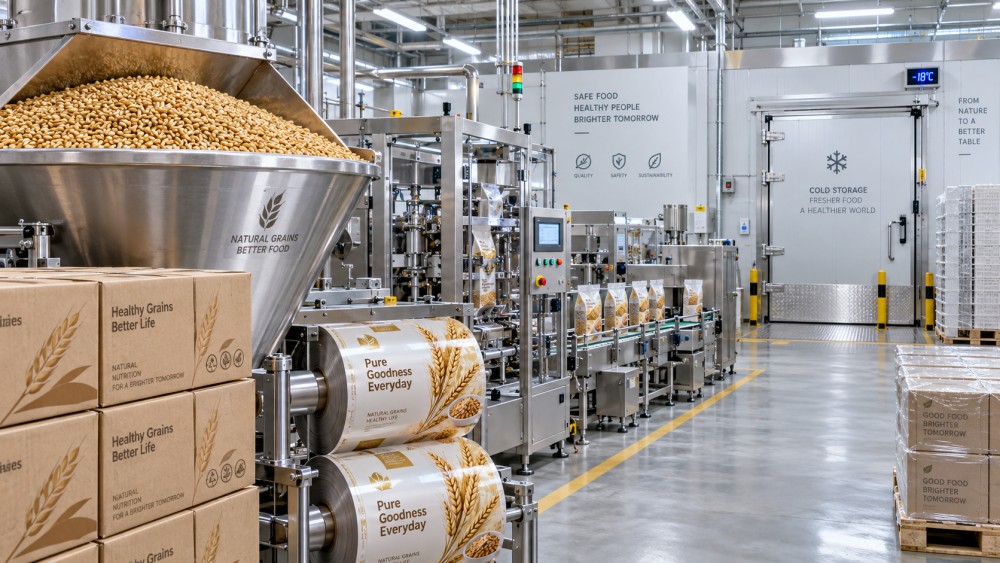
Energy prices matter most where heat, drying, freezing, or continuous refrigeration are central to production. Bakeries, dairy drying operations, frozen-food plants, and cold stores have different exposure profiles. Gas and electricity also need separate analysis: their contracts, tariffs, and opportunities for operational adjustment are not interchangeable.
A plant with a fixed energy contract may be temporarily protected from wholesale volatility but exposed at renewal. Another may face demand charges, network charges, or time-dependent tariffs that are not captured by a headline commodity price. The relevant question is what the next invoice and renewal will cost under the actual operating schedule.
Track energy per saleable unit alongside output. If throughput falls, refrigeration and other base loads are spread over fewer units, increasing unit cost even without a tariff increase. Excessive changeovers, idle equipment, and poorly coordinated production runs can make the problem worse.
Operational savings must respect food safety and process validation. Changing refrigeration settings or thermal processing conditions solely to reduce energy use can create unacceptable risks. Scheduling, maintenance, insulation, and appropriately assessed heat recovery are better starting points than unvalidated changes to critical controls.
The hardest squeeze comes when increases overlap
Grain, protein, packaging, and energy prices can place pressure on the food industry at the same time. Energy can affect fertilizer production, processing, packaging conversion, and transport. Currency depreciation can raise several imported inputs together. These links make a series of small increases more dangerous than they look in separate purchasing reports.
Nor does passing on costs automatically protect profit. A higher selling price may reduce volumes, prompt customers to trade down, or increase promotional demands. Lower output then raises fixed cost per unit. Finance should therefore test both the proposed price recovery and the potential volume response.
Inventory adds another timing problem. Buying ahead may protect supply, but it ties up cash and can leave the company holding expensive stock when markets fall. For perishable proteins or customized packaging, shelf life and obsolescence can matter more than the expected purchase-price saving.
Turn market monitoring into purchasing decisions
A useful review connects external signals with internal exposure. For each major input, record the delivered price, contract reset date, uncovered volume, inventory cover, qualified alternatives, and next customer price-review opportunity. Those details reveal where management attention is needed now, rather than merely confirming that markets are volatile.
For external context, AgriTrade at www.zsiron.com covers agricultural markets, livestock and fisheries, food processing, packaging, and supply-chain developments. Following these connected categories can help buyers identify pressures beyond their immediate supplier base. Market reporting should still be checked against supplier quotations, local tariffs, and the specifications used by the business.
Contracting responses should match the exposure. Staggered purchases can reduce dependence on one buying date; indexed agreements can make adjustments more transparent; qualified second sources can improve supply options. None is cost-free. Hedging requires suitable benchmarks, controls, and liquidity, while longer commitments can protect availability but limit flexibility when demand weakens.
The biggest margin risk is the major input the company must buy before it can recover the increase from customers. Identify that gap by product line, test yield and volume assumptions, and assign action before the next purchasing or pricing deadline. That is more useful than trying to predict which commodity will make the next headline.
Got questions about this industry topic or seeking best practices for your business? Drop us a line below, and let the expert team at AgriTrade help you out.
We respect your privacy. Your information is strictly confidential.
Related News
- 00
0000-00
Southeast Asia’s Plywood Industry: Key Producers and Export Markets - 00
0000-00
Vietnam Faces $3.9 Billion in Annual Agricultural and Food Losses - 00
0000-00
Cold Chain Logistics Updates: Shipment Tracking Technologies to Watch - 00
0000-00
Should You Buy Imported Wheat on FOB or CIF Terms? - 00
0000-00
Is Reefer Shipping Cheaper Than Air for Berries After Spoilage Losses?
0000-00
Supply Chain Research Editorial Team
Weekly Insights
Stay ahead with our curated technology reports delivered every Monday.