Professional Agri-Forestry Industry Insights | Global Intelligence Leader

What information do you need to complete an FDA prior notice form?





To complete an FDA prior notice form, gather the food’s identity, quantity, manufacturer or grower details, relevant countries, shipment parties, transport information, and anticipated U.S. arrival details. You also need contact information for the person submitting the notice and, where applicable, food facility registration information and details of any country that has refused the food entry.
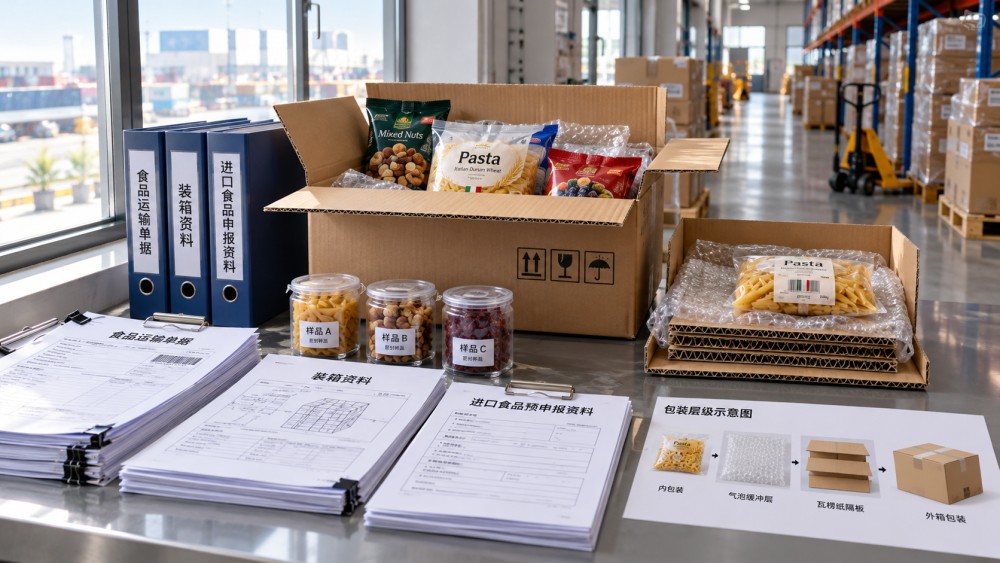
The exact fields depend on the product, transportation method, and filing route. A commercial ocean shipment, an express courier parcel, and food sent through international mail do not use identical information. Preparing a shipment-specific information sheet before opening the filing system helps prevent interruptions, inconsistent entries, and delays affecting perishable goods.
First, establish what shipment you are filing
Prior notice generally applies to food for humans and animals imported or offered for import into the United States, subject to specific exclusions and exemptions. Commercial samples, animal feed, and some shipments passing through the country can fall within its scope. A small shipment or a product described as a “sample” does not automatically qualify for an exemption.
Check the product’s regulatory status before gathering the full filing package. Certain meat, poultry, and egg products under USDA’s exclusive jurisdiction fall outside FDA prior notice requirements. Food carried by an individual for personal use and qualifying homemade food gifts have specific exemptions. These distinctions depend on the circumstances; “personal shipment” alone is an insufficient basis for deciding.
Also establish whether the submission will go through FDA’s Prior Notice System Interface, known as PNSI, or through a customs filing using the Automated Broker Interface within ACE. A customs broker or courier may submit on your behalf, but the exporter, importer, and logistics provider still need to supply accurate information.
FDA’s prior notice requirements are set out in 21 CFR Part 1, Subpart I. The filing system’s instructions should guide which conditional fields apply to your shipment.
Prepare the information that identifies the food
The product description should allow the filer to identify the actual food article. An invoice description such as “food products,” “agricultural goods,” or “assorted snacks” leaves too much unresolved. Give the filer the specific food name, its form, and enough processing and packaging information to select the appropriate FDA product code.
For quantities, “100 cartons” may be insufficient. If each carton holds 12 sealed bags containing 500 grams each, provide that complete structure. It allows the filer to describe the amount and packaging consistently with the packing list. Distinguish net food quantity from gross shipping weight, which may include pallets, insulation, and refrigerants.
Lot information deserves attention even where it is not a universally required field. Make it available so the filer can determine whether it must be reported for that food. Avoid substituting an invoice number for a production lot code without checking what the field requires.
A shipment can require multiple prior notices. Different foods or articles with different required identifying information may need separate submissions, even when they travel under one invoice or transport document. An assorted shipment should therefore be reviewed line by line before filing.
Identify the manufacturer or grower and the relevant countries
For food that is no longer in its natural state, prepare the manufacturer’s identity and applicable facility registration information. The manufacturer is not necessarily the trading company issuing the invoice, the brand owner, or the warehouse dispatching the goods. A supplier that purchases finished food from another plant needs to obtain the relevant manufacturing details.
Where a manufacturer’s FDA registration number is required, obtain the number and the associated identity and location information. If the number is not provided, the rules allow specified alternative information and a reason for its absence in applicable circumstances. Do not assume that entering “unknown” is sufficient. The filer should follow the permitted route in the filing system and supply the required supporting details.
For food in its natural state, prepare the grower’s name and growing location, if known. A produce exporter or consolidator should distinguish the grower from the packing business and the shipper. Where several farms supply a consignment, resolve how the articles and grower information should be represented before submission.
Keep the following country details separate:
- FDA country of production: The country determined under FDA’s rules for where the food was grown or manufactured, as applicable.
- Country from which the food is shipped: The country associated with the shipment to the United States, which may differ from the production country.
- Countries that refused entry: Any country to which the article has been refused entry, where applicable.
These fields should be established from the product and shipment history. A warehouse address in a trading hub does not, by itself, establish where the food was produced. Likewise, customs country-of-origin information should not be copied into an FDA field without checking that the applicable definitions align.
Ask the supplier directly about previous refusals. If the article has been refused entry by another country, that history forms part of the required prior notice information. A later sale or rerouting does not erase the question.
Gather the parties and transportation details
The filing needs to connect the food with the people and businesses responsible for its movement. Prepare full legal names and complete addresses, using consistent spellings across commercial documents. Contact details should reach someone who can resolve a question while the shipment is moving.
The information package should identify:
- The submitter: The individual submitting the notice, with business affiliation, address, telephone number, and email address.
- The transmitter, when different: The individual transmitting the notice and the applicable business and contact details.
- The shipper: The party shipping the food, with its complete address.
- The importer, owner, and ultimate consignee: Their names and addresses, as applicable to the shipment and filing route.
These roles can belong to different companies. For example, a trading company may sell the food, a manufacturer may ship it, a U.S. business may import it, and a distribution center may receive it. Confirm each role instead of repeating the invoice buyer in every field.
Transportation information includes the mode of transport, anticipated arrival location, and expected arrival date and time. Have the relevant customs entry information available when it applies. The carrier identifiers and transport references depend on how the food enters the country.
For air shipments, obtain the applicable carrier and flight information and air waybill references. For ocean freight, gather the vessel, voyage, bill of lading, and container details required by the filing route. Road and rail movements have their own carrier and conveyance fields. Ask the carrier or broker for the correct identifiers rather than trying to derive them from a booking email.
For an express courier shipment, obtain the tracking or air waybill information and establish who will handle prior notice. A courier accepting a package does not establish that a valid notice has been filed. International mail follows a distinct process: prepare the sender, recipient, mailing, and package information requested by PNSI, and obtain confirmation before sending the food.
Check the information against the filing deadline
Accurate information must also be available early enough. For standard submissions, FDA must receive and confirm prior notice at least two hours before arrival by road, four hours before arrival
Got questions about this industry topic or seeking best practices for your business? Drop us a line below, and let the expert team at AgriTrade help you out.
We respect your privacy. Your information is strictly confidential.
Related News
- 00
0000-00
Southeast Asia’s Plywood Industry: Key Producers and Export Markets - 00
0000-00
Vietnam Faces $3.9 Billion in Annual Agricultural and Food Losses - 00
0000-00
Cold Chain Logistics Updates: Shipment Tracking Technologies to Watch - 00
0000-00
Should You Buy Imported Wheat on FOB or CIF Terms? - 00
0000-00
Is Reefer Shipping Cheaper Than Air for Berries After Spoilage Losses?
0000-00
Supply Chain Research Editorial Team
Weekly Insights
Stay ahead with our curated technology reports delivered every Monday.