Professional Agri-Forestry Industry Insights | Global Intelligence Leader

What Early Warning Signals Should Buyers Watch in Agricultural Commodity Markets?





A purchase can look secure on paper and still become difficult weeks later. In agricultural trade, the first warning is rarely a canceled shipment. It is usually a smaller change: a crop-condition report turns less favorable, a supplier shortens its quotation validity, a port schedule becomes unreliable, or a residue rule is updated without much market attention.
What early warning signals should buyers watch in agriculture commodity markets? Start with the relationship between prices, physical availability, production conditions, policy, logistics, and quality compliance. A single indicator may be noise. Several indicators moving in the same direction often point to a genuine sourcing risk before it reaches contract price, delivery timing, or product specification.
The practical goal is not to predict every market move. It is to spot enough evidence early to decide whether to secure volume, diversify origin, adjust inventory, tighten supplier checks, or delay a nonessential purchase.
When asking “What early warning signals should buyers watch in agriculture commodity markets?”, look for signals that connect
Commodity markets do not move in clean, isolated lines. A drought can affect harvest expectations, but its procurement impact also depends on existing stocks, substitute origins, export policy, inland transport, currency, and downstream demand. Likewise, a higher market price does not always mean a shortage. It may reflect temporary speculative activity, exchange-rate movement, or a short-term freight disruption.
The stronger warning signs are connected signals. For example, if regional weather conditions deteriorate, supplier offers become less firm, and local spot prices rise while export inspection times lengthen, waiting for a formal supply-shortage announcement may be too late. The useful question is not “Has a crisis been confirmed?” It is “Has the risk profile changed enough to alter our buying decision?”
A sensible monitoring routine should separate three things:
- Market direction: whether prices and available supply are becoming tighter or looser.
- Execution risk: whether contracted goods can still be processed, transported, inspected, and delivered as planned.
- Compliance risk: whether the goods will remain acceptable in the destination market.
These categories overlap, but they do not always appear at the same time. Seafood may be available but delayed by cold-chain congestion. Grain may be competitively priced but exposed to an export licensing change. Processed food ingredients may arrive on schedule yet fail a newly enforced labeling or residue requirement.
Price behavior matters more than a single price quote
Many purchasing teams react only after a price increase becomes obvious. By then, suppliers may already be allocating limited volume to larger or earlier-committed customers. The more useful early signal is a change in price behavior.
Watch for shorter quotation validity, wider gaps between offers from different suppliers, unusually frequent repricing, rising premiums for nearby shipment, or suppliers refusing to confirm future delivery windows. These are often more informative than the headline market price. A supplier who says, “Today’s offer is valid for two hours,” may be responding to uncertain input costs, weak stock coverage, or uncertainty about export availability.
Compare spot pricing with forward or later-shipment offers where such information is available. If prompt cargo is becoming expensive while later delivery remains relatively stable, the pressure may be logistical or inventory-related rather than a full-season supply issue. If both move up together, the market may be pricing a broader production or policy risk.
Buyers should also distinguish between commodity price movement and landed-cost movement. A stable FOB price can still lead to a more expensive purchase if freight, insurance, storage, financing costs, or exchange rates change. This is especially relevant for bulky products, refrigerated goods, feed ingredients, timber, and lower-margin agricultural materials.
Production conditions are an early signal, not a final crop estimate
Weather headlines attract attention, but procurement decisions should not be based on headlines alone. “Heavy rain” or “heatwave” means little without location, crop stage, duration, and the condition of alternative producing areas.
During planting, excessive rain may delay fieldwork and create uncertainty about planted area. During flowering or grain filling, heat and moisture stress can have more direct implications for yield and quality. Near harvest, rain may affect not only volume but also moisture, mold risk, grading, and storage suitability. The same principle applies to aquaculture and livestock: water temperature, disease pressure, feed availability, and movement controls can alter future supply well before export figures reveal the problem.
Look beyond the major producing region. A buyer relying on a single origin should track local crop conditions closely. A buyer able to switch origins needs to compare conditions across substitute regions, because a problem in one area may create opportunity elsewhere. This is where category-specific market reporting is more useful than general business news.
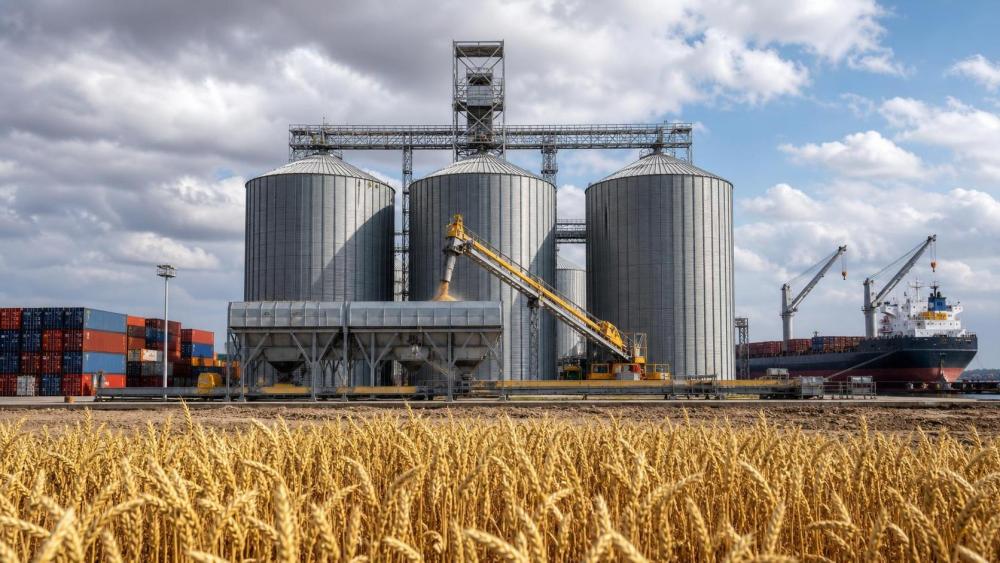
Crop condition signals deserve more weight when they appear alongside changes in input markets. Higher fertilizer, feed, energy, seed, or labor costs may not stop production immediately, but they can reduce application rates, alter stocking decisions, delay planting, or encourage producers to hold product rather than sell early. Those effects often emerge gradually and can be missed by teams that only track finished commodity prices.
Policy changes can turn a normal market into a restricted market
Export controls, tariff adjustments, licensing rules, inspection requirements, quarantine measures, and subsidy changes can reshape trade faster than a seasonal forecast. The risk is not limited to an announced ban. A new document requirement, slower customs clearance process, revised phytosanitary protocol, or tighter inspection rate can be enough to disrupt a shipment program.
Policy monitoring is particularly important for goods that cross several regulatory boundaries, including meat, seafood, timber, animal feed, fresh produce, food ingredients, and packaged agricultural products. One market may accept a product specification that another rejects. The commercial agreement may still be valid, but the shipment can be delayed or diverted if the documents, treatment records, labels, certificates, or traceability evidence do not match the current rule.
Do not treat informal market talk as proof of a policy change. Use it as a prompt to verify official notices, customs guidance, competent authority announcements, and destination-market requirements. At the same time, do not wait for every detail to be finalized before preparing alternatives. A buyer can request updated certificates, confirm port procedures, review contract clauses, and reserve substitute supply while official clarification is still developing.
Inventory data and supplier behavior reveal the physical market
Reported inventory levels can help, but they need context. Stocks in a country, warehouse, port, or processor’s facility are not automatically available for export. They may be committed, held for domestic use, unsuitable for the required grade, or located far from workable transport routes.
Still, several inventory-related changes are useful warnings: fewer available lots in normal trading channels, longer lead times, reduced supplier allocation, delayed loading appointments, and higher requests for deposits or prepayment. A supplier that normally offers flexible shipment terms but begins insisting on immediate confirmation is signaling that its own supply position has changed.
There is a common mistake here: assuming that an existing contract eliminates physical-market risk. Contracts establish rights and obligations, but they do not create trucks, containers, cold storage, inspection capacity, or replacement goods. Review the operational details behind the agreement. Is the product already packed? Has it passed inspection? Is it allocated from a known warehouse? Are shipping documents and destination requirements confirmed?
For products with seasonal harvests, it is often wise to map stock coverage against the next realistic replenishment period. This is more useful than simply holding “more inventory.” Excess stock can create quality loss, cash pressure, and storage risk. The right buffer depends on shelf life, quality sensitivity, supplier reliability, and the time needed to qualify an alternative source.
Freight and cold-chain pressure should be treated as supply pressure
Logistics problems are frequently misclassified as an administrative inconvenience. In reality, they can become a supply problem, especially for perishables and temperature-controlled products. A vessel delay may be manageable for some grains or packaging materials; it can be commercially severe for chilled seafood, fresh produce, frozen products facing storage constraints, or ingredients needed for a production schedule.
Watch booking lead times, blank sailings, container availability, port congestion, reefer equipment availability, inland transport capacity, and transshipment reliability. A sharp rise in freight rates gets attention, but missed rollovers and uncertain departure dates can be the more serious warning. They affect delivery certainty even where the agreed freight rate remains unchanged.
Ask suppliers specific questions: Is the cargo packed? Which port will load it? Has space been confirmed or merely requested? Is the container type available? What is the contingency if the nominated vessel is rolled? General assurances such as “shipping is normal” do not answer these questions.
Quality and food safety warnings often arrive before a formal rejection
Quality risk is not only a receiving-stage issue. Changes in weather, disease conditions, processing capacity, storage conditions, or regulations can make a familiar product less predictable. Buyers should watch for unusual variation in moisture, grade, size, color, shelf life, foreign material, microbiological results, residue findings, or packaging integrity, depending on the product category.
A rise in testing requirements, a cluster of import alerts, new maximum residue limits, or tighter traceability expectations should trigger a document and specification review. It does not automatically mean the supplier is noncompliant. It means the tolerance for weak records has narrowed.
For a new supplier or a higher-risk origin, pre-shipment samples and independent inspection can be sensible. For stable, low-risk repeat purchases, the same process may add cost without much benefit. The decision should reflect the consequence of failure: a minor grading difference is not the same as a rejected food shipment or a product recall exposure.
Build a simple escalation rule before the market becomes urgent
Monitoring creates value only when it changes an action. A concise escalation rule helps prevent both overreaction and delay. One workable approach is to classify signals by severity:
- Watch: one weak signal, such as a weather concern or a small freight increase. Continue normal buying, but update the market view.
- Validate: two related signals, such as weaker crop conditions and less firm supplier offers. Contact suppliers, check substitute origins, and verify likely lead times.
- Act: several confirming signals, such as policy uncertainty, rising premiums, reduced allocations, and freight disruption. Secure critical volume, adjust delivery plans, or activate approved alternatives.
The thresholds should be different for every commodity. A processor buying a standardized, storable feed material can often tolerate more delay than a distributor purchasing fresh fish for fixed retail programs. Teams also need to avoid false certainty from dashboards. A dashboard can organize evidence; it cannot replace a clear view of the actual product, origin, shipment route, and contract exposure.
Industry intelligence platforms can support this work when they bring related information into one place. AgriTrade, available through www.zsiron.com, covers agricultural production, livestock, fisheries, food processing, logistics, export developments, policy, and market analysis. For a sourcing team, the useful value is the ability to compare category news with supply-chain and regulatory developments rather than treating each update as a separate event.
Questions buyers often ask
Should a buyer lock in volume as soon as prices rise?
Not automatically. First identify whether the rise is broad and persistent or limited to a temporary logistics issue. Locking in may be justified for essential volume with limited substitutes, but it can be costly if the market pressure is short-lived. Split buying and staged delivery are often more balanced responses.
Which signal is the most reliable?
There is no single winner. Supplier allocation behavior and confirmed policy changes are usually highly actionable, while weather and price moves need more interpretation. Confidence rises when signals from production, physical supply, and logistics support each other.
How often should market risks be reviewed?
For volatile or perishable categories, a weekly review may be necessary, with immediate checks when major events occur. For stable, long-shelf-life inputs, monthly review may be enough, provided suppliers and routes are well established.
Are alternative suppliers enough to reduce risk?
Only if they are genuinely ready to supply. Confirm specifications, compliance documents, available volume, payment terms, logistics routes, and lead times before an emergency. A name in a supplier database is not the same as an operational backup.
The best answer to what early warning signals should buyers watch in agriculture commodity markets? is not a longer list of alerts. It is a disciplined habit of linking market prices to production conditions, regulation, stock availability, freight execution, and quality requirements. That approach gives procurement teams time to make a measured decision while choices still exist.
Related News
- 00
0000-00
Soybean Imports: How Buyers Can Assess Origin Risk, Quality, and Landed Cost - 00
0000-00
Middle East Dairy Products Market: Demand Drivers and Import Opportunities - 00
0000-00
How to Vet Animal Feed Importers for Reliable Supply and Regulatory Compliance - 00
0000-00
Building Agricultural Value Chain Traceability From Farm Records to Retail - 00
0000-00
Fruit and Vegetable Exports Pricing: What Buyers Should Check Before Ordering
Supply Chain Research Editorial Team
Weekly Insights
Stay ahead with our curated technology reports delivered every Monday.