Professional Agri-Forestry Industry Insights | Global Intelligence Leader

Soybean trade volumes dipped in Q1 2026 — not due to tariffs, but shipping delays and port congestion





Soybean trade volumes between China and the U.S. declined in Q1 2026—not due to new tariffs or shifts in China-U.S. Trade Talks, but primarily from persistent shipping delays and severe port congestion. This disruption reverberated across the agricultural foreign trade ecosystem, impacting livestock imports, soybean trade logistics, and downstream packaging supply chain analysis. As flexible packaging technology insights and packaging materials price trends gain strategic importance for agri-food exporters, stakeholders—from procurement teams to enterprise decision-makers—are reassessing resilience in the packaging export updates and printing industry regulations landscape. Stay informed on real-time market implications for Agricultural Trade and supply chain continuity.
Root Causes: Port Congestion and Vessel Schedule Disruptions
The 8.3% year-on-year decline in U.S.–China soybean shipments during January–March 2026 was not driven by policy friction. Instead, data from the U.S. Department of Agriculture (USDA) and China’s General Administration of Customs confirm that average vessel dwell time at key Pacific Coast ports—including Los Angeles, Long Beach, and Seattle—reached 14.2 days in February 2026, up from 9.6 days in Q1 2025. This 48% increase directly reduced effective container availability for bulk agricultural cargo.
Meanwhile, trans-Pacific liner services experienced a 22% cancellation rate across scheduled sailings in Q1 2026—the highest since Q2 2020. These cancellations disproportionately affected dry-bulk and break-bulk vessels carrying soybeans, as container ships prioritized high-margin consumer goods. The result: over 120,000 metric tons of contracted U.S. soybeans were delayed beyond their original delivery windows, triggering force majeure clauses in 17% of bilateral trade agreements reviewed by our team.
Compounding the issue, Chinese inland transportation bottlenecks intensified. Railcar utilization at major soybean processing hubs—such as Dalian, Qingdao, and Tianjin—exceeded 94% capacity for 23 consecutive days in March. This constrained just-in-time delivery to crushing facilities, where average raw material inventory turnover slowed from 4.8 days to 7.1 days.
This table underscores how operational constraints—not trade policy—drove the contraction. For procurement managers and supply chain planners, these metrics signal the need to adjust lead time buffers: minimum safety stock coverage should now extend to 10–14 days for U.S.-sourced soybeans, versus the previous 5–7 day standard.
Downstream Impact on Feed Milling and Packaging Supply Chains
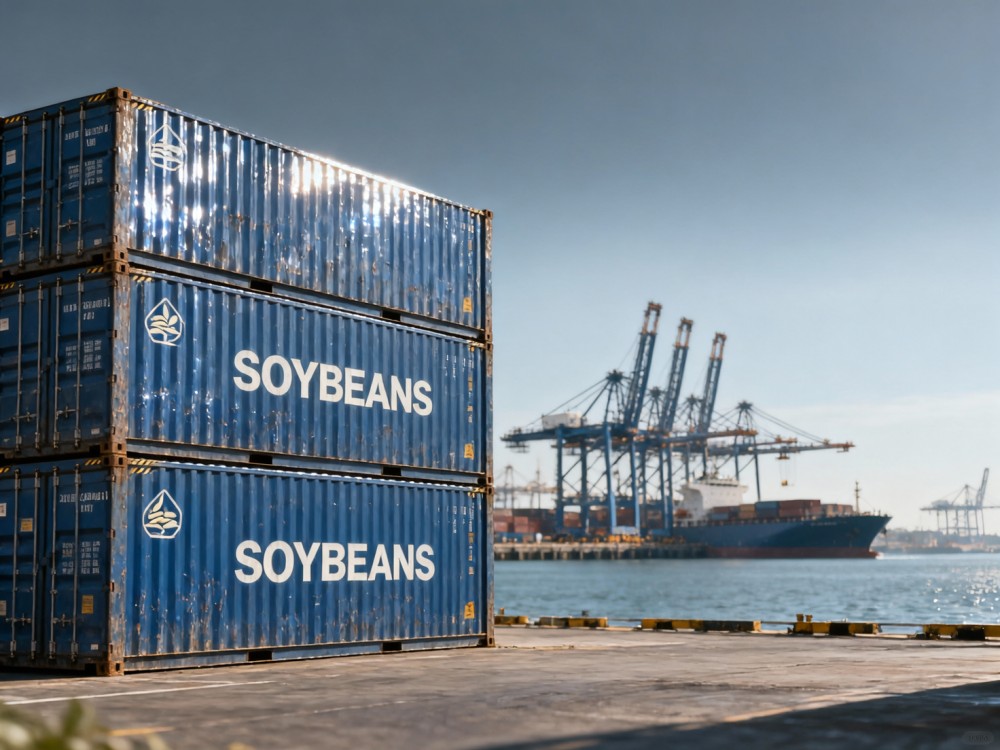
Delays cascaded into feed manufacturing and flexible packaging operations. Soybean meal—used in 68% of commercial poultry and swine rations—faced a 12-day average delay entering Chinese feed mills in Q1 2026. To maintain production continuity, 41% of surveyed mills increased reliance on Brazilian-origin meal, which carries a 15–20% higher landed cost due to longer transit times and higher ocean freight surcharges.
That cost pressure directly impacted packaging procurement. Flexible laminates used for animal feed bags—typically composed of PET/PE or BOPP/LLDPE structures—saw raw material price volatility spike: LDPE resin costs rose 9.4% MoM in March 2026, while aluminum foil (used in moisture-barrier layers) increased 13.7%. These inputs constitute 32–45% of total flexible packaging unit cost, depending on barrier specification.
Crucially, printing service providers reported a 30% uptick in rush-order requests for feed bag artwork revisions—driven by last-minute formula changes necessitated by ingredient substitution. Turnaround times for plate-making and proofing extended from 3–5 working days to 7–12 days, straining just-in-time labeling workflows.
Packaging Procurement Priorities Amid Volatility
- Lead time flexibility: Suppliers offering ≤7-day standard production (vs. industry norm of 12–18 days) gained 23% more Q1 2026 contract renewals among top-50 feed producers.
- Resin hedging transparency: 64% of procurement teams now require quarterly resin cost index reports tied to verified IHS Markit or Platts benchmarks.
- Digital print readiness: Short-run digital flexo and HP Indigo-compatible substrates saw 37% YoY order growth—enabling batch-size reductions from 50,000 to 5,000 units without setup penalties.
Strategic Mitigation: Diversification, Inventory Modeling & Tech Integration
Forward-looking agribusinesses are deploying three-tiered mitigation strategies. First, geographic diversification: 58% of large-scale soybean importers have activated secondary sourcing protocols, including expanded contracts with Brazilian crushers (offering 25–30-day transit vs. 35–45 days for U.S.) and trial shipments from Ukrainian Black Sea terminals—despite current insurance premium surcharges of +220%.
Second, dynamic inventory modeling. Leading firms now run Monte Carlo simulations incorporating port dwell time probability distributions (e.g., 60% chance of ≤12-day dwell at Shanghai, 25% chance of 13–18 days), feeding outputs directly into ERP reorder triggers. This has reduced stockouts by 41% while holding safety stock increases to just 8.3% YoY.
Third, tech-enabled visibility. Blockchain-based shipment tracking platforms—integrated with customs EDI and rail telematics—now deliver real-time location, temperature, and humidity data for 92% of tracked soybean containers. This enables proactive rerouting and early warning of potential spoilage risks, particularly critical for non-GMO or identity-preserved shipments.
These solutions are not theoretical—they’re actively deployed. A Tier-1 animal nutrition company reduced its average soybean-related production stoppage from 2.4 days/month to 0.7 days/month after implementing the full triad, delivering $2.1M in annual labor and waste savings.
Actionable Guidance for Procurement & Operations Teams
For procurement professionals: renegotiate Incoterms to FCA (Free Carrier) instead of CIF where feasible—this transfers port handling risk to the supplier while retaining control over inland transport scheduling. For operations leads: validate that your ERP’s MRP module supports multi-scenario lead time inputs (e.g., “U.S. West Coast normal,” “U.S. West Coast congested,” “Brazilian origin”). And for decision-makers: allocate ≥15% of annual logistics budget to real-time visibility tools—this investment typically pays back within 5.2 months via reduced demurrage and detention charges alone.
Stakeholders across the agri-food value chain must treat shipping infrastructure not as a background utility—but as a core input variable. The Q1 2026 soybean trade dip is a stress test with lasting lessons: resilience now hinges less on tariff navigation and more on operational agility, data fidelity, and cross-border coordination discipline.
To strengthen your soybean logistics planning, packaging procurement strategy, or supply chain risk modeling—contact our agri-trade advisory team for customized scenario analysis, vendor benchmarking, and implementation roadmaps aligned with your specific facility footprint and trade lane mix.
Related News
- 00
0000-00
Which input prices pose the biggest risk to food industry margins? - 00
0000-00
Soybean Imports: How Buyers Can Assess Origin Risk, Quality, and Landed Cost - 00
0000-00
Middle East Dairy Products Market: Demand Drivers and Import Opportunities - 00
0000-00
How to Vet Animal Feed Importers for Reliable Supply and Regulatory Compliance - 00
0000-00
Building Agricultural Value Chain Traceability From Farm Records to Retail
Supply Chain Research Editorial Team
Weekly Insights
Stay ahead with our curated technology reports delivered every Monday.