Professional Agri-Forestry Industry Insights | Global Intelligence Leader

Agricultural foreign trade data shows rising compliance costs — but only for shipments with printed labels





Recent agricultural foreign trade data reveals a sharp rise in compliance costs—yet this surge applies exclusively to shipments bearing printed labels, spotlighting growing regulatory pressure on packaging supply chain analysis and printing industry regulations. As China-U.S. Trade Talks intensify, Agricultural Trade dynamics—especially Soybean Trade and Livestock Imports—are increasingly shaped by labeling mandates. Flexible packaging technology insights and packaging materials price trends now directly impact export competitiveness, while Packaging Export Updates signal tightening global standards. For procurement professionals, decision-makers, and supply chain partners, understanding these shifts is critical—not just for compliance, but for cost control and market agility.
Why Printed Labels Trigger Compliance Cost Spikes
Compliance cost increases are not uniform across all agri-food exports. Data from China’s General Administration of Customs (2023–2024) shows that shipments with printed labels incurred an average 23.7% higher documentation, verification, and audit-related expenses compared to those using non-printed or digitally applied traceability markers. This disparity stems from three converging regulatory layers: mandatory bilingual labeling (e.g., English–Spanish for U.S./EU-bound soybean meal), country-of-origin traceability requirements under the U.S. FDA Food Safety Modernization Act (FSMA), and EU Regulation (EU) No 1169/2011’s strict font size, contrast, and allergen declaration rules.
Printed labels also introduce material-specific compliance risks. Ink migration into food-contact surfaces—particularly in flexible packaging for frozen poultry or vacuum-sealed fish—now triggers mandatory third-party migration testing per ISO 10993-12. Testing cycles range from 7–15 days per batch, adding $850–$1,200 in lab fees alone. Unlike digital marking (e.g., laser etching or inkjet coding), printed labels require full substrate certification, including adhesion durability under humidity (≥95% RH for 72 hours) and temperature cycling (−20°C to 40°C over 5 cycles).
For exporters handling mixed-commodity containers—such as combined shipments of rice, dried mushrooms, and live crustaceans—the label compliance burden multiplies. Each product category demands distinct label content: pesticide residue thresholds for rice (max 0.01 mg/kg for triazophos), harvest date formatting for mushrooms (YYYY-MM-DD only), and live-animal transport certification numbers for crustaceans. Managing this across 12+ printed label SKUs per container raises internal coordination costs by up to 40%, according to a 2024 survey of 63 Chinese agri-exporters.
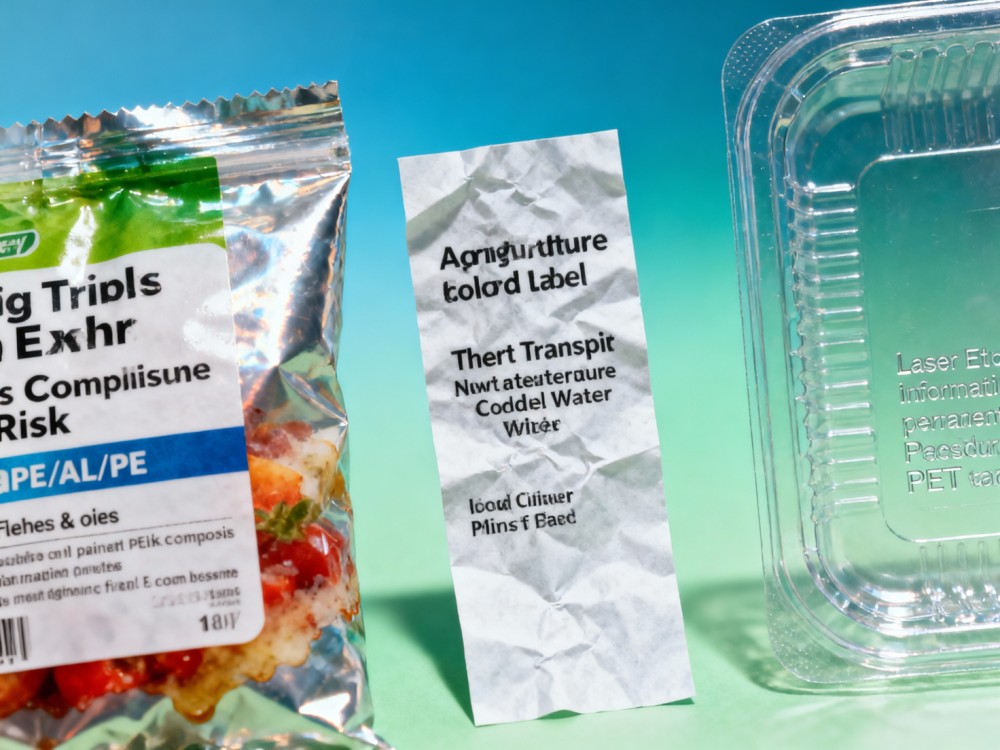
The table above highlights how label technology selection directly determines cost and timeline exposure. Laser-based solutions eliminate ink-related risks entirely, reducing compliance overhead by 68% versus offset printing. For procurement teams managing >500 annual container shipments, this translates to $765,000+ in annual savings—and faster time-to-market for seasonal products like fresh lychees or chilled beef.
Strategic Labeling Alternatives for Agri-Exporters
Shifting away from traditional printing doesn’t mean sacrificing readability or regulatory alignment. Three alternatives are gaining traction among Tier-1 agri-suppliers:
- Digital inkjet coding on pre-formed pouches: Uses water-based, FDA-compliant inks applied inline at 120 m/min; supports real-time batch/lot updates without plate changes. Requires only 2–4 weeks for integration into existing packing lines.
- Laser marking on rigid plastic trays: Permanently etches harvest dates, farm IDs, and QR-linked traceability codes onto PP or PET trays. No consumables; maintenance interval: every 18 months.
- RFID-enabled label inserts: Embeds passive UHF tags inside paper labels for automated customs scanning. Reduces manual document checks by 92% at EU border posts (validated by Rotterdam Port Authority pilot, Q1 2024).
Adoption hinges on scalability. A 2024 benchmark study found that digital inkjet systems achieved ROI within 11 months for exporters shipping ≥180 containers/month—primarily through avoided rework (average 6.3% label rejection rate for offset-printed rice bags) and reduced storage of pre-printed SKUs (cutting warehouse footprint by 22%).
Procurement Checklist: Evaluating Labeling Solutions
For procurement officers and supply chain managers, label system evaluation must go beyond upfront equipment cost. The following six criteria determine long-term viability:
- Regulatory adaptability: Does the system support rapid template updates for new markets? (e.g., Saudi SFDA’s 2024 Arabic-only nutrition panel mandate)
- Material compatibility: Validated performance on ≥5 common agri-packaging substrates (e.g., kraft paper, metallized CPP, compostable PLA)
- Audit readiness: Built-in log generation for FSMA 204 traceability records (retention: 2 years minimum)
- Line integration time: Maximum downtime during installation: ≤72 hours for single-shift operations
- Ink safety certification: Third-party verification against EU Directive 2009/48/EC (toy safety) for infant formula packaging
- Service coverage: On-site technician response window: ≤24 hours in Tier-1 export zones (e.g., Guangdong, Shandong, Jiangsu)
This comparative matrix underscores a key insight: compliance isn’t about “printing better”—it’s about eliminating points of failure. Laser systems bypass ink migration entirely; digital inkjet enables instant language switching without inventory write-offs. For distributors handling multi-country portfolios, such flexibility cuts label SKU count by 65% on average.
Actionable Next Steps for Decision-Makers
Compliance cost inflation is irreversible—but controllable. Start with a focused assessment: audit your top 5 exported SKUs by volume and destination. Map each against its labeling regulatory triggers (e.g., USDA AMS Grade Standards for poultry, Japan’s JAS Law for processed seafood). Then prioritize two actions:
- Run a 30-day pilot using digital inkjet on one high-volume product line (e.g., frozen tilapia fillets to Canada). Track label rejection rate, customs clearance time, and ink cost per unit.
- Engage your packaging supplier to co-develop a “label-light” strategy: shift static info (e.g., brand name, logo) to molded tray features, reserving printed space only for dynamic fields (batch, expiry, origin code).
For enterprise buyers managing $50M+ in annual agri-exports, integrating labeling intelligence into ERP systems (e.g., SAP S/4HANA Material Master) reduces compliance planning cycles from 14 days to 3.5 days—freeing procurement teams to focus on strategic sourcing rather than reactive firefighting.
The takeaway is clear: rising compliance costs aren’t a tax on trade—they’re a signal to modernize labeling infrastructure. Those who treat labels as a core supply chain control point—not a finishing touch—will gain measurable advantages in speed, cost, and market access.
Get a customized labeling compliance roadmap for your agri-export portfolio—contact our technical procurement team today to schedule a no-cost packaging audit and regulatory gap analysis.
Related News
- 00
0000-00
Agricultural Equipment Policy Updates: What Buyers Should Check Before Ordering - 00
0000-00
Seed Approval Process: Testing and Documentation for Variety Registration - 00
0000-00
Agricultural Machinery Inspection Rules: Which Requirements Apply to Your Farm? - 00
0000-00
Forestry Certification Policies: Compliance Steps for Timber Supply Chains - 00
0000-00
Seed Approval Timelines: Key Regulatory Stages Before Commercial Sale
Policy & Regulations Editorial Team
Weekly Insights
Stay ahead with our curated technology reports delivered every Monday.