Professional Agri-Forestry Industry Insights | Global Intelligence Leader

Poultry Housing Upgrades in 2026: What Nigeria Buyers Are Prioritizing





Poultry Housing Upgrades in 2026: What Nigeria Buyers Are Prioritizing
Nigeria’s poultry sector enters 2026 under familiar pressure but with a different mindset. Feed costs remain a defining issue, power reliability still shapes production planning, and disease management continues to influence both farm design and operating discipline. Yet buyers are no longer looking at housing upgrades as a narrow equipment replacement exercise. For many farms, distributors, and investment groups, the housing decision is becoming a long-term operating strategy tied to labor efficiency, bird welfare, output consistency, and the ability to scale without rebuilding core systems too early.
That shift matters because poultry housing affects more than bird placement density. It influences ventilation behavior, manure handling, cleaning time, mortality risk, egg damage, worker movement, and the predictability of routine maintenance. In practical terms, the wrong housing choice can lock a farm into recurring inefficiencies for years. The right one may not solve every production challenge, but it can reduce avoidable losses and make performance easier to manage under Nigerian operating conditions.
For information researchers and procurement teams, the current market trend is not simply about finding lower prices. Buyers are increasingly balancing capital cost against lifecycle value. That means asking more detailed questions about material durability, local installation support, spare parts access, compatibility with future automation, and whether a housing system can handle heat, humidity, dust, and cleaning routines without premature deterioration.
Why 2026 Feels Different for Poultry Housing Decisions
The urgency around housing upgrades is being shaped by a combination of operational and commercial factors. Farms that expanded in phases over the past few years often carry mixed infrastructure, with older housing layouts sitting beside newer feeding or watering systems. That mismatch creates inefficiency. Workers spend more time adjusting routines between sheds, maintenance becomes less standardized, and farm managers struggle to benchmark performance across units.
Another factor is buyer sophistication. Many Nigerian poultry operators now compare equipment options with greater attention to total usable life rather than initial invoice value alone. This does not mean price has become less important. It means low upfront cost is no longer enough if galvanization quality is weak, wire thickness is inconsistent, or installation accuracy is poor. In a market where downtime can quickly affect cash flow, resilience matters.
There is also growing recognition that housing design plays a role in routine biosecurity. A farm does not become secure merely by buying newer cages or shed components, but structured layouts can make cleaning schedules more repeatable, reduce hidden waste accumulation points, and support more disciplined flock management. For commercial operations trying to improve output consistency, that operational order is increasingly valuable.
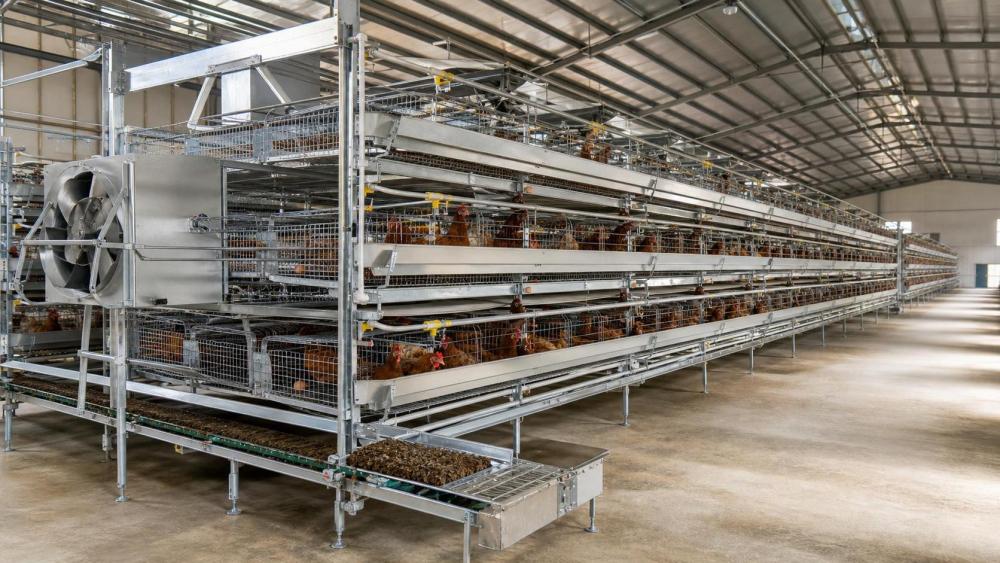
What Buyers Are Prioritizing in 2026
The strongest purchasing trend is practical performance over appearance. Buyers want systems that can operate reliably in everyday farm conditions, not just look competitive in catalogs. Across layer and broiler operations, several priorities keep appearing in supplier evaluations.
- Material durability: Corrosion resistance, weld consistency, and structural stability are central concerns, especially where moisture, manure exposure, and regular washdown can shorten equipment life.
- Ease of maintenance: Buyers increasingly prefer layouts that make inspection, cleaning, and part replacement straightforward, since hidden maintenance complexity often raises long-term labor costs.
- Labor efficiency: Housing that reduces repetitive manual handling, simplifies feeding and watering checks, and improves collection flow is receiving more attention from larger farms.
- Upgrade compatibility: Even where full automation is not immediately planned, many buyers want structures that can later accommodate automated feeding, manure removal, or environmental support systems.
- Supplier responsiveness: Delivery timelines, installation guidance, documentation clarity, and after-sales communication are becoming more influential in final purchasing decisions.
These priorities reflect a maturing market. Buyers are trying to avoid the hidden costs that emerge after installation: bent frames under stress, poor alignment that affects operation, difficult cleaning access, and shortages of matching replacement components. For decision-makers, the purchasing conversation is moving beyond unit count toward serviceability and operational continuity.
How These Priorities Affect Different Stakeholders
For farm owners, the immediate question is return on investment. Housing upgrades require capital, and returns are rarely judged by equipment alone. Managers tend to evaluate whether the new system helps stabilize production, reduce losses, improve staff efficiency, and support flock management standards. In many cases, the value of an upgrade becomes visible through fewer avoidable disruptions rather than dramatic headline gains.
For procurement teams, specification discipline becomes more important than ever. The challenge is not only choosing a housing format but translating farm needs into verifiable purchasing criteria. That includes coating quality, dimensions, installation scope, accessory inclusion, transport assumptions, and replacement part policy. Procurement mistakes often happen when quotations appear similar on paper but differ significantly in build quality or support expectations.
Distributors and agents also face a more informed buyer base. They may need to support technical comparison discussions, explain operational tradeoffs clearly, and align product recommendations with local farm realities. A product that performs well in one environment may require a different support model in another. As a result, channel partners that understand maintenance patterns and installation risks are likely to be more credible than those focused only on price negotiation.
What Procurement Teams Should Examine Before Committing
In 2026, stronger poultry housing decisions are likely to come from a structured evaluation process. Buyers should compare suppliers on technical and operational fit, not only commercial terms. Several checkpoints deserve attention before an order is finalized.
- Shed compatibility: Cage layout, aisle width, ventilation behavior, loading access, and manure handling pathways should match the building, not fight it.
- Installation scope: Buyers should clarify who is responsible for assembly, supervision, site corrections, and commissioning support.
- Parts standardization: Consistent component sizing can reduce future maintenance friction and simplify stocking of replacements.
- Cleaning practicality: Housing should allow realistic sanitation routines under the labor and water conditions the farm actually has.
- Expansion pathway: If the business expects growth, the chosen system should not make later capacity additions unnecessarily complex.
For teams comparing poultry cages manufacturers in nigeria, the most useful approach is to place supplier evaluation within a wider operational review: material longevity, local climate suitability, installation precision, maintenance burden, spare-part continuity, and how well the housing system supports future scaling plans. That broader context helps buyers avoid decisions driven by headline price alone.
Common Buying Mistakes Still Seen in the Market
Despite better market awareness, several purchasing mistakes continue to appear. One is assuming that all galvanized systems offer similar durability. In reality, coating performance, fabrication quality, and handling during transport and installation can affect how long equipment remains serviceable. Another mistake is underestimating the cost of poor layout integration. A housing system may be technically acceptable but still inefficient if worker access, ventilation movement, or manure management are not properly considered.
Some buyers also rely too heavily on generic specifications without checking the realities of their own farm conditions. A model that suits a tightly managed commercial site may not perform the same way in a location facing intermittent power, inconsistent labor training, or difficult logistics. That is why site-specific planning remains important even when the equipment category is familiar.
A further risk is treating after-sales support as secondary. In practice, documentation quality, access to troubleshooting support, and clarity on replacement components can influence operating stability long after purchase. Procurement teams that ignore these issues often find themselves solving preventable problems under production pressure.
How Housing Upgrades May Shape Competitive Position
For established operators, housing upgrades can become a competitive factor when they improve consistency. Better internal workflow, fewer handling losses, and more manageable maintenance schedules may help a farm stabilize output even when market inputs remain volatile. That consistency matters to buyers, distributors, and business partners who depend on predictable supply.
For newer entrants, equipment choices made in 2026 may set the ceiling for future growth. Housing that cannot scale efficiently may force redesigns earlier than expected. By contrast, a system chosen with realistic expansion, maintenance, and workflow requirements in mind can support growth with less disruption. The goal is not to overbuild at the start, but to avoid choices that become obstacles once flock size or operating complexity increases.
A Practical Outlook for 2026 Buyers
The strongest poultry housing decisions in Nigeria during 2026 are likely to come from buyers who connect infrastructure with day-to-day farm performance. The market is not rewarding simplistic purchasing logic. Farms are under pressure to manage cost, protect productivity, and reduce operational waste at the same time. That makes disciplined housing selection more important than ever.
For researchers, procurement leads, and business decision-makers, the key question is no longer whether an upgrade is needed, but which upgrade can remain practical under real operating conditions. Durability, maintainability, installation quality, and future adaptability are becoming the standard filters. Buyers that evaluate these factors carefully are more likely to build housing systems that support performance rather than create new constraints.
Related News
- 00
0000-00
Animal Health Industry News: Key Policy, Disease, and Market Updates to Watch - 00
0000-00
Dairy Agro-Processing Industry News: What Market Shifts Matter Most to Producers? - 00
0000-00
Fertilizer Industry Price News: What Buyers Should Track Before Contracting - 00
0000-00
Starch Market News: Supply Shifts, Pricing Signals, and Buyer Risks to Watch - 00
0000-00
Seed Industry Trade News: Key Market Shifts, Policy Signals, and Supply Risks to Watch
Industry News Editorial Team
Weekly Insights
Stay ahead with our curated technology reports delivered every Monday.