Professional Agri-Forestry Industry Insights | Global Intelligence Leader

Cold Chain Logistics News Today: Route Disruptions and Freight Cost Risks





Cold Chain Logistics News Today: Route Disruptions and Freight Cost Risks
For procurement teams sourcing fresh produce, seafood, meat, and other temperature-sensitive goods, a disrupted shipping route can quickly turn a competitive quote into an expensive delivery problem. Tracking cold chain logistics news today helps buyers assess how port congestion, rerouting, reefer availability, and fuel surcharges may affect landed costs and product shelf life. This AgriTrade overview examines disruption risks and freight cost pressures, highlighting what buyers should verify with suppliers and logistics partners before confirming orders.
The central question is not simply whether freight rates are rising. It is whether a particular shipment can still arrive within its commercial and temperature-control limits at an acceptable total cost. This is a procurement risk assessment rather than a live disruption bulletin: current route status, carrier charges, and equipment availability need confirmation against dated operational notices and shipment-specific quotations.
A route disruption becomes a shelf-life problem before it becomes a freight problem
Shipping headlines usually describe vessel diversions, port delays, or canceled sailings. For refrigerated cargo, the more useful question is where those changes consume the shipment’s remaining time allowance. Extra sailing days, a missed feeder connection, and a delayed inspection do not have the same operational consequences, even when each produces a similar arrival delay.
A longer voyage with reliable refrigeration may be manageable for some frozen products. The same extension can undermine the economics of fresh berries, chilled fish, or short-life meat. Temperature control slows deterioration; it does not stop the product from aging. A shipment can remain within its specified temperature range and still arrive with too little saleable life for the intended customer.
Work backward from the buyer’s minimum remaining shelf-life requirement. Allow time for discharge, inspection, customs clearance, inland delivery, receiving checks, and distribution—not just port-to-port transit. Production date and loading date also matter. Goods held at origin while waiting for equipment may have already consumed part of the buffer before the vessel departs.
This is where a seemingly cheaper shipment becomes difficult to defend. If the arrival window leaves no room for a missed connection, the quoted saving depends on an unusually smooth journey.
Read disruption news at the service level, not just the trade-lane level
Chokepoint restrictions, security-related diversions, severe weather, labor disruption, and terminal congestion can all change shipping patterns. Their effect is rarely uniform. A direct service and a transshipment service connecting the same countries can face very different exposure. Even within one port, terminal conditions and refrigerated-container handling arrangements may differ.
When a disruption is reported, ask the forwarder to identify the booked service, actual routing, connection ports, and latest estimated arrival. Establish whether the revised schedule is confirmed or provisional. An arrival estimate copied from the original booking is not evidence that the shipment remains on track.
Transshipment deserves particular attention. A missed connection may add waiting time at a hub rather than merely extend sailing time. Refrigeration can continue during that wait, but plug availability, monitoring, onward space, and responsibility for extra costs still need checking. Fewer handoffs can justify a higher rate when the product has limited tolerance for uncertainty.
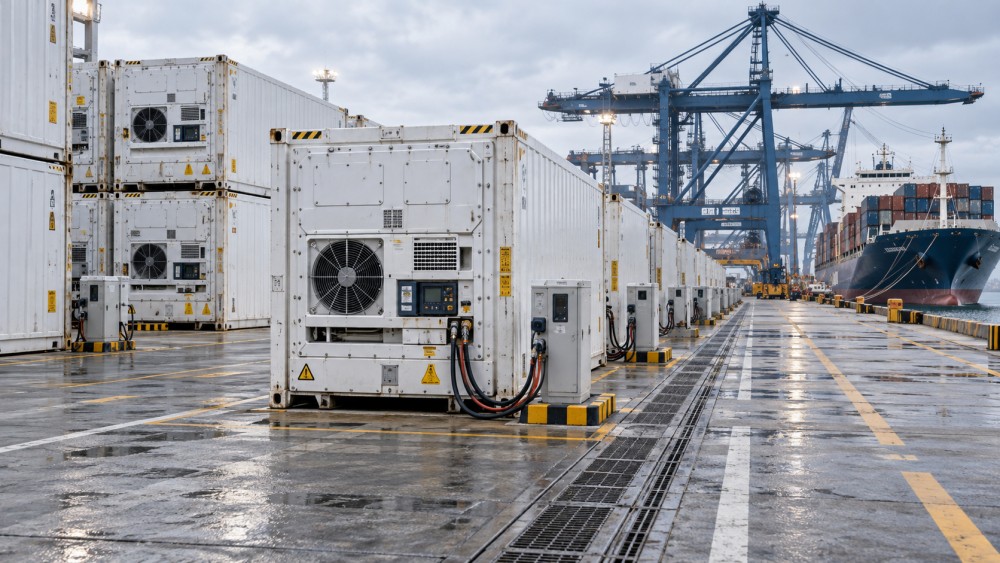
For verification, combine carrier service advisories with terminal notices, port authority updates, and the forwarder’s operational confirmation. Broad market reporting explains the context; it does not replace evidence about the container or booking in question. Check publication dates carefully, because an old disruption notice can remain visible after operating conditions change.
Reefer availability can tighten even when general container capacity looks adequate
A refrigerated shipment needs more than vessel space. It requires suitable equipment at origin, an acceptable pre-trip inspection, power during relevant handling stages, and a workable refrigerated inland connection. A carrier may have nominal capacity while the required reefer size or equipment configuration is unavailable at the loading location.
Seasonal agricultural exports can intensify local equipment demand. Longer container cycles can also slow the return of empty reefers. That creates a procurement risk which general freight indices may not reveal: a market can look reasonably supplied overall while a particular origin struggles to secure refrigerated equipment for a harvest window.
Before authorizing packing or dispatch, distinguish a rate quotation from a confirmed equipment release. Verify pickup location, release timing, depot operating hours, inspection status, and any special requirements such as controlled atmosphere. An alternative loading port may help, but only after checking additional trucking time, refrigeration arrangements, export procedures, and cutoff feasibility. Moving the bottleneck inland is not a solution.
The ocean rate is only one part of the exposure
Rerouting can affect voyage duration, fuel consumption, and equipment circulation. Carriers may adjust rates or apply surcharges, depending on the service and contract. Those changes should not be treated as automatic or identical across suppliers. A buyer needs the charge basis, effective date, and applicability to the actual booking.
Some of the least visible costs arise after arrival: reefer electricity, terminal storage, examination handling, missed delivery appointments, additional trucking, or temporary cold storage. Demurrage and detention terms also matter, although their application depends on the contract and local charging arrangements. Do not assume that a broad reference to “free time” covers every relevant charge.
A useful quote review should resolve these points before approval:
- Which origin, ocean, destination, and inland charges are included, and which remain payable at actual cost?
- Can surcharges change after booking, and what event determines the applicable rate?
- When does each free-time allowance begin, and are reefer power or monitoring charged separately?
- Who pays for an inspection delay, missed connection, port change, or emergency cold-storage transfer?
- Does the agreed trade term match the named place, delivery obligations, and freight arrangement in the contract?
Trade terms help allocate obligations, but they do not settle every disruption scenario or guarantee cargo condition. Document exceptional-cost approval separately. Otherwise, a shipment may be moved urgently while the parties are still arguing about who authorized the expense.
Compare cost per accepted unit, not freight per container
For perishables, a better comparison is the expected cost of product accepted for sale. Alongside purchase price and logistics charges, assess the exposure to quality deductions, reduced shelf life, rejected quantities, and disposal. These are planning assumptions, not guaranteed losses, and should be grounded in product specifications and previous receiving records where available.
Consider the decision between a lower-priced service with a transfer and a more expensive direct service. The direct option is not automatically better. For frozen stock with sufficient inventory cover, the saving may justify a longer journey. For a time-sensitive fresh order with a strict retail intake window, greater schedule reliability may be worth more than the freight difference.
Use a base case and a disruption case rather than pretending that a single arrival date is certain. Test what happens if the shipment misses its connection or requires extra storage. If a modest delay removes the purchase margin, renegotiate the price, change the service, reduce the shipment, or reconsider the order. Insurance should not be assumed to fill the gap: delay-related deterioration and other losses depend on policy wording, exclusions, and the circumstances.
Monitoring is useful only when someone can act
A reefer setpoint is not proof of product temperature. Cargo preparation, loading temperature, packaging, airflow, and handling all affect performance. Refrigerated containers are generally intended to maintain appropriately prepared cargo, not compensate for inadequate pre-cooling or freezing. Requirements must be confirmed for the specific commodity and transport system.
Agree on the monitoring method before loading. Identify whether the available information represents supply air, return air, or readings from independent cargo loggers. Sensor placement and reporting intervals influence what the record can establish. A visible temperature excursion needs investigation; equally, an apparently stable air-temperature record does not by itself prove that every package meets specification.
The practical issue is escalation. Who receives an alert outside office hours? Who can request a terminal check, arrange an inspection, or authorize transfer? What evidence must be retained? Define those responsibilities while the shipment is still routine. Monitoring without a response path may document a loss without preventing it.
Turn market updates into booking decisions
The most useful signal is often a combination: revised schedules, repeated booking rollovers, shorter quotation validity, restricted equipment releases, or more uncertainty around destination charges. None proves a market-wide shortage alone. Together, they warrant a closer review of the affected origin, commodity, and service.
AgriTrade, operated through www.zsiron.com, connects agricultural and fishery trade coverage with food-processing, packaging, policy, and supply-chain intelligence. That wider context matters because transport risk does not develop in isolation. A harvest surge, inspection change, or packaging constraint can alter loading plans even when the vessel schedule appears stable.
Use cold chain logistics news today to decide what needs rechecking—not as a substitute for booking confirmation. Before releasing the next order, obtain a dated routing update, a clear landed-cost breakdown, confirmation of equipment, and an arrival plan that preserves the required saleable life. If one remains unresolved, make that uncertainty explicit in the approval rather than hiding it inside the freight estimate.
Got questions about this industry topic or seeking best practices for your business? Drop us a line below, and let the expert team at AgriTrade help you out.
We respect your privacy. Your information is strictly confidential.
Related News
- 00
0000-00
Agribusiness Sustainability News: Key Trends in Farming and Supply Chains - 00
0000-00
Food Manufacturing Industry News: Supply Chain and Cost Trends to Watch - 00
0000-00
Cold Chain News Today: Developments Affecting Storage Investment - 00
0000-00
Cold Chain Logistics News Today: Route Disruptions and Freight Cost Risks - 00
0000-00
Food Industry Market Outlook: Demand, Input Costs, and Supply Risks Shaping 2026
0000-00
Industry News Editorial Team
Weekly Insights
Stay ahead with our curated technology reports delivered every Monday.