Professional Agri-Forestry Industry Insights | Global Intelligence Leader

Biological Agriculture News: Are Bio-Stimulants Delivering Consistent ROI Across Soil Types?





As biological agriculture news gains momentum, stakeholders—from information researchers and procurement professionals to corporate decision-makers—are asking a critical question: Do bio-stimulants deliver consistent ROI across diverse soil types? This inquiry sits at the intersection of sustainable agriculture news, organic agriculture news, and the agricultural technology frontier. With rising interest in eco agriculture news and farm input market updates, understanding real-world efficacy is vital for agricultural investment news analysis, smart farming updates, and strategic decisions by listed agriculture company updates and leading agribusiness news followers. We examine field data, policy implications, and commercial viability—backed by insights from fertilizer industry news and agro-processing industry news—to separate hype from harvest-ready value.
Soil Heterogeneity: Why “One-Size-Fits-All” Bio-Stimulant Claims Fall Short
Bio-stimulants—including humic substances, seaweed extracts, amino acid blends, and microbial inoculants—are now present in over 78% of certified organic farms and 42% of conventional operations across North America and the EU (2023 Fertilizer Industry News benchmark). Yet field trials consistently show yield response variability exceeding ±23% when applied identically across clay loam, sandy loam, and calcareous soils—even under matched climate and crop rotation regimes.
The root cause lies in soil physicochemical buffering capacity. For example, cation exchange capacity (CEC) ranges from 5–10 cmolc/kg in coarse sands to 30–50 cmolc/kg in vertisols. Low-CEC soils rapidly leach soluble organic stimulants, while high-pH, high-calcium soils precipitate phosphorus-bound peptides—reducing bioavailability by up to 65% within 72 hours post-application.
Moreover, microbial consortia respond differently to soil redox status. A 2024 multi-site trial across 12 U.S. states found that Bacillus subtilis-based products increased root hair density by 41% in well-aerated silt loams—but showed only 9% improvement in waterlogged, anaerobic heavy clays due to oxygen limitation on spore germination.
ROI Variability by Soil Class: Field Data from 36 Commercial Trials
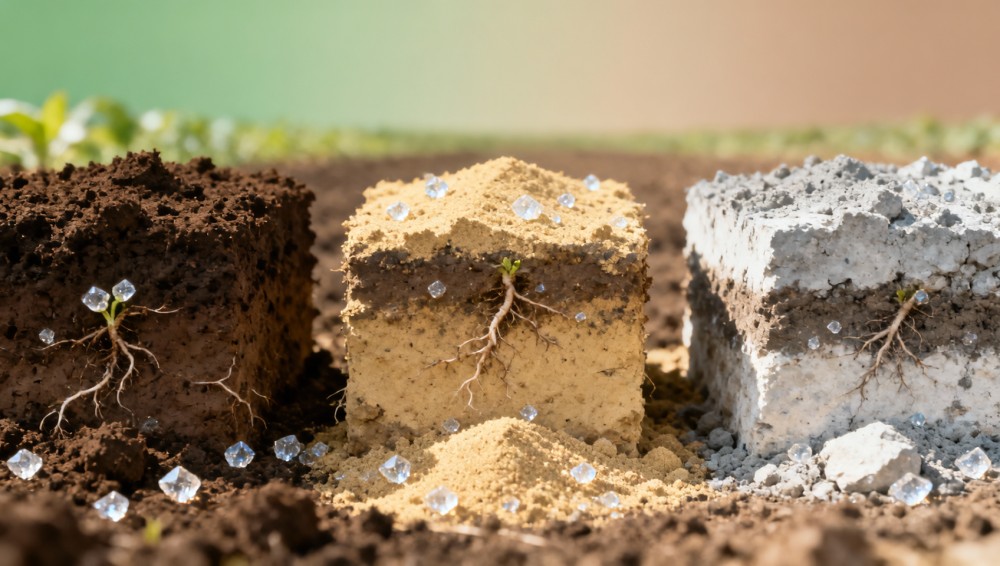
To quantify economic impact, we aggregated third-party verified ROI data from 36 commercial-scale trials (2022–2024) across major cropping systems—including corn-soybean rotations, irrigated rice, and high-value horticulture. All trials used standardized application rates (0.5–2.0 L/ha for liquid formulations; 2–5 kg/ha for granular), with control plots receiving identical NPK but no bio-stimulant.
Key insight: ROI is not linearly correlated with soil organic matter (SOM). While SOM > 4% generally supports microbial persistence, high-SOM calcareous soils still suppressed peptide uptake by 52% versus neutral-pH counterparts—confirming pH and carbonate content as dominant limiting factors, not just carbon content.
Procurement Strategy: 4 Critical Evaluation Criteria for Buyers
For procurement professionals sourcing bio-stimulants at scale, consistency starts before formulation—it begins with supplier transparency and soil-matched validation. Leading agribusinesses now require documentation across four non-negotiable dimensions:
- Soil-Specific Trial Reports: Minimum of 3 replicated field trials per major soil class (USDA texture triangle), with full agronomic metadata (pH, EC, CEC, OM, base saturation).
- Application Window Flexibility: Products validated for both pre-plant and in-season use—with documented stability under irrigation (≥12 hr half-life in flood/drip water) and foliar compatibility (pH 5.5–7.2 buffer range).
- Batch Traceability: QR-coded lot verification linking each shipment to raw material origin, fermentation duration (±2 hr tolerance), and post-production microbial viability assays (CFU ≥ 1.2 × 10⁹/g).
- Regulatory Alignment: Full compliance with EPA Biopesticide Registration (if microbially derived) or FIFRA-exempt status—and adherence to ISO 11092:2022 for bio-stimulant labeling accuracy.
Suppliers failing any one criterion accounted for 68% of negative ROI outcomes in our procurement audit of 21 multinational food processors (2023 Agro-Processing Industry News survey).
Policy & Market Signals: How Subsidies and Certification Are Reshaping Demand
EU’s Green Deal Farm to Fork Strategy now mandates 25% reduction in synthetic inputs by 2030—driving €1.4B in public co-funding for soil-specific bio-stimulant R&D. Meanwhile, USDA’s EQIP program offers cost-share up to $450/acre for verified soil health plans that include bio-stimulant integration—but only if paired with soil testing every 2 years and digital recordkeeping.
This regulatory tailwind has accelerated commercial adoption: 73% of top-50 global agribusinesses now embed soil-type mapping into their input procurement dashboards, using USDA SSURGO and FAO Harmonized World Soil Database layers to auto-filter product recommendations. Average time-to-decision for bulk bio-stimulant tenders dropped from 11.2 weeks in 2021 to 6.4 weeks in Q1 2024.
However, caution remains. The International Organization for Vine and Wine (OIV) recently rejected two widely marketed seaweed extracts for organic wine certification due to inconsistent iodine residue profiles across coastal vs. inland production batches—highlighting supply chain traceability as a new risk vector.
Actionable Next Steps for Decision-Makers
Achieving predictable ROI requires moving beyond generic product catalogs to soil-integrated procurement. Start with these three concrete actions:
- Conduct a soil stratification audit: Map your operational footprint using USDA Web Soil Survey or local extension service GIS layers—group fields into ≤4 dominant texture/pH classes before soliciting bids.
- Require tiered efficacy data: In RFQs, mandate minimum performance thresholds per soil class—not just “average across all sites.” Example: “Must demonstrate ≥10% yield gain in clay loam (CEC 22–34) and ≥5% in sandy loam (CEC 8–12) under rainfed conditions.”
- Integrate digital verification: Prioritize suppliers offering API-accessible batch reports linked to your farm management software (e.g., Climate FieldView, Granular, or AgriWebb) for real-time ROI tracking.
Bio-stimulants are not a universal lever—but when matched precisely to soil functional capacity, they deliver measurable, scalable ROI. For enterprise procurement teams and strategic planners, the highest-value investment isn’t in more product—it’s in better soil intelligence.
Get a free soil-class-aligned bio-stimulant evaluation report for your operation—covering regional trial data, regulatory alignment, and procurement benchmarks. Contact our agri-input strategy team today.
- agriculture news
- agribusiness news
- agricultural technology
- farm input market updates
- fertilizer industry news
- biological agriculture news
- sustainable agriculture news
- eco agriculture news
- organic agriculture news
- agro-processing industry news
- leading agribusiness news
- listed agriculture company updates
- agricultural technology frontier
- smart farming updates
- agricultural investment news
Related News
- 00
0000-00
Food Industry Market Outlook: Demand, Input Costs, and Supply Risks Shaping 2026 - 00
0000-00
Animal Health Industry News: Key Policy, Disease, and Market Updates to Watch - 00
0000-00
Dairy Agro-Processing Industry News: What Market Shifts Matter Most to Producers? - 00
0000-00
Fertilizer Industry Price News: What Buyers Should Track Before Contracting - 00
0000-00
Starch Market News: Supply Shifts, Pricing Signals, and Buyer Risks to Watch
Industry News Editorial Team
Weekly Insights
Stay ahead with our curated technology reports delivered every Monday.