Professional Agri-Forestry Industry Insights | Global Intelligence Leader

Why Do Natural Gas Prices Affect Urea Prices?





Natural gas prices affect urea prices because gas supplies both the hydrogen needed to manufacture ammonia and much of the energy used in production. Ammonia is then combined with carbon dioxide to make urea. When natural gas becomes more expensive, the cost of producing gas-based urea rises. If that increase makes fertilizer production uneconomic, plants can reduce output, tightening supply and adding further pressure to prices.
The connection is strong, but the price response is rarely proportional or immediate. Gas contracts, plant efficiency, competing production routes, available inventories, and fertilizer demand all influence how higher energy costs reach the market. Understanding that transmission helps distinguish a temporary cost increase from a supply disruption with longer consequences.
The connection starts in the ammonia plant
Urea production begins upstream, with ammonia. In a conventional natural-gas-based ammonia plant, methane reacts with steam to produce hydrogen through a process called steam reforming. Further processing produces additional hydrogen and separates carbon dioxide. The hydrogen then reacts with nitrogen obtained from air to form ammonia.
Natural gas therefore has two distinct jobs. It is a chemical feedstock, supplying hydrogen atoms that become part of ammonia, and a fuel, providing heat and supporting the plant’s energy requirements. Electricity and steam are also needed for compression, circulation, separation, and other operations. Their costs depend partly on how the site generates or purchases energy.
The urea unit combines ammonia with carbon dioxide under pressure. At an integrated site, carbon dioxide recovered during hydrogen production supplies this part of the process. Subsequent concentration and finishing produce solid fertilizer as granules or prills.
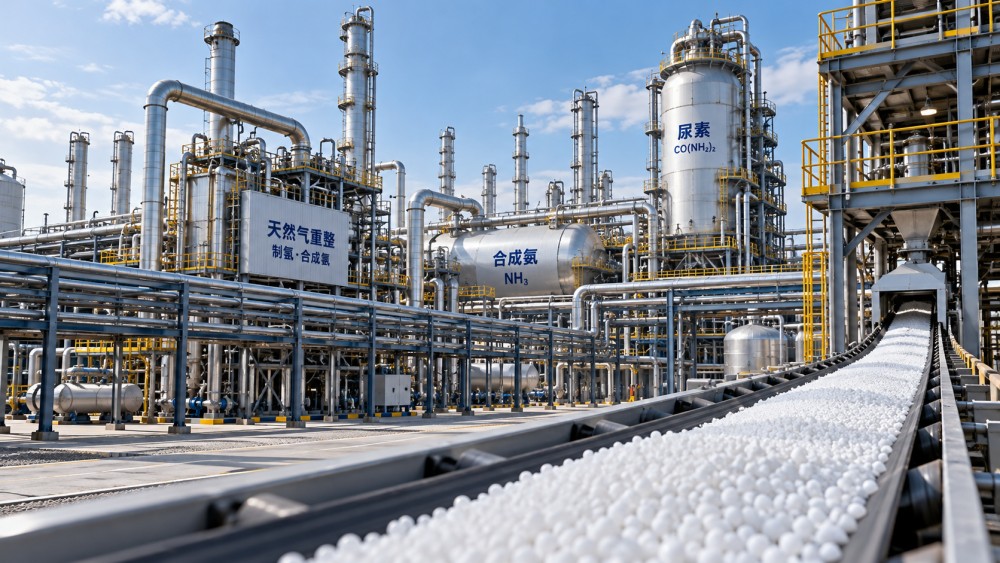
This integration explains why a gas price movement reaches beyond the plant’s fuel bill. It changes the economics of making the ammonia that urea requires. A standalone urea operation purchasing ammonia experiences the connection through its ammonia purchase price, although contracts and transport arrangements can change the timing.
Urea granulation, storage, and loading add further costs, but the upstream ammonia stage accounts for much of the exposure to natural gas. Focusing only on the energy consumed inside the urea unit misses the larger connection.
Translate the gas movement into a production-cost signal
A useful first calculation links the change in gas price to the amount of gas required per tonne of saleable urea. Both figures must use compatible units and cover the same production boundary.
Estimated change in gas-related cost per tonne of urea = change in delivered gas price per energy unit × gas consumed per tonne of urea.
This relationship estimates cost sensitivity; it does not predict the final market price. A calculation covering an integrated ammonia–urea plant should include the relevant feedstock and fuel consumption across that system. Using only the consumption of the finishing unit understates exposure. Adding an ammonia purchase cost to a calculation that already includes ammonia production would double-count part of it.
Plant efficiency also matters. Two facilities paying the same gas price can have different production costs because their equipment, heat recovery, operating rates, and maintenance condition differ. Published consumption figures need a clear basis: whether they describe ammonia or urea output, whether purchased electricity is included, and whether energy exports receive a credit.
Gas quotations introduce another potential mismatch. A benchmark price at a trading hub is different from the delivered price at a fertilizer plant. Pipeline charges, local tariffs, contractual formulas, and currency movements can change the effective cost. Comparisons also require consistent energy units and heating-value conventions.
A percentage increase in natural gas should never be applied directly to the urea price. Gas represents part of total cost, while the selling price also reflects supply, demand, freight, and the operating margins available in the market.
Production cuts can amplify the initial cost increase
Higher gas costs first compress production margins if urea selling prices have not risen enough to compensate. Continued operation then depends on the revenue available from fertilizer sales relative to avoidable operating costs, contractual obligations, and shutdown or restart expenses.
Once production becomes unattractive, a plant can reduce its operating rate or stop temporarily. This changes the market mechanism. The issue is no longer simply that each tonne costs more to manufacture: fewer tonnes are available.
The effect is stronger when several facilities face the same gas shock and the affected region needs replacement imports. Additional cargoes must come from somewhere else, potentially drawing supplies away from other destinations. Urea prices can then rise even in regions where domestic gas prices have barely moved.
The cost of the additional supply needed to balance demand often matters more than the average production cost across all plants. If meeting demand requires output from an expensive facility, or imports with substantial freight costs, that supply can influence the traded price. A producer with inexpensive gas can consequently receive a higher selling price without experiencing an equivalent cost increase.
Capacity announcements require careful interpretation. A reduction in stated production capacity is different from the loss of actual output, especially if the plant was already operating below capacity. The commercial significance depends on tonnes removed from the market, the expected duration, and the availability of substitute supply.
Regional gas prices do not move together
Natural gas markets have regional constraints. Pipeline networks, liquefied natural gas infrastructure, domestic production, storage, and contract structures influence local prices. Urea moves internationally by ship, allowing fertilizer markets to transmit a regional energy shock across borders.
This creates several distinct relationships between the gas headline and the fertilizer price:
Coal-based production is an important boundary to the gas–urea relationship. Its hydrogen comes from a different feedstock route, so a gas price increase does not create the same direct cost shock. Nevertheless, coal-based urea participates in the same traded fertilizer market and can follow prices established by broader supply conditions.
Export restrictions can also prevent low-cost production from relieving a shortage elsewhere. Available manufacturing capacity and available export supply are separate quantities.
Why falling gas prices do not immediately produce cheaper urea
A decline in gas prices improves production economics, but additional fertilizer supply takes time to reach the market. An idled plant needs a restart decision, suitable operating conditions, and coordinated operation of its ammonia and urea units. Maintenance requirements or other constraints can extend the delay.
After production resumes, fertilizer still has to be finished, stored, loaded, shipped, and distributed. Material already moving through the supply chain may have been purchased under earlier contracts. Spot cargo offers, contract prices, and local warehouse quotations therefore adjust on different schedules.
Demand can absorb the additional output. A concentrated application season, a large import purchase, or depleted inventories can support urea prices while gas costs fall. Conversely, weak demand and ample stocks can limit the price response to higher gas costs, at least until production cuts materially reduce availability.
Inventory acquisition costs influence selling decisions, but they do not guarantee a price floor. When replacement material becomes cheaper and competition is strong, existing stocks can lose value. The relevant question is how quickly lower-cost replacement supply becomes available in the same destination and delivery window.
A practical sequence for interpreting price changes
Start by defining the fertilizer quotation being explained. A bulk export price at the loading port, an import price including ocean freight, and a bagged warehouse price contain different cost components. Comparing them without adjusting for delivery terms can create a misleading picture of the gas connection.
- Identify the relevant source of supply. Establish which producing regions are supplying the destination and which region could provide the next available cargo. The domestic gas benchmark alone may have little explanatory value when imports determine replacement costs.
- Match the gas signal to the production route and contract exposure. Gas-based and coal-based ammonia have different cost drivers. Where gas purchasing terms are unknown, treat a spot benchmark as a directional indicator rather than a precise measure of plant costs.
- Look for a physical supply response. Operating-rate reductions, confirmed shutdowns, restarts, and changes in export availability reveal whether the energy movement is affecting fertilizer volumes. Distinguish scheduled maintenance from cuts caused by poor margins.
- Align the timing. Compare gas developments with fertilizer offers for the relevant shipment and arrival periods. Today’s gas price is an incomplete explanation for material manufactured or contracted earlier.
Then assess the delivered-price components outside production. Ocean freight, port handling, inland transport, bagging, and exchange rates can reinforce or offset the upstream movement. A rise in a local urea quotation during stable gas conditions could originate in these components rather than in ammonia manufacturing.
Product comparisons need consistency as well. Granular and prilled urea can command different prices because of application preferences, handling characteristics, and destination demand. Bagged and bulk quotations include different services. An apparent change in the gas–urea relationship sometimes reflects a change in the product or delivery basis being compared.
Use gas prices as an early signal, not a purchase trigger
A rising gas market becomes a stronger warning of higher urea costs when it coincides with exposed production capacity, weakening plant margins, falling fertilizer inventories, and firm demand for upcoming deliveries. The same gas movement carries less immediate weight when contracted feedstock costs remain stable and ample fertilizer stocks cover the shipment period.
Purchase timing should therefore relate to the required arrival date and the availability of replacement tonnes. Splitting purchases across delivery windows can reduce exposure to a single pricing moment where storage capacity, order size, and freight arrangements permit. It does not eliminate market risk, and delayed purchases introduce delivery risk when supply is already tight.
The most useful question behind a gas price headline is specific: does this movement change the cost or availability of the urea required for a particular destination and delivery period? Answering it connects the chemistry of production to the actual quotation, without assuming that every change in natural gas must produce an equal change in fertilizer prices.
Got questions about this industry topic or seeking best practices for your business? Drop us a line below, and let the expert team at AgriTrade help you out.
We respect your privacy. Your information is strictly confidential.
Related News
- 00
0000-00
Particle Board Industry Outlook: Demand Drivers and Raw Material Risks - 00
0000-00
Agro-Processing Industry Analysis: Supply Chain Risks and Growth Opportunities - 00
0000-00
Global Food Ingredient Market Size: Growth Drivers and Key Segments - 00
0000-00
Food Ingredient Market Forecast: Key Growth Drivers and Emerging Opportunities - 00
0000-00
Listed Agriculture Company Earnings Updates: What Margins and Guidance Reveal
0000-00
Industry Insights Editorial Team
Weekly Insights
Stay ahead with our curated technology reports delivered every Monday.