Professional Agri-Forestry Industry Insights | Global Intelligence Leader

When does a wood based panel market forecast support capacity planning?





A reliable wood based panel market forecast becomes essential when project managers must align production capacity, procurement schedules, and investment timing with changing demand conditions.
The practical question is not whether forecasts are useful. It is whether forecast evidence is strong enough to justify expanding, delaying, redirecting, or protecting capacity.
Start With the Decision: What Capacity Question Must the Forecast Answer?
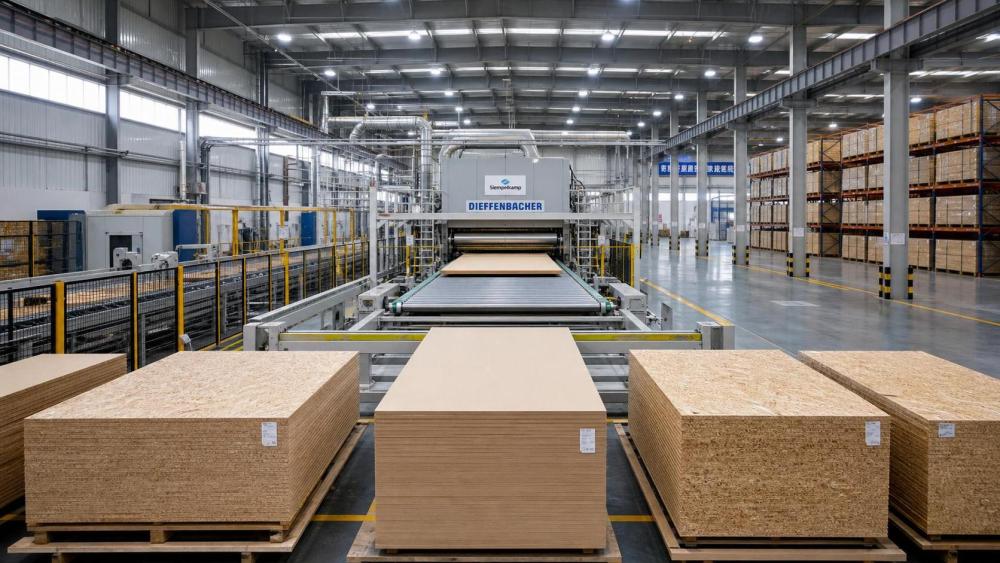
A wood based panel market forecast supports capacity planning when it is connected to a specific operating decision, rather than used as a broad industry outlook.
Project leaders should first define whether they are evaluating a new mill, an additional production line, warehouse expansion, equipment replacement, or temporary outsourcing capacity.
Each decision requires a different forecast horizon. A quarterly demand estimate may support inventory planning, while a long-term investment needs multi-year market scenarios.
For major capital projects, the forecast should estimate expected demand by panel category, geography, customer segment, application, and purchasing channel.
Wood based panels are not a single market. MDF, particleboard, plywood, OSB, hardboard, decorative panels, and construction panels respond differently to demand drivers.
A forecast becomes commercially useful when it identifies which product categories are growing, which are under price pressure, and which may face excess supply.
Project managers should avoid using national market growth alone as proof of local capacity demand. Regional construction activity and freight economics can change conclusions.
A new panel facility may appear justified at national level but remain uneconomic if nearby buyers are supplied by lower-cost producers or imports.
The most relevant forecast therefore combines top-down market estimates with bottom-up evidence from target customers, distributors, contractors, furniture manufacturers, and processors.
Capacity planning should begin with a decision statement: what volume, product mix, location, investment level, and operating date are under consideration?
Use Demand Signals That Match Actual Wood Based Panel Consumption
A useful wood based panel market forecast tracks the end markets that consume panels, rather than relying only on historical production and sales volumes.
Construction activity is often a major demand driver, especially for plywood, OSB, structural panels, flooring substrates, wall systems, and interior applications.
However, project managers should separate residential construction, commercial development, renovation activity, public infrastructure, and industrial construction because their panel requirements differ substantially.
Housing starts can support future panel demand, but renovation spending may be more relevant in mature markets with slower new-build activity.
Furniture and interior manufacturing are equally important for MDF, particleboard, melamine-faced boards, laminated panels, cabinetry components, and decorative applications.
When furniture exports are rising, panel demand may increase even if domestic construction remains flat. Export competitiveness therefore deserves direct evaluation.
Packaging, logistics, transport equipment, prefabricated housing, retail fixtures, and do-it-yourself markets can also create meaningful demand for selected panel grades.
Project managers should examine whether demand growth reflects temporary restocking, a one-time construction cycle, sustained demographic change, or long-term manufacturing expansion.
A forecast based only on one exceptional year can encourage overbuilding. Capacity decisions require evidence that demand will remain sufficient after market normalization.
Useful demand indicators include building permits, furniture production indexes, housing completions, import volumes, retail sales, manufacturing orders, and distributor inventory levels.
Test Whether Market Growth Will Actually Translate Into Profitable Utilization
Market growth does not automatically support capacity expansion. The key planning measure is profitable utilization, not simply higher regional consumption of wood based panels.
A project can operate at high physical utilization while producing weak returns if selling prices fall below sustainable levels or input costs rise sharply.
Capacity planning should compare forecasted demand with existing regional supply, announced investments, import availability, competitor utilization, and likely plant operating rates.
If competing mills already have unused capacity, demand growth may be absorbed without requiring a new facility or additional production line.
Project managers should calculate the minimum utilization rate needed to cover fixed costs, debt obligations, maintenance requirements, labor, energy, and overhead.
That threshold should then be tested against conservative, expected, and upside demand scenarios rather than a single optimistic forecast case.
For example, an expansion may appear viable at eighty-five percent utilization but become financially fragile when demand falls enough to reduce utilization below seventy percent.
The analysis should also consider product switching. Flexible production assets may protect utilization by allowing shifts between panel thicknesses, grades, coatings, or customer segments.
Where flexibility is limited, the forecast must be more precise. Dedicated products depend heavily on stable demand from a narrower buyer base.
A forecast supports capacity planning when it shows not only expected volume, but also the probability of maintaining acceptable utilization under adverse conditions.
Assess Raw Materials, Energy, and Logistics Before Committing New Capacity
Wood based panel capacity depends on more than demand. Fiber availability, timber sourcing, resin supply, energy costs, transport capacity, and environmental restrictions shape viability.
A strong forecast should include regional wood residue volumes, plantation output, sawmill activity, recycled fiber availability, and competing demand from pulp, biomass, and packaging sectors.
Fiber shortages can quickly undermine a growth opportunity. A new plant may create demand for raw materials that local suppliers cannot provide consistently.
Project managers should analyze supply contracts, harvesting cycles, forestry certification, traceability requirements, weather exposure, and land-use policy before approving additional capacity.
Energy is another major variable. Drying, pressing, processing, and emissions control can make electricity, gas, biomass, and carbon costs critical profitability factors.
Forecasts should model energy price volatility because a facility with competitive panel pricing may still lose margin during extended periods of elevated energy costs.
Resin and chemical inputs deserve similar attention. Formaldehyde regulations, low-emission standards, adhesive technology, and petrochemical price movements can affect production economics.
Logistics costs often determine whether capacity can serve a broader region. Panels are bulky products, making freight distance and backhaul availability commercially significant.
A market forecast is more reliable when demand growth is tested against transport infrastructure, port access, truck availability, rail connections, and warehouse capacity.
For projects serving export markets, managers should also evaluate customs requirements, shipping reliability, trade restrictions, currency exposure, and destination-country product standards.
Build Scenarios Instead of Treating a Forecast as a Single Answer
Capacity planning becomes more defensible when the wood based panel market forecast is converted into scenarios that show how different conditions affect project performance.
The base case should reflect the most probable demand, price, raw material, energy, and operating assumptions supported by current market evidence.
The downside case should test slower construction activity, reduced furniture production, lower panel prices, higher input costs, import competition, or delayed project commissioning.
The upside case can consider stronger housing demand, export growth, improved product mix, constrained competitor supply, or premium demand for certified low-emission panels.
Each scenario should calculate capacity utilization, revenue, gross margin, cash flow, working capital needs, payback period, and debt-service coverage.
Decision-makers need to know which assumptions create the greatest risk. Sensitivity analysis often reveals that price, fiber cost, and utilization matter more than headline demand growth.
Scenario planning also helps teams identify early-warning indicators. These may include falling permit approvals, customer order cancellations, declining distributor inventories, or rising imported panel volumes.
When warning indicators appear, the project team can slow equipment commitments, revise ramp-up schedules, protect raw material supply, or postpone non-essential expenditure.
Conversely, persistent signs of supply tightness may justify reserving equipment slots, securing long-term fiber agreements, or accelerating engineering and permitting work.
A forecast supports capacity planning best when it creates decision triggers, not when it simply provides a predicted market number without operational consequences.
Match the Investment Structure to Forecast Confidence
Forecast confidence should influence how capacity is built. High uncertainty generally favors phased investment, modular equipment, flexible production layouts, and staged procurement commitments.
Rather than constructing maximum capacity immediately, managers may commission an initial line and preserve land, utilities, and engineering provisions for future expansion.
This approach reduces exposure if demand develops more slowly than expected. It also allows operating teams to learn from actual production, quality performance, and customer acceptance.
Phased capacity is especially useful in markets affected by volatile construction cycles, uncertain export conditions, changing environmental standards, or incomplete supplier infrastructure.
Where demand is already supported by contracted customers, limited competing supply, secure fiber access, and favorable margins, a larger initial investment may be justified.
Even then, project managers should distinguish between customer interest and binding volume commitments. Letters of intent rarely provide the same protection as contractual off-take agreements.
Sales teams should validate forecast assumptions with customer-level discussions covering annual volume, specifications, approval requirements, payment terms, delivery patterns, and switching barriers.
Technical qualification periods can delay revenue. New panel grades may require testing by furniture producers, builders, distributors, or manufacturers before regular purchasing begins.
Capacity ramp-up plans should account for this approval period. Installing production equipment does not guarantee immediate sales at planned utilization levels.
Investment governance should therefore include clear stage gates, with defined evidence needed before land acquisition, equipment orders, construction, commissioning, and full-scale ramp-up.
Turn Market Intelligence Into a Capacity Planning Process
Project teams need a repeatable process for converting market intelligence into decisions. Forecasting should be integrated with engineering, procurement, operations, finance, and commercial planning.
First, define the capacity decision and identify the panel products, target geographies, customer groups, and intended operating date under review.
Second, collect market data from construction, furniture, trade, forestry, logistics, pricing, regulatory, and competitor sources that directly affect the project economics.
Third, validate the data through interviews with customers, distributors, raw material suppliers, transport providers, equipment specialists, and relevant industry associations.
Fourth, model supply-demand balance by product category. Include existing capacity, announced projects, likely shutdowns, imports, exports, and realistic utilization assumptions.
Fifth, translate market outcomes into operating assumptions for volume, price, product mix, conversion cost, fiber cost, energy cost, and working capital.
Sixth, prepare scenario-based financial models and identify the assumptions that require active monitoring during project development and after commissioning.
Seventh, establish triggers for accelerating, pausing, resizing, or redesigning the project. These triggers should be measurable and assigned to accountable owners.
Regular market reviews are necessary because panel markets can change rapidly through trade policy shifts, weather disruption, construction downturns, or raw material constraints.
Industry intelligence platforms such as AgriTrade can help project teams monitor forestry supply, trade developments, policy changes, logistics issues, and related market movements.
Conclusion: A Forecast Is Valuable When It Changes the Capacity Decision
A wood based panel market forecast supports capacity planning when it connects real demand evidence with supply conditions, operating economics, investment risk, and clear management actions.
Project managers should not approve capacity because market demand appears generally positive. They should confirm that demand can support profitable utilization in their specific location.
The strongest decisions combine market forecasts with customer validation, fiber security, logistics analysis, competitor assessment, scenario modeling, and phased investment discipline.
When these elements align, a forecast becomes more than a report. It becomes a practical basis for deciding when capacity should be expanded, protected, delayed, or redirected.
Related News
- 00
0000-00
When does a wood based panel market forecast support capacity planning? - 00
0000-00
Processing Machinery Investment Trends: Where Manufacturers See ROI in 2026 - 00
0000-00
How to Read a Listed Agriculture Company Updates Report for Market and Partner Signals - 00
0000-00
What Buyers Review in Taiyu(HK) Poultry Farm Equipment for Small Layer Farms - 00
0000-00
Panel Products Market Outlook: What Is Driving Demand Across Construction and Furniture?
Industry Insights Editorial Team
Weekly Insights
Stay ahead with our curated technology reports delivered every Monday.