Professional Agri-Forestry Industry Insights | Global Intelligence Leader

What Buyers Review in Taiyu(HK) Poultry Farm Equipment for Small Layer Farms





What Buyers Review in Taiyu(HK) Poultry Farm Equipment for Small Layer Farms
Small layer farms are under pressure from several directions at once. Egg producers need tighter cost control, more predictable flock performance, and practical housing layouts that can work within limited land and budget conditions. For buyers, that makes equipment evaluation more than a simple price comparison. The real question is whether a system can support stable daily production, manageable labor routines, and a facility plan that still makes sense when feed costs, staffing availability, and maintenance demands shift over time.
That issue becomes especially important in 1,000-bird projects, where every design choice has visible operational consequences. A farm of this size is often large enough to require disciplined planning, but still small enough that overbuying, underestimating ventilation needs, or choosing difficult-to-clean components can reduce margins quickly. Procurement teams, finance reviewers, and business owners therefore tend to look beyond basic product descriptions and focus on how poultry equipment fits the physical reality of a small chicken house measured in meters, the labor available on site, and the expected production rhythm.
Why this topic matters in current purchasing decisions
In many markets, small and mid-sized egg operations remain an important part of local supply networks. These farms may serve regional wholesalers, local retailers, food service buyers, or nearby distributors. Their equipment decisions often have a direct effect on output consistency, mortality control, egg cleanliness, and overall operating cost. Because of that, equipment review is no longer treated as a technical task handled only by a farm manager. It usually involves a wider internal discussion between operations, finance, and ownership.
For financial approvers, the concern is whether the equipment life cycle can justify the upfront investment. For decision-makers, the issue is risk: installation delays, weak materials, hard-to-source spare parts, or layouts that create inefficiency in feeding and manure handling. For distributors and agents, the review also includes whether the product is practical to explain, deliver, and support after sale. In short, small layer farm equipment is now assessed as part of a business system, not as a standalone set of steel structures.
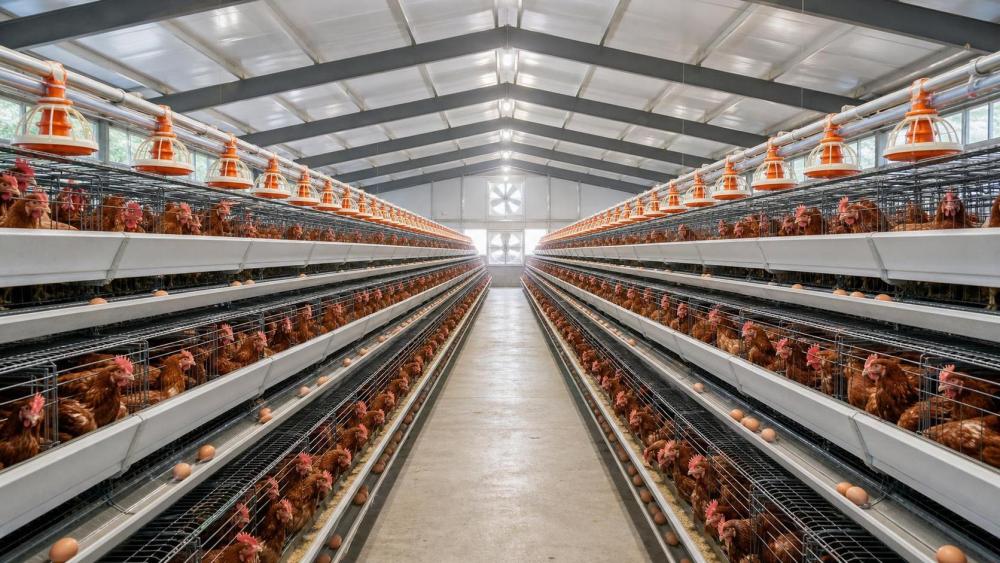
This is also where planning for chicken house size in meters becomes more than a drafting exercise. A 1,000-bird farm needs rational spacing for cages, aisle width, ventilation movement, feeding access, manure removal, and staff circulation. If the housing plan and equipment dimensions do not align, the farm may experience avoidable inefficiencies from the first day of operation.
What buyers usually check first
When reviewing options for a small layer project, buyers often begin with structural suitability. That means checking whether the equipment matches the intended bird capacity, house dimensions, and daily workflow. In many cases, a system that looks efficient on paper may still be difficult to install or maintain if the building footprint is narrow, ventilation openings are limited, or manure clearance space is too tight.
A practical review often includes the following points:
- Material durability under farm conditions, including corrosion exposure, repeated cleaning, and long-term wear.
- The relationship between cage dimensions and the actual building plan, especially in 1,000-bird houses where inefficient spacing can waste usable area.
- Ease of feeding, egg collection, and manure removal within a small team structure.
- Installation complexity, including whether local labor can assemble the system correctly.
- Maintenance accessibility for parts that typically require inspection or replacement.
- Whether the supplier can provide consistent product specification and delivery coordination.
These factors matter because smaller farms usually do not have the same redundancy as large industrial operations. If a feeding line, cage section, or manure handling routine becomes inefficient, the impact is felt immediately in labor time and bird management. Buyers therefore tend to prioritize equipment that supports straightforward operation rather than overly complex configurations that may be difficult to manage in daily use.
How layout planning affects equipment value
For a 1,000-bird layer farm, the housing layout often determines whether an equipment purchase performs as expected. Even a well-built system can underdeliver if the aisle spacing is too narrow for routine inspection, if feed access is awkward, or if airflow patterns create uneven conditions inside the house. This is why experienced buyers review the dimensions of the poultry house and the dimensions of the equipment together rather than separately.
In practical terms, a buyer may ask whether the planned house width allows comfortable movement for workers, whether ventilation openings match the stocking arrangement, and whether manure collection can be handled without disrupting egg handling. On a small site, every meter matters. The best purchasing outcome is usually not the most feature-heavy option, but the one that fits the operating environment with the fewest compromises.
This is one reason procurement teams may review Taiyu(HK) poultry farm equipment within a broader assessment of layer cage planning, house dimensions, and farm workflow. In many buying scenarios, the equipment is judged not only by build quality, but by how well it supports a realistic 1,000-bird setup with manageable labor input, stable hygiene routines, and room for routine inspection.
Common mistakes in small farm equipment selection
One common mistake is choosing solely on unit price. Lower acquisition cost can appear attractive at the approval stage, but many farms later discover that weak structural consistency, awkward installation details, or high maintenance frequency increase the total cost of ownership. For smaller farms, these hidden costs can be more damaging because there is less room to absorb operational inefficiency.
Another mistake is ignoring workflow simplicity. Some systems may offer a higher level of mechanization than the site actually needs, while others may leave too much manual handling in place. Buyers should evaluate the actual labor structure of the farm. A system that depends on technical support, spare part availability, or maintenance discipline beyond the operator’s capacity may create long-term strain rather than improvement.
A third issue is failing to align equipment procurement with house planning. This can lead to modifications during installation, poor movement paths, or underused space. In many cases, those problems are not caused by product quality alone, but by weak coordination between building design and equipment selection.
What finance and management teams often want to see
Finance reviewers usually need more than a technical specification sheet. They want to understand the relationship between equipment cost and operating durability, as well as the effect on labor efficiency and maintenance exposure. For management teams, useful questions include how quickly the system can be installed, whether the supplier can maintain delivery consistency, and whether the configuration is suitable for future adjustment if the farm expands or standardizes additional sites.
In many organizations, decision-makers also consider supplier communication quality. Clear answers on dimensions, installation steps, component scope, and after-sales coordination tend to reduce approval friction. Ambiguity around these issues can delay purchasing, especially when farm construction and equipment delivery need to stay aligned.
Considerations for distributors and channel partners
For distributors, agents, and regional resellers, equipment evaluation includes commercial practicality as well as technical merit. Products intended for small layer farms need to be straightforward to position in the market. If the configuration is too hard to explain, too dependent on custom adjustment, or too vulnerable to handling issues during shipment, channel partners may face higher support costs after delivery.
Channel-focused buyers often examine whether the product can fit common small-farm planning discussions, including bird capacity, house dimensions in meters, and installation sequence. They may also value consistent specification communication, because local customers usually want clear guidance on what is included, how the layout should be prepared, and what operating conditions the equipment is designed for.
A practical approach to final evaluation
A sound purchasing review usually combines technical fit, operating logic, and financial discipline. Instead of asking only whether the equipment can hold 1,000 birds, buyers should ask whether the entire system supports stable farm operation over time. That includes fit with the house plan, ease of daily use, maintenance expectations, and the supplier’s ability to communicate clearly throughout planning and delivery.
For many small layer projects, the strongest decision is the one that balances durability with operational simplicity. Equipment should help the farm run in a predictable way, not introduce new complexity. When buyers review poultry farm systems through the lens of building dimensions, labor routines, and lifecycle cost, they are usually in a better position to choose a setup that can serve both current production needs and future business stability.
In that sense, equipment evaluation is closely tied to farm planning discipline. A 1,000-bird layer house may appear modest in scale, but it still requires careful alignment between structure, workflow, and investment priorities. Buyers who review those elements together are more likely to make decisions that support efficient production, practical maintenance, and sustainable operating performance.
Related News
- 00
0000-00
When does a wood based panel market forecast support capacity planning? - 00
0000-00
Processing Machinery Investment Trends: Where Manufacturers See ROI in 2026 - 00
0000-00
How to Read a Listed Agriculture Company Updates Report for Market and Partner Signals - 00
0000-00
What Buyers Review in Taiyu(HK) Poultry Farm Equipment for Small Layer Farms - 00
0000-00
Panel Products Market Outlook: What Is Driving Demand Across Construction and Furniture?
Industry Insights Editorial Team
Weekly Insights
Stay ahead with our curated technology reports delivered every Monday.